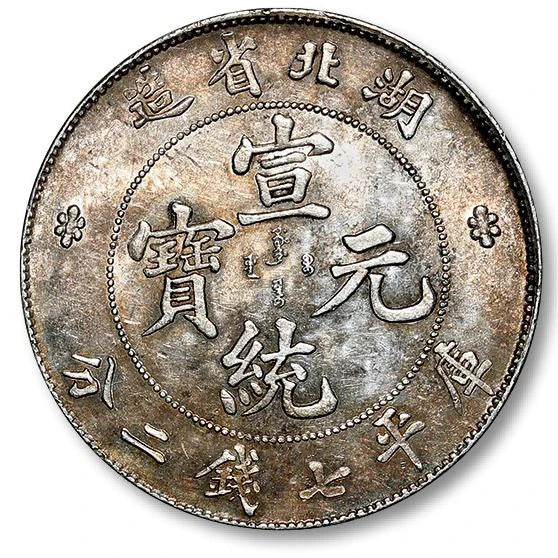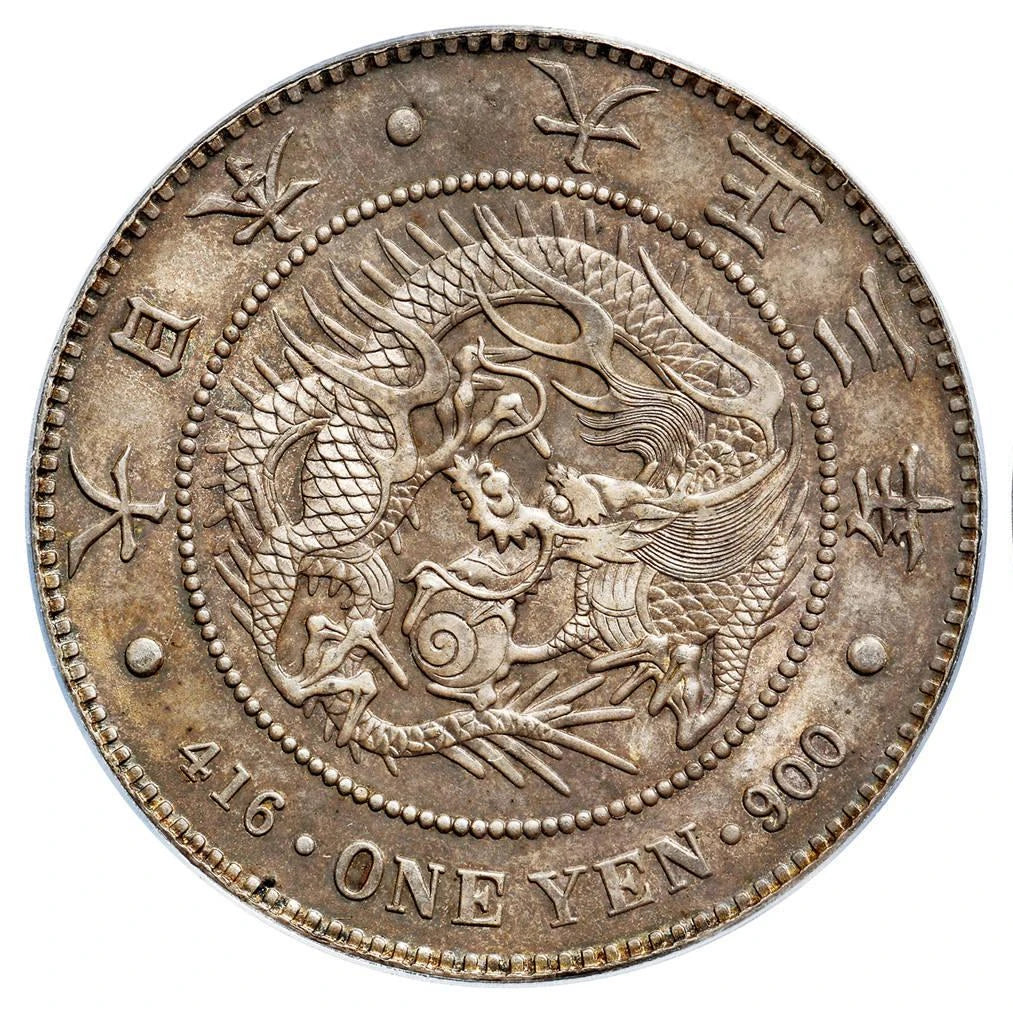
Northern Warlords Guangxu 34th Year Dragon Dollar: The Last Machine-Struck Silver Coin from the Jingji | Gu Jin Jian Bao
The Beiyang-minted Guangxu 34th year (1908) silver dollar is the last batch of Guangxu Yuanbao coins minted by the Beiyang Machinery Bureau in Tianjin. After this, Emperor Xuantong ascended the throne, and the history of Beiyang minting came to an end. This "last generation" status makes the 34th-year edition the most sought-after variety in the Beiyang series, with its market price significantly higher than other years.
I. Historical Status of the Beiyang Mint
The Beiyang Mint (also known as "Tianjin Mint") was a central-level minting institution established in 1902 by a memorial to the throne from Yuan Shikai, the Governor-General of Zhili. Its importance was significant:
- The largest mint in northern China
- Introduced the most advanced German minting technology
- Responsible for minting Guangxu Yuanbao, Xuantong Yuanbao, Daqing Silver Coins, and subsequently, the core production base for Yuan Datou
- It was the technical center for currency modernization in the late Qing Dynasty
II. Complete Historical Version of Beiyang Guangxu Yuanbao
| Year (Beiyang) | Western Calendar | Mintage | Key Features |
|---|---|---|---|
| 22nd Year of Beiyang | 1896 | Small trial mintage | Early experimental, extremely rare |
| 25th Year of Beiyang | 1899 | Approx. 500,000 | Attempt at standardization |
| 26th Year of Beiyang | 1900 | Approx. 1,000,000 | Affected by the Boxer Rebellion |
| 29th Year of Beiyang | 1903 | Approx. 8,000,000 | Formal mass production began |
| 33rd Year of Beiyang | 1907 | Approx. 15,000,000 | Mainstream circulation version |
| 34th Year of Beiyang | 1908 | Approx. 6,000,000 | Last generation version |
III. Special Status of the Beiyang 34th Year Edition
Status 1: The Last Minting of the Late Guangxu Era
On November 14, 1908, Emperor Guangxu passed away; on November 15 of the same year, Empress Dowager Cixi also passed away. The Beiyang 34th-year edition was the last batch of official silver dollars minted during Emperor Guangxu's reign. It holds the historical significance of a "dynasty's end."
Status 2: Product of a Period of Technical Perfection
By 1908, the minting technology of the Beiyang Mint was fully mature:
- Die accuracy reached its highest level in history
- Dragon details were the most exquisite (especially dragon scales, whiskers, and claws)
- Edge milling was the most uniform
- Silver content of the coins was stable at 89%
Therefore, the Beiyang 34th-year edition is considered the "artistic pinnacle" of the Beiyang series.
Status 3: Low Mintage → Rarity
Compared to the 15 million mintage of 1907 (Beiyang 33rd year), only 6 million were minted in 1908. The reason: In the latter half of 1908, Guangxu and Cixi successively passed away, and the country entered a period of "mourning," temporarily halting minting activities. Thus, the Beiyang 34th-year edition is a relatively rare version within the Beiyang series.
IV. Identification Features of the Beiyang 34th Year Edition
Feature 1: Year Mark
The obverse features the characters "Guangxu Yuanbao" + "Kuping Qiqian Erfen" (seven mace and two candareens) + "Beiyang Zao" (Made in Beiyang) + "Guangxu Sanshisi Nian" (Guangxu 34th Year). Note: "Sanshisi Nian" is written in Chinese characters, not "34".
Feature 2: Dragon Details
The dragon design of the Beiyang 34th-year edition is the most exquisite in the Beiyang series:
- Approximately 60-65 dragon scales in total
- Each dragon scale has an independent outline
- 8 dragon whiskers (4 on each side)
- 4 dragon claws (a convention for local silver dollars in the Qing Dynasty)
- Dragon head facing upwards, eyes wide open
Feature 3: English on the Reverse
The reverse features "PEI YANG" + "33rd YEAR OF KUANG HSU" + dragon design. Note: The English "33rd" refers to "Guangxu 33rd Year," but it is actually the 34th-year edition (Guangxu 1st year = 1875, plus 33 = 1908). This is an auxiliary method for version confirmation.
Feature 4: Edge Milling
- Standard reeded edge (vertical 90°)
- Approximately 175-180 reeds
- Sharp reeding, consistent depth of grooves
Feature 5: Physical Parameters
- Weight: 26.6-26.8 grams
- Diameter: 39mm
- Thickness: 2.5mm
- Silver content: 89%
V. 2026 Hong Kong Buyback Price for Beiyang 34th Year Edition
| Condition | Buyback Price (HKD) |
|---|---|
| Heavily Worn (G-VG) | $3,500-5,500 |
| Circulation Wear (F-VF) | $6,500-9,500 |
| Light Circulation (XF-AU) | $11,000-18,000 |
| Uncirculated Graded (MS62+) | $25,000-45,000 |
| Top Graded (MS65+) | $80,000-150,000+ |
Comparing Market Prices with Other Beiyang Versions
| Version | Common VF Market Price | MS62 Market Price |
|---|---|---|
| Beiyang 22nd Year | HK$25,000+ | HK$80,000+ |
| Beiyang 25th Year | HK$8,500-13,000 | HK$25,000-45,000 |
| Beiyang 26th Year | HK$5,500-8,500 | HK$15,000-28,000 |
| Beiyang 29th Year | HK$2,500-4,500 | HK$8,000-15,000 |
| Beiyang 33rd Year | HK$2,000-3,500 | HK$6,500-12,000 |
| Beiyang 34th Year | HK$6,500-9,500 | HK$25,000-45,000 |
It can be seen that the market price of the Beiyang 34th-year edition is 2-3 times higher than the 33rd-year edition, second only to the 22nd (trial mintage) and 25th (early) versions.
VI. Why is the Beiyang 34th Year Edition Considered a "Niche Essential"?
Reason 1: Low Awareness
Most novice collectors only recognize the general concept of "Guangxu Yuanbao" and are unaware of the internal version differences within the Beiyang mint. Therefore, the market attention for the Beiyang 34th-year edition is lower than its rarity would warrant.
Reason 2: Significant Appreciation Potential
Compared to popular Yuan Datou and Sun Xiaotou coins, the Beiyang 34th-year edition has lower market circulation but high rarity. For knowledgeable collectors, this is an "undiscovered" high-quality collectible.
Reason 3: Unique Historical Significance
As the last coinage of the late Guangxu era, the Beiyang 34th-year edition holds the historical status of a "finisher." Each coin is a tangible testament to the final stage of the Qing Dynasty in 1908.
VII. 5 Tips for Purchasing a Beiyang 34th Year Edition
Tip 1: Look for PCGS / NGC Grading
An MS62 graded coin with a market price of HK$25,000+ must be in a graded slab. An ungraded 34th-year edition, even if genuine, will have lower market liquidity and recognition.
Tip 2: Compare with the 33rd Year Edition
The 33rd and 34th-year editions are extremely similar in appearance; counterfeiters might alter a 33rd-year coin to look like a 34th-year. Recommendations:
- Carefully compare the characters"Sanshisi Nian"(especially the details of the character"Si")
- Use a 10x magnifying glass to check for any signs of alteration
Tip 3: Dragon Detail Requirements
The dragon design of the 34th-year edition is the most exquisite in the Beiyang series. If the dragon scales are blurred or the dragon whiskers are missing, it might be a counterfeit or a heavily circulated piece.
Tip 4: Natural Patina
Genuine 34th-year editions have over 100 years of natural patina (black or iridescent). Counterfeit coins with chemical aging will have a dull patina and an abnormal smell.
Tip 5: Traceable Provenance
Choose collectibles with documented provenance (auction records, former collector proof). The Beiyang 34th-year edition is a niche subject, with fewer fakes, but caution is still advised.
VIII. What to Do if You Suspect You Have a Beiyang 34th Year Edition at Home?
- Confirm the year mark "Guangxu Sanshisi Nian"
- Use a 10x magnifying glass to check the dragon details (to assess exquisiteness)
- Absolutely do not clean it
- Take clear close-up photos of the obverse, reverse, and edge milling
- WhatsApp 98342057 to send images to Gu Jin Jian Bao for free appraisal + valuation
- If it is a genuine MS60+ piece, consider sending it for PCGS / NGC grading
Conclusion
The Beiyang-minted Guangxu 34th-year edition is a "niche treasure" in Qing Dynasty dragon dollar collecting—its rarity is significant, but market attention is low, making it an advanced subject pursued by seasoned collectors. If you have a Beiyang Guangxu Yuanbao at home, it's recommended to carefully confirm the year—the market price of the 34th-year edition is 2-3 times higher than the 33rd-year edition. WhatsApp 98342057 to schedule a free appraisal with Gu Jin Jian Bao.
Gu Jin Jian Bao – Professional Dragon Dollar Buyback
Free Appraisal ‧ Transparent Pricing ‧ Instant Cash ‧ Door-to-door purchasing in Hong Kong, Kowloon, and the New Territories. If you have similar old items, don't rush to sell them cheaply. You can WhatsApp us for a valuation first to understand the true market value.