
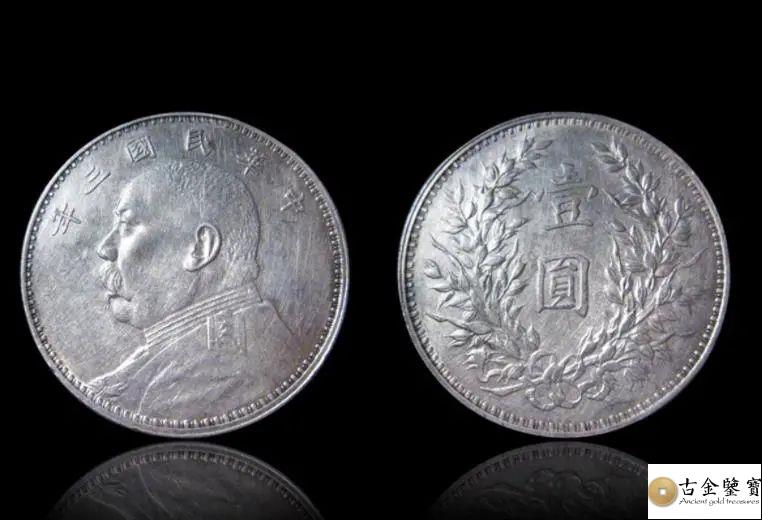
The Yuan Datou (Yuan Shikai dollar) is the most counterfeited type of silver dollar in the market—the reason is simple: it has the widest audience, suitable price, and large profit margins for counterfeiters. However,"counterfeit"is not a vague concept. According to the counterfeiting process, it can be divided into three levels, each with completely different identification difficulties.
Quick Conclusion:The collectible value of Yuan Datou comes from the overlap of historical background, existing condition, and market demand, and cannot be judged by a single year alone.
Level 1: Sand-Cast Counterfeits (Easiest to Identify)
Sand-casting is the oldest method of counterfeiting—using a genuine coin as a model to make a sand mold and then pouring molten metal into it.
Characteristics:
- The surface has visible sand eyes (tiny air bubbles).
- The edges of the characters are blurred and lack sharpness.
- Weight is lighter (usually 1-3 grams less).
- Diameter is smaller (due to cold shrinkage, about 0.5-1mm less).
- Reedings are rough and uneven in depth.
Identification Difficulty: ★☆☆☆☆ (Identifiable by beginners)
Market Share: Approximately 40% (mainly circulated on online platforms and street stalls)
Level 2: Machine-Struck Counterfeits (Requires Experience)
Counterfeits produced using modern machinery (hydraulic press + precision molds). The precision of these counterfeits is already quite high, with no sand eyes on the surface and clear characters.
Characteristics:
- The metal material is usually copper-plated silver or zinc alloy, not genuine silver.
- The weight can be close to the standard, but the feel is"light."
- The striking sound is dull, lacking the prolonged resonance of silver.
- The reedings are too regular, lacking the natural wear and tear of a hundred years of circulation.
- The toning is artificially aged, soaked in chemical solutions, resulting in unnatural colors.
Identification Difficulty: ★★★☆☆ (Requires listening to the sound + observing the reedings)
Market Share: Approximately 35%
Level 3: Genuine Silver Counterfeits (Most Dangerous)
High-quality counterfeits made from genuine silver (89-90% silver content, same as genuine products). The weight, sound, and specific gravity of these counterfeits are almost identical to genuine products, with only subtle differences that can be discerned.
Characteristics:
- Weight, sound, and specific gravity are all up to standard.
- Differences are concentrated in: smoothness of beard lines, arrangement of Jiahe grains, number and depth of reedings.
- Some high-end counterfeits require side-by-side comparison with genuine products to distinguish.
- PCGS / NGC grading is the most effective method for exclusion.
Identification Difficulty: ★★★★★ (Requires professional experience or equipment)
Market Share: Approximately 15% (concentrated in high-value varieties such as O-version, signed version)
Most Practical Advice
If you are unsure whether your Yuan Datou is genuine or fake, the safest approach is to:
- Conduct a preliminary screening using the characteristics listed above.
- If it passes the preliminary screening, find a professional numismatist for face-to-face authentication.
- If you plan to collect or sell long-term, it is recommended to send it for PCGS / NGC grading.
Data Boundary (2026-06-03)
This article is for understanding the collection context and valuation logic of Yuan Datou and should not be considered as a fixed buyback price. To determine the value of a single collectible, one must still refer to the following physical evidence:
- Specifications:Yuan Datou must first be measured for weight, diameter, and thickness to exclude low-quality fakes or privately minted items.
- Edge Reeding:The depth, spacing, and direction of wear on the edge reeding are key points for determining the authenticity of a silver dollar.
- Condition:Toning, cleaning marks, nicks, and wear will affect the actual received value more than the year itself.
Data Citation Boundary (2026-06-03)
The pricing of Yuan Datou is not a fixed figure. This article can only provide a judgment framework and recent market indications. Silver dollar collectibles are also affected by varieties, toning, edge reeding, cleaning marks, and grading scores. Before formal transactions, please refer to physical authentication, itemized quotes, and the current day's tradable prices.
Frequently Asked Questions
Can I make a preliminary judgment on Yuan Datou without experience?
You can first check the appearance, size, preservation status, and source information according to the checklist in this article, but do not clean or repair it yourself.
What information is most valuable to prepare first?
Photos of the obverse and reverse, images of local features, weight and dimensions, source description, and any grading or purchase records are all the most useful information for valuation.
Preparation for Valuation:If you wish to inquire about a Yuan Datou, first take photos of the front, back, edge, or local features, and supplement with dimensions, weight, and source. The more complete the information, the easier it is to make a preliminary judgment close to the actual item.
