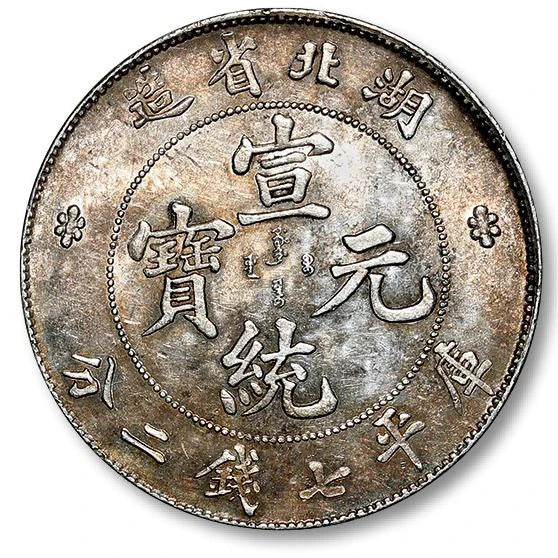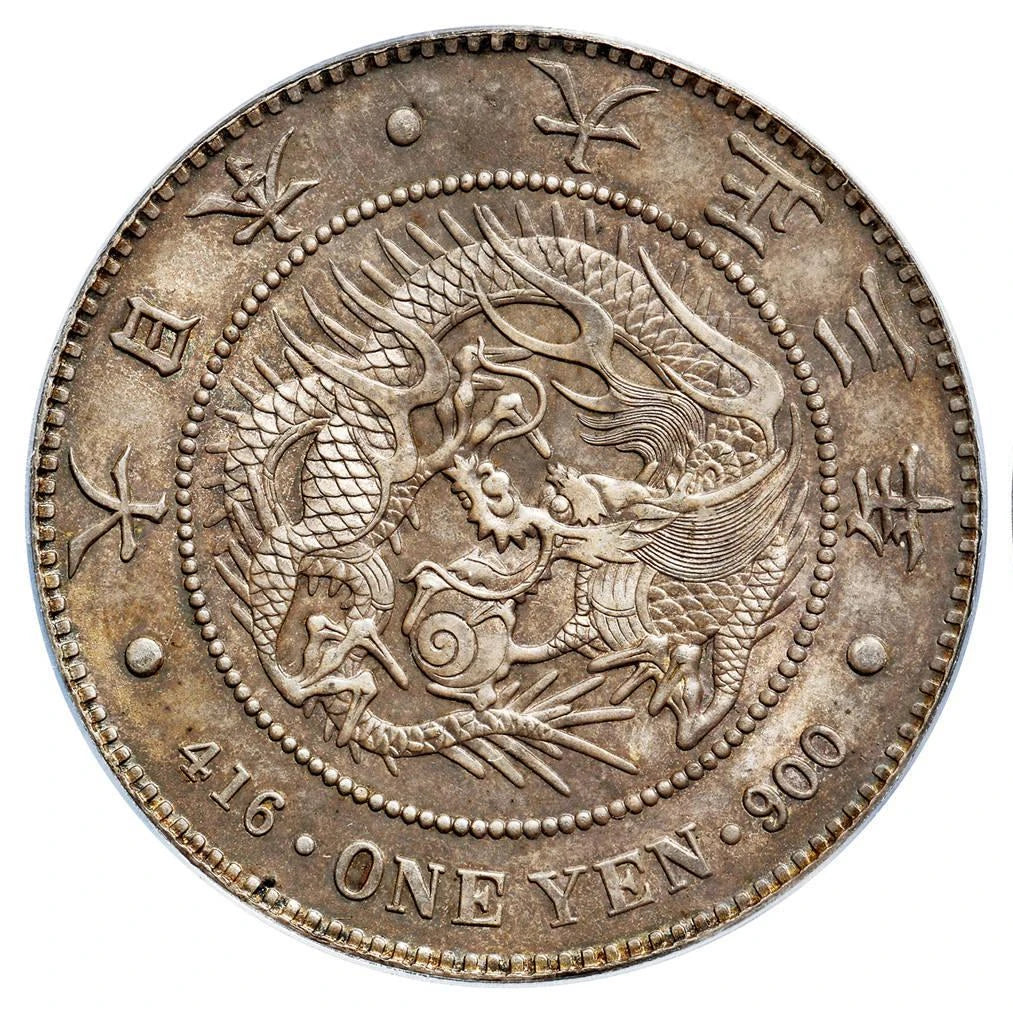
6-Step Guide to Authenticating Silver Dollars at Home: Preliminary Identification You Can Do (with | Gu Jin Jian Bao
When you come across an old silver coin, the first reaction is usually, "Is it real?" Before sending it for professional appraisal, you can actually do a few preliminary checks yourself – no special equipment needed, just a kitchen scale and a magnifying glass will suffice.
The following 6 steps can filter out most obvious fakes, but please note: high-quality counterfeit coins (especially real silver fakes) can already pass the first 4 steps. Steps 5-6 are the crucial dividing line.
Step 1: Visual Inspection
Genuine silver dollars have an overall feel of being "old" but "exquisite" – with powerful strokes in the text, smooth lines in the patterns, and neat edges. Common problems with fake coins: stiff or overly smooth text strokes, blurry pattern details, rough edges, or casting marks.
Key area to check: The fluidity of the dragon's whiskers/portrait's beard. Genuine whiskers are distinct and individual, while fakes are usually blurred or overly regular.
Step 2: Weighing
Use an electronic scale (0.01 gram precision) to weigh the coin. Standard weights for common silver dollars:
- "Yuan Datou" / "Sun Xiaotou": 26.86 grams (tolerance ±0.3 grams)
- Guangxu Yuanbao 7 Mace 2 Candareens: 26.86 grams
- British Trade Dollar (Standing Dollar): 26.96 grams
- Mexican Trade Dollar (Eagle Dollar): 27.07 grams
A deviation exceeding 0.5 grams raises significant suspicion. However, note: the weight of real silver fakes can be almost perfect.
Step 3: Sound Test
Hold the edge of the silver coin between your thumb and forefinger, and gently tap it with another similar silver coin. A genuine coin produces a clear"ding"sound, a crisp silver tone with a long decay (fading gradually over 3-5 seconds). Fakes usually have a duller sound, a short decay, or metallic Za Yin (metallic Za Yin).
Step 4: Measure Diameter
Use a caliper to measure. The standard diameter for a "Yuan Datou" is 39.0mm. A deviation exceeding 0.5mm should be noted. This step can identify some counterfeit coins made by shrinkage casting – as metal shrinks when cooling, the diameter of these molded fakes is typically 0.5-1mm smaller.
Step 5: Examine the Reeded Edge (Crucial)
Use a 10x magnifying glass to examine the reeded edge. Genuine reeds have consistent depth, even spacing, and smooth walls. The reeded edge is where high-quality fakes are most easily exposed:
- Sand-cast fakes: shallow reeds, sand holes
- Machine-struck fakes: overly regular reeds, lacking natural wear
- Real silver fakes: the number of reeds may be incorrect (a genuine Yuan Datou from the 3rd year of the Republic has 178-180 reeds)
Step 6: Patina Assessment (Most Difficult)
Natural patina is an oxidation layer formed on the surface of silver dollars over many years of exposure to air, presenting a gradient from gray to dark brown. Characteristics of artificially aged patina: overly uniform color, absence of patina in concave areas (which violates natural laws), and can be scraped off with a fingernail.
This step requires accumulated experience. For beginners, it's recommended to use the first 5 steps for initial screening. If all 5 steps are passed but you are still unsure, it's advisable to seek professional appraisal.
Want a professional appraisal of your silver dollar's authenticity? WhatsApp 98342057 to send photos. Gu Jin Jian Bao offers free preliminary appraisal opinions.