Qing Dynasty, Republic of China, People's Republic of China: A Collector's Guide to Chinese Silver Coins | Gu Jin Jian Bao
The history of Chinese silver coins spans over a century, from the birth of machine-struck coins in the late Qing Dynasty to the golden age of Republican-era silver dollars, and then to the modern collection market of commemorative silver coins from the People's Republic – each of these three periods possesses unique collecting logic and value systems. To clarify which collecting tier your silver coin belongs to, you must first understand the fundamentals of these three periods.
Qing Dynasty Silver Coins (1889-1911): The Beginning of the Dragon Dollar Era
Minting Background
Machine-struck silver coins of the Qing Dynasty marked the beginning of modern Chinese currency. In 1889, the Guangdong Mint first struck the Guangxu Yuanbao, and minting continued until the Xinhai Revolution in 1911, a period of 22 years. The motivation at the time was straightforward: foreign silver dollars (e.g., US Trade Dollars, Mexican pesos) were widely circulated in China, and the Qing government sought to produce its own silver dollars to compete with foreign currencies while also rectifying the chaotic currency system across various provinces.
Main Types and Market Prices
| Type | Issuance Period | Characteristics | 2026 Reference Price (VF condition) |
|---|---|---|---|
| Guangxu Yuanbao (Various Provinces) | 1889-1908 | Provincially minted, diverse dragon designs | HK$1,500-15,000 |
| Guangxu Yuanbao (Hubu/Beiyang) | 1902-1908 | Central government's attempt at unification | HK$3,000-25,000 |
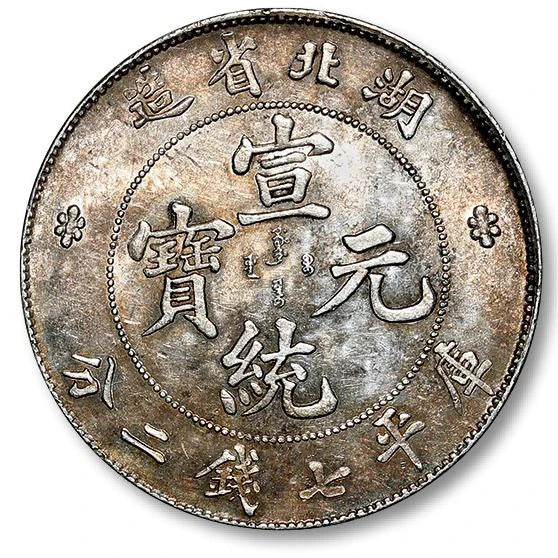
| Xuantong Yuanbao (Various Provinces) | 1909-1911 | Last provincial minting of late Qing | HK$2,000-20,000 |
| Daqing Silver Coin (Xuantong 3rd Year) | 1911 | First attempt at central unification, five-dragon design | HK$3,500-30,000 |
Collecting Angle
Collecting Qing Dynasty silver coins offers diverse approaches: collecting by province (Guangdong, Hubei, Jiangnan, Beiyang, Fengtian, and over a dozen other provincial mints), researching by variant (Hubei provincial variant, Guangdong reverse variant with hidden marks), or appreciating the artistry of the dragon designs (the evolution of dragon designs from Guangdong Guangxu to Xuantong Daqing silver coins is a micro-history of art itself). The ceiling for top-tier items is very high – most of the "Top Ten Rarest Silver Dollars" originate from the Qing Dynasty, and auction prices exceeding ten million are not uncommon.
Republic of China Silver Coins (1912-1935): Largest Circulation, Widest Collector Base
Minting Background
After the establishment of the Republic of China in 1912, the new government urgently needed a unified national currency to replace the chaotic situation of various provincially minted coins from the Qing Dynasty. In 1914, the Yuan Datou was officially issued, becoming the "hard currency" of the Republic, and continued to be minted until 1929; subsequently, the "junk dollar" took over in 1932, until the 1935 legal tender reform officially ended the silver standard.
Main Types and Market Prices
| Type | Issuance Period | Characteristics | 2026 Reference Price (VF condition) |
|---|---|---|---|
| Sun Xiaotou | 1912-1928 | Founding commemorative coin, hexagonal star variant most common | HK$1,800-8,000 |
| Yuan Datou | 1914-1929 | Minted over 150 million, main currency of the Republic | HK$2,500-18,000 |
| Junk Dollar (Double Sailboat) | 1932-1934 | Last silver standard currency of the Republic | HK$2,000-6,000 |
| Local Variants (Sichuan Military Government, etc.) | 1912-1920 | Transitional provincial silver coins | HK$1,500-12,000 |
Collecting Angle
The entry barrier for Republican-era silver coins is relatively low – a common 3rd Year Republic of China Yuan Datou can be acquired for around HK$3,000, yet its depth is equally astonishing. The Yuan Datou's year system (3rd, 8th, 9th, 10th years), variant variations (O-variant, signed variant, fine hair variant, Gansu added character), and even PCGS/NGC grading differences, each layer offers potential for deep exploration. The collector base for Republican-era silver coins is the largest among the three periods, offering the best liquidity and easiest realization of value.
People's Republic of China Silver Coins (1949-Present): Modern Commemorative Coin Market
Minting Background
After the founding of the People's Republic of China, silver standard currency ceased to be issued – the Renminbi is based on paper currency and alloy coins. However, since 1979, the People's Bank of China has successively issued various precious metal commemorative coins, with silver coins accounting for the largest proportion. These silver coins are not circulating currency but special products targeting the collection and investment market.
Main Types and Market Prices
| Type | Issuance Period | Characteristics | 2026 Reference Price |
|---|---|---|---|
| Panda Silver Coin | 1989-Present | Annually updated design, 1 ounce | HK$300-2,000 |
| Zodiac Silver Coin | 1992-Present | Issued annually | HK$500-3,000 |
| Major Event Commemorative Silver Coin | Multiple issuances | Olympics, national anniversaries, etc. | HK$800-15,000 |
| Rare Limited Edition | Irregularly | Special items with extremely low mintage | HK$5,000-50,000+ |
Collecting Angle
The collecting logic for People's Republic silver coins differs significantly from old silver dollars. Old silver dollars' prices are driven by historical scarcity and natural survival rates; modern commemorative silver coins' prices are determined by mintage control and thematic popularity. Panda silver coin sets (e.g., a complete 37-coin set from 1989-2026) have stable institutional demand; the premium potential for limited editions depends on mintage and market sentiment. Overall, the price fluctuations of People's Republic silver coins are greater than old silver dollars, with stronger investment attributes and a weaker sense of historical storytelling.
Comprehensive Comparison of the Three Dynasties
| Dimension | Qing Dynasty | Republic of China | People's Republic of China |
|---|---|---|---|
| Issuance Span | 22 years | 23 years | Ongoing |
| Collecting Threshold | Medium-High | Low | Lowest |
| Price Ceiling | Highest (tens of millions) | High (millions) | Medium (hundreds of thousands) |
| Liquidity | Medium | Best | Good |
| Counterfeit Risk | High | Highest | Low |
| Suitable for Collectors | Experienced collectors | All levels | Investment-oriented |
Which Dynasty to Start With?
There is no absolute answer, but there are several practical guiding principles. If you have a limited budget (below HK$5,000) and want to buy genuine items, a 3rd Year Republic of China Yuan Datou is the safest starting point; if you are interested in historical narratives, each Qing Dynasty dragon dollar tells multiple stories of province, era, and politics; and for collectors seeking standardization, liquidity, and annual updates, Panda silver coins and Zodiac silver coins are excellent choices.
The three dynasties are not mutually exclusive – many experienced collectors adopt a "Republican main + Qing Dynasty fine pieces + People's Republic commemoratives" three-tiered configuration.
Want to know which dynasty your silver coin belongs to and how much it's worth?
WhatsApp a photo, and we'll help you identify the type and estimate its value for each coin, with free appraisal and a response within 30 minutes.