The Political Economy Behind the"Yuan Datou"Dollar: A Complete Overview from Yuan Shikai's Imperial | Gu Jin Jian Bao
The Yuan Shikai dollaris not just a silver coin; its creation, circulation, and eventual discontinuation reflect the political struggles and economic reforms of the early Republic of China. From Yuan Shikai's use of currency unification to consolidate power, to the continued circulation of the silver dollar after his failed attempt to become emperor, and finally to the end of the silver standard with the 1935 legal tender reform—this historical background is something every collector of Yuan Shikai dollars should understand.
I. The Monetary Chaos of Late Qing and Early Republican China
During the late Qing Dynasty, China's monetary system was in extreme disarray. The following currencies circulated simultaneously:
- Silver taels– silver ingots valued by weight (with multiple standards such as Kuping tael, Caoping tael, Guangping tael, etc.)
- Cash coins– copper coins officially minted during the Qing Dynasty
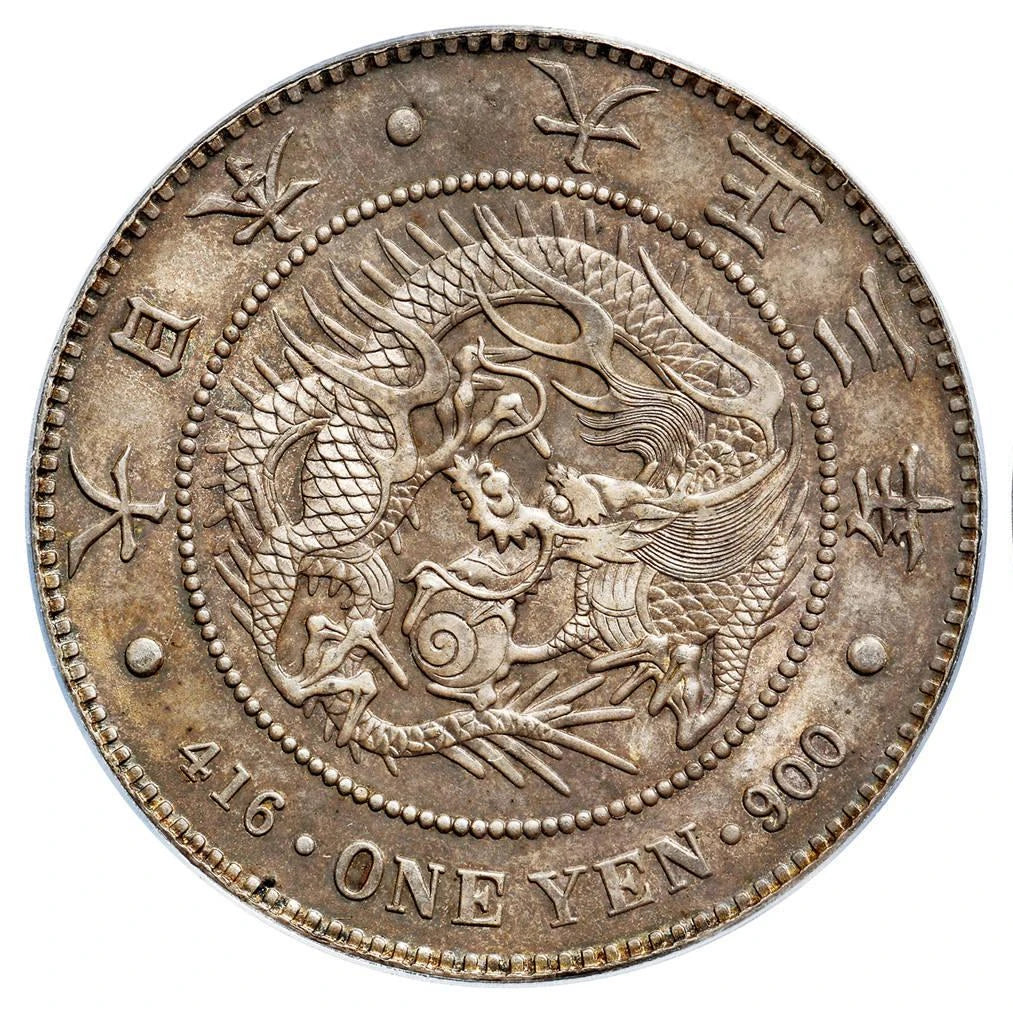
- Foreign silver dollars– a large circulation of Mexican pesos (Eagle dollars), Spanish dollars, British trade dollars, etc.
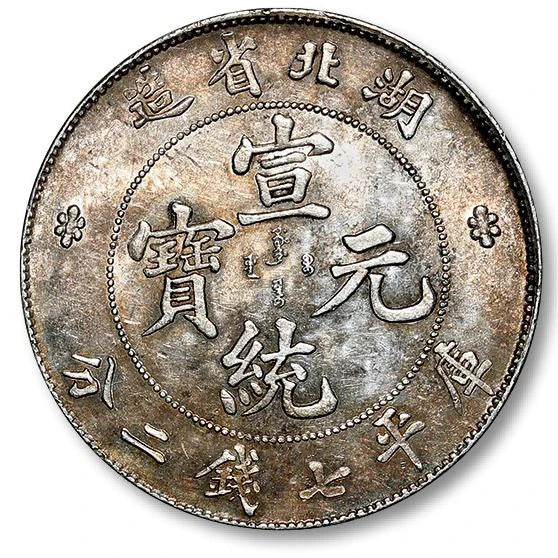
- Provincial silver dollars– silver coins minted by various provinces, such as theGuangxu YuanbaoandXuantong Yuanbao, with varying weights and silver content
- Foreign bank banknotes– silver dollar notes issued by HSBC, Standard Chartered, Chartered Bank of India, Australia and China, etc.
This chaos led to the need to calculate exchange rates for every transaction, resulting in low commercial efficiency, difficulties in tax collection, and disadvantages in international trade. After the Xinhai Revolution in 1911, one of the primary tasks for the newly established Republic of China government was to unify the currency.
II. The Political Decision to"Abolish Taels and Adopt Dollars"
On February 7, 1914, the Beiyang government promulgated the"National Currency Regulations,"which clearly stipulated:
- Establish a unified silver-standard monetary system, with"yuan"as the unit.
- One yuan silver coin to weigh 26.6971 grams and contain 89% silver.
- Silver coins to be uniformly minted by the Central Mint, abolishing provincial minting.
- Foreign silver dollars to be gradually withdrawn from circulation.
This was the famous"abolish taels and adopt dollars"reform. The Yuan Shikai dollar was the core product of this reform. In the same year, the Tianjin Mint began minting the first batch of silver coins bearing Yuan Shikai's likeness, officially replacing the provincial"dragon dollars"as the national standard currency.
III. Why was Yuan Shikai on the Obverse?
Traditionally, the obverse of Chinese silver coins featured imperial reign titles or dragon motifs. However, by 1914, Yuan Shikai was no longer merely the President—he was actively preparing to proclaim himself emperor (he officially ascended the throne as"Emperor of the Chinese Empire"in December 1915). Placing his own portrait on the national currency was a political move by Yuan Shikai to establish personal prestige and pave the way for his imperial ambitions.
Yet, history took a turn: in March 1916, Yuan Shikai was forced to abolish the monarchy, and he passed away in June. However, the minting of Yuan Shikai dollars continued because the new government found it difficult to overturn a currency that had already become standard. Thus, Yuan Shikai's portrait unexpectedly became an enduring symbol of the Republic of China's silver currency.
IV. The Role of Designer Luigi Giorgi
The engraving design of the Yuan Shikai dollar was completed by Italian numismatic engraver Luigi Giorgi. Giorgi, born in the 1860s, was a senior engraver at the Italian Royal Mint, having designed commemorative coins for various countries including the Vatican, San Marino, and Libya. In the 1910s, he was hired by the Beiyang government as a technical consultant to the Tianjin Mint.
Giorgi's design skill was world-class. The obverse portrait of Yuan Shikai on the Yuan Shikai dollar possesses the following artistic characteristics:
- Delicate layering of hair (the"fine hair"variant shows 4 layers)
- Natural and well-defined jawline
- Deeply recessed auricle (inner ear)
- Precise depiction of neck muscles
To test the dies, Giorgi inscribed his signature"L. GIORGI"on the first few dozen trial strikes—this is the origin of today's"signed version,"which can be worth millions of Hong Kong dollars.
V. Mint Distribution and Production Volume
The Yuan Shikai dollar was primarily minted by the following mints:
| Mint | Years of Minting | Estimated Mintage | Characteristics |
|---|---|---|---|
| Tianjin Mint | 1914-1929 | Approx. 150 million coins | Main mint, finest craftsmanship |
| Nanjing Branch Mint | 1914-1920 | Approx. 15 million coins | "Nan"(Nan) secret mark |
| Wuchang Branch Mint | 1914-1920 | Approx. 10 million coins | "E"(E) secret mark |
| Guangzhou Branch Mint | 1914-1929 | Approx. 15 million coins | "Yue"(Yue) secret mark |
| Shenyang Mint | 1920 | Approx. 3 million coins | Common for"Year 9"variety |
| Gansu Mint | 1928 | Approx. 500,000 coins | "Gansu Added Characters"variety |
The cumulative mintage was approximately 170-180 million coins, making it the most minted silver coin in Chinese history. This also explains why a large number still exist today.
VI. The Retirement of the Yuan Shikai Dollar
In March 1933, the Nationalist Government promulgated the"Regulations for the Minting of Silver Standard Currency,"announcing that the"Sun Yat-sen Junk Dollar"(Year 22 variety) would replace the Yuan Shikai dollar. However, the Yuan Shikai dollar continued to circulate until the legal tender reform of 1935. On November 4, 1935, the Nationalist Government abolished the silver standard and implemented the legal tender (paper money) system, officially withdrawing all silver coins (including Yuan Shikai dollars,Sun Yat-sen dollars, and dragon dollars) from circulation.
But the story of the Yuan Shikai dollar did not end there. After 1949, during the Chinese Civil War, the Yuan Shikai dollar once again became the most trusted hard currency among the populace—people lost confidence in paper money and hoarded silver dollars to preserve their value. It wasn't until 1955, with the issuance of the second series of Renminbi by the People's Republic of China, that the Yuan Shikai dollar officially ceased physical circulation and entered the realm of collecting.
VII. The Role of Yuan Shikai Dollars in Hong Kong
As a financial hub during the Republican era, Hong Kong saw extensive circulation of the Yuan Shikai dollar:
- From the 1920s to 1940s, Hong Kong's silver dealers (Nambelinhongs, gold shops) heavily stockpiled Yuan Shikai dollars as hard currency.
- During World War II, under Japanese occupation, black market transactions in Hong Kong were priced in Yuan Shikai dollars.
- After the war, from 1945 to 1955, Yuan Shikai dollars remained the primary settlement currency between Hong Kong and mainland China.
- In 1949, a large number of mainland collectors brought Yuan Shikai dollars to Hong Kong, laying the foundation for today's Hong Kong silver dollar collecting market.
Thus, even today, during demolition of old Hong Kong tenement buildings or house clearances, collectors still discover silver dealer stashes of dozens or even hundreds of Yuan Shikai dollars—these are financial legacies from nearly a century ago.
VIII. Insights from the Yuan Shikai Dollar for Modern Collecting
Understanding the historical context allows for a re-evaluation of the collectible value of the Yuan Shikai dollar:
- Irreplaceable historical status– It was China's first truly unified national currency, possessing unique historical significance.
- Stable artistic value– Luigi Giorgi's international-class design gives the Yuan Shikai dollar cross-cultural artistic appreciation value.
- Large collector base– The collective historical memory within Chinese communities ensures a stable demand base.
- Witness across eras– From the early Republic, warlord conflicts, the Sino-Japanese War, the Chinese Civil War, to reform and opening up, the Yuan Shikai dollar consistently existed as hard currency.
IX. A Yuan Shikai Dollar at Home Might Be a Fragment of a Hundred-Year Family History
In past cases handled by Gojin Appraisals, approximately 30% of the Yuan Shikai dollars came from family heirlooms—perhaps savings from grandparents'businesses during the Republican era, belongings brought to Hong Kong while fleeing wartime, or silver dealer relics found during the demolition of old tenement buildings. Behind every silver coin, there may be an untold family story.
If you plan to sell a family heirloom Yuan Shikai dollar, it's recommended to first record the coin's provenance story (whose it was, when it was collected, where it was found, etc.). These historical details add to the cultural value of the collection. WhatsApp 98342057 to schedule a free on-site appraisal + buyback service.
Conclusion
The Yuan Shikai dollar is a silver coin, but also a piece of history. Its creation reflects the political ambitions and monetary reform determination of early Republican China, its circulation witnessed China's most turbulent 40 years, and its collection continues into the 21st century. For collectors, understanding history is not just background knowledge—it's the foundation for building deeper appreciation and emotional connection.
Gojin Appraisals - Professional Yuan Shikai Dollar Buyback
Free appraisal ‧ Transparent pricing ‧ Instant cash ‧ On-site collection service across Hong Kong. If you have similar old items, don't rush to sell them cheaply. You can WhatsApp us for an estimate first to understand the true market value.