Why is the"Yuan Datou"considered the"King of Silver Dollars"? A three-dimensional analysis of its | Gu Jin Jian Bao
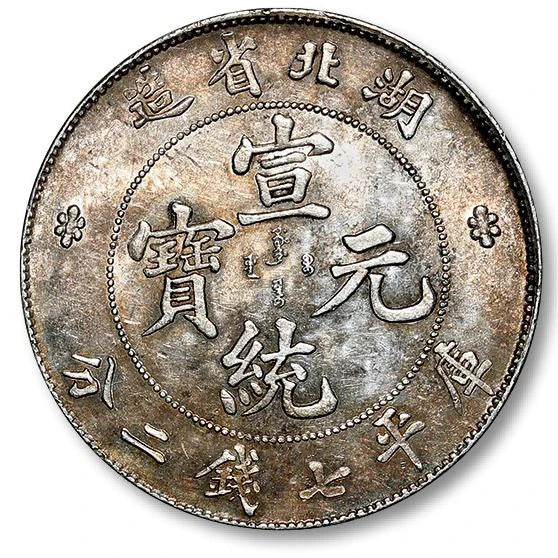
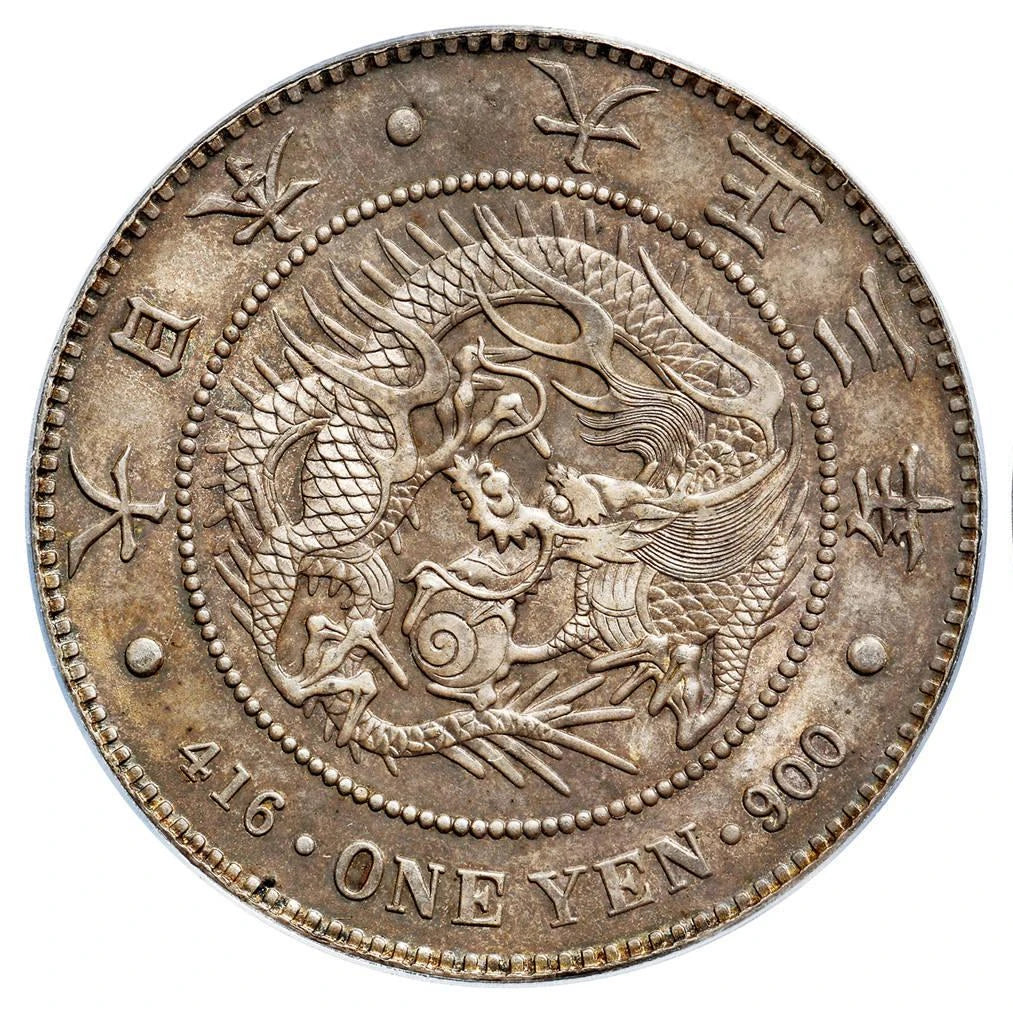
Yuan Datou is known as the "King of Silver Dollars," not because it is the most expensive – in terms of individual record high prices, trial mint proofs of Qing Dynasty silver coins far exceed Yuan Datou. Its "kingly" status comes from three dimensions: the largest mintage (over 150 million pieces), the widest circulation (covering all of China), and the largest collector base (low entry barrier). The superposition of these three dimensions makes it the absolute core variety in the Chinese silver dollar market.
Dimension 1: Mintage Scale - Historically Largest Silver Dollar
Cumulative Mintage
The cumulative mintage of Yuan Datou (15 years from 1914-1929) is approximately 170-180 million pieces, making it the largest minted silver coin in Chinese history. Compared to other silver dollars of the same period:
| Silver Dollar Type | Mintage Period | Cumulative Mintage |
|---|---|---|
| Yuan Datou | 1914-1929 (15 years) | Approx. 170-180 million pieces |
| Sun Xiaotou | 1912-1928 (16 years) | Approx. 80 million pieces |
| Boat Dollar (Sun Yat-sen double-sailboat) | 1932-1934 (3 years) | Approx. 80 million pieces |
| Qing Dynasty Silver Coin (Xuantong 3rd Year) | 1911 (1 year) | Approx. 15 million pieces |
| Guangxu Yuanbao (total for all provinces) | 1889-1908 (19 years) | Approx. 150 million pieces |
Mint Distribution
Yuan Datou was minted by multiple mints across the country:
- Tianjin General Mint (main mintage)
- Nanjing Branch Mint
- Wuchang Branch Mint
- Guangzhou Branch Mint
- Shenyang Mint
- Gansu Mint
Dimension 2: Circulation Scope - 40 Years of Hard Currency
1914-1935: Legal Tender
From its issuance in 1914 until the currency reform in 1935, Yuan Datou served as the legal tender of the Republic of China for 21 years. Circulation scope:
- All of China (except some border regions)
- Overseas Chinese communities in Southeast Asia (carried by Chinese merchants)
- Manchukuo (still circulated during the puppet regime from 1932-1945)
1935-1955: Hard Currency Reserve
After the currency reform in 1935, Yuan Datou officially ceased to be in circulation. However, it continued to be held as a hard currency reserve by the public:
- 1937-1945 During the Anti-Japanese War: The legal tender depreciated, and Yuan Datou became "real money."
- 1948-1949 During the Chinese Civil War: The Gold Yuan collapsed, and Yuan Datou once again became the mainstream hard currency.
- 1949-1955: The main settlement currency between Hong Kong/Macau and mainland China.
Hong Kong's Special Role
As a financial hub during the Republican era, Yuan Datou circulated extensively in Hong Kong:
- 1920s-1940s: Reserve for money changers
- Pricing in the black market during wartime
- Settlement currency between Hong Kong and mainland China after the war
Therefore, when old Tong Lau buildings in Hong Kong are demolished today, a large number of Yuan Datou reserves are still found – a tangible testament to its 40-year circulation history.
Dimension 3: Collector Status - Core of the Chinese Circle
Core Status Indicators
Yuan Datou's core status in the Chinese numismatic collecting circle is reflected in several indicators:
Indicator 1: Auction Frequency
Major auction houses like Spink Hong Kong, China Guardian Hong Kong, and Cheng Xuan feature dedicated Yuan Datou sessions in every auction:
- Annual auction sessions: 50+ sessions
- Average number of lots per session: 50-200 lots
- Total annual lots sold: 5,000-10,000 lots
- Compared to Sun Xiaotou: 2,000-4,000 lots sold annually
Indicator 2: Collector Population
Estimated Yuan Datou collectors in the global Chinese community:
- Mainland China: 3-5 million people
- Hong Kong, Macau, Taiwan: 500,000-800,000 people
- Overseas Chinese: 300,000-500,000 people
- International collectors: 50,000-100,000 people
Total approximately 4-6.5 million. This is the largest group in the silver dollar collecting circle.
Indicator 3: Price Stability
Market price fluctuations of Yuan Datou over the past 10 years (2016-2026):
- Common grade VF: Increased by 30-50%
- MS62 graded coins: Increased by 200-250%
- Rare varieties (O-version, Tri-circle): Increased by 250-350%
- Pattern coins (signed version): Increased by 300-500%
Almost no years of decline, making it the most stable asset class in silver dollar collecting.
Indicator 4: Variety Richness
The richness of Yuan Datou varieties is the highest among Chinese silver dollars:
- 4 years (Year 3, Year 8, Year 9, Year 10)
- Multiple varieties for each year (common, special, hidden mark)
- Pattern coins (L. Giorgi signed version, seven-face, etc.)
- Minor differences due to multiple provincial mints
Totaling over 50 distinguishable varieties, it is an ideal target for in-depth collection by experienced collectors.
Three-Dimensional Comparison: Yuan Datou vs. Other "King-level" Candidates
| Silver Dollar | Mintage Scale | Circulation Scope | Collector Status | Overall Score |
|---|---|---|---|---|
| Yuan Datou | ★★★★★ (170 million) | ★★★★★ (40 years) | ★★★★★ (Core) | 15/15 |
| Sun Xiaotou | ★★★ (80 million) | ★★★★ (30 years) | ★★★★ (Core) | 11/15 |
| Guangxu Yuanbao (Guangdong) | ★★★★ (150 million) | ★★★ (Late Qing) | ★★★★ (Widespread) | 11/15 |
| Qing Dynasty Silver Coin (Xuan 3) | ★★ (15 million) | ★★ (Short) | ★★★★★ (Top-tier) | 9/15 |
| Boat Dollar | ★★★ (80 million) | ★★★ (3 years) | ★★★ (Mainstream) | 9/15 |
With a three-dimensional comprehensive assessment, Yuan Datou's perfect score of 15/15 clearly leads all other silver dollar candidates. "King of Silver Dollars" is a well-deserved title.
Practical Handling of Yuan Datou at Home
- Inventory all Yuan Datou (note the year for each coin)
- Preliminary assessment of condition
- Verify variety features (O-version? Tri-circle? Signed version?)
- Absolutely do not clean
- WhatsApp 98342057 to arrange a free appraisal + valuation with Gujin Jianbao
Conclusion
Yuan Datou's status as the "King of Silver Dollars" is based on the comprehensive advantages of its mintage, circulation, and collector dimensions. Its superiority is not just prominent in one aspect, but balanced across all – large mintage ensures a circulation foundation, long circulation period establishes historical standing, and deep collector base maintains market stability. If you have Yuan Datou at home, it's not just a silver dollar, but a tangible ownership of the king of Chinese numismatic collecting.
Gujin Jianbao – Professional Yuan Datou Buyback
Free appraisal ‧ Transparent pricing ‧ Instant cash ‧ On-site purchase across Hong Kong. If you have similar old items, don't rush to sell them cheaply. You can WhatsApp us first for a valuation to understand the true market value.