Tell real from fake by sound! Three tips to identify family heirloom silver dollars and avoid old coin | Gu Jin Jian Bao
"Just a flick tells you if it's real or fake" – this saying has been circulating in numismatic circles for decades, but is there any truth to it? The answer is: yes, but it's only one of three tricks; relying solely on sound is not enough. The truly practical and traditional method for authenticating silver dollars is a three-pronged approach: "listening to the sound + observing the patina + feeling the reeding." Below, we'll break down each trick to help you make a preliminary judgment of authenticity without sending it for grading.
I. Three Core Tricks: Experts Teach You How to "Listen to the Sound, Examine the Edge, and Identify the Characters"
Without precise spectroscopic instruments, when faced with an unknown antique silver dollar, we first need to perform a basic physical and morphological inspection using our senses. These three tricks can help you filter out over 90% of low- and mid-tier counterfeit coins on the market.
Trick One: Listen to the Sound to Identify the Material — Let the Silver Dollar's Metal Resonance "Sing"
Listening to the sound is the most traditional and direct method of authentication. Standard machine-struck silver coins from the late Qing Dynasty to the Republic of China typically used a silver-copper alloy formula with 88% to 90.2% silver content. This specific metal density and crystal structure give genuine silver dollars a unique acoustic characteristic.
- Correct Testing Method: Gently hold the silver dollar at its center point with your thumb and forefinger, allowing it to hang freely, then lightly tap its edge with another coin or a soft metal rod.
- Sound of Genuine Silver: It will emit a deep, prolonged, and mellow "om..." sound. The sound is clear and has a long echo that reverberates in the air. Experts often describe this sensation, which starts soft and then becomes crisp, as "the singing of silver."
-
Flaws in the Sound of Counterfeit Coins:
- Lead, Tin Alloys: The material is extremely soft, and sound waves are absorbed internally, resulting in a dull, heavy "thud, thud" sound with no lingering echo.
- Steel Core, Silver Plated: Steel is extremely rigid, with a high resonance frequency, causing the sound to be sharp, harsh, and short, like a "clink, clink" sound, lacking any depth.
- Metal Powder/Cement Composite Blanks: Completely silent when tapped, commonly known as "mute foreign coins."

Trick Two: Examine the Edge to Determine Authenticity — The Reeding is a "Demon-Revealing Mirror" that Counterfeit Coins Cannot Cross
This step is the most crucial part of authentication. The vast majority of genuine Chinese silver dollars are machine-struck coins. The mints of that era used heavy-tonnage presses (usually over a thousand tons) to strike and roll the edges of silver blanks in a single operation. This extreme metal extrusion process is extremely difficult for modern small workshops or sand-casting molds to perfectly replicate.
- Reeding of Genuine Silver Dollars (Mechanical Pressure Reeding): The grooves are deep and flat at the bottom, with each tooth being very regular and uniform in depth and width. The reeding is clean and sharp, with absolutely no blurring, sticking, or excess metal protrusions (flashing).
- Reeding of Counterfeit Silver Dollars (Sand-Casting Reeding): The reeding is typically shallow and blurry, varying in size, and irregularly arranged. Small sand holes or air bubbles can often be seen within the grooves. Many inferior counterfeit coins are cast by joining two molds, leaving a subtle "seam line" on the side.
- Natural Wear and Artificial Polishing: Genuine coins, after a century of circulation, will develop natural rounded wear on their edges, which feels smooth to the touch; counterfeit coins, in order to remove casting burrs, are often artificially polished with files, leaving harsh slopes or parallel scratches at the joints, feeling rough and scraping to the touch.
Trick Three: Identify the Characters to Observe the Spirit — See the Steel Die's "Pressure" from the Pattern Details
Genuine coins are formed by precise steel dies under high-pressure impact, and their patterns and characters are full of "precision, vitality, and spirit."
- Details of Genuine Silver Dollars: Whether it's Chinese characters, Manchu script, or English, the lettering is very smooth and elegant. The grains of the Jiaohe (rice) pattern are plump, the scales of the dragon on dragon dollars are distinct and not interconnected, and the portraits (such as on Yuan Datou coins) have a clear three-dimensional quality and undulations, with strong and powerful lines.
- Details of Counterfeit Silver Dollars: Counterfeits, due to energy loss during the mold-making process, lack three-dimensionality in their patterns, with blurred details (such as dragon eyes, rice awns), and weak, soft lines, as if "melted." The facial expressions of figures are often dull, the overall pattern pressure is uneven, and the stroke thickness is inconsistent.

II. Advanced Authentication: Physical Specifications and the Scientific Code of Patina
After eliminating low-grade counterfeits, we need to use precise measurements and chemical characteristics to deal with higher-grade fakes.
1. Strict Physical Standard Measurements
The weight and dimensions of late Qing Dynasty dragon dollars and Republic of China main currency (one yuan) had extremely strict legal standards at the time.
- Standard Weight: The general legal weight was 7 mace 2 candareens Kuping tael (approximately 26.7 grams). Genuine silver dollars should weigh between 26.5 grams and 26.9 grams. If the measured weight is only 25 grams or less, even if the text and design are realistic, it is highly likely to be a lead-tin alloy or a modern high-quality counterfeit.
- Standard Diameter and Thickness: Genuine coins typically have a diameter between 39.0mm and 39.5mm, and a thickness of approximately 2.5mm. Counterfeit coins, in order to make up for weight, often widen the border or increase the thickness, leading to visual disproportion.
2. Patina: The "Second Life" of a Silver Dollar
Patina is the layer of oxidation (silver sulfide) that forms on the surface of silver coins over long periods through slow chemical reactions with sulfides in the air. This is not only a historical mark but also a core indicator for authenticating genuineness and determining market value.
| Feature Dimension | Genuine Natural Old Patina | Artificial Chemical Fake Patina |
|---|---|---|
| Color and Layers | Appears light black, gray, light orange, or rainbow-colored. The color transition is soft, with rich layers, blending seamlessly with the coin body. | Single, dull color, often appearing heavy black (like shoe polish). Lacks transition, giving a superficial appearance. |
| Physical Odor | No unusual odor, or only a faint, aged metallic scent. | Often has a pungent acidic, sulfuric, burnt, or shoe polish smell. |
| Adhesion | Extremely stable structure, adhering tightly to the metal surface, not easily removed even when boiled in alkaline water. | Poor adhesion, can be scraped off with a fingernail or wiped away with a damp cloth, revealing an unnatural base color. |
| Rust Appearance | Circulated coins have a thin rust layer; unearthed coins from raw pits have hard, deep-seated rust. When two genuine coins collide, bright "silver sheen" appears, which cannot be faked. | Fake rust is mostly light green, stands upright when poked with a needle, and dissipates in alkaline water within half an hour. |
III. Analysis of Three Major Traps in Old Coin Transactions and Prevention Guidelines
During the process of old coin Buyback and trading, many newcomers often suffer significant financial losses due to the following three traps:
Trap One: "Never Wash!" Cleaning Silver Dollars Destroys Value
This is the most common fatal mistake made by novices. Many people find their heirloom silver dollars to be dark and dirty, so they take it upon themselves to clean them using silver cleaner, toothpaste, or even brushes. In the professional buyback market, such actions cause dual physical and chemical damage to the silver coin. Cleaning not only removes the"old patina"which possesses high historical and aesthetic value, but also leaves countless fine"hairlines"on the coin's surface, destroying the original cartwheel luster.Market Consequences: A genuine coin, originally worth tens of thousands of Hong Kong dollars with natural rainbow patina, once cleaned, will only receive a grading of "UNC Details (Cleaned)" in international evaluations, and its resale value may plummet by over 70%.
Trap Two: "Genuine Silver High-Quality Counterfeits" — A Dimensionality Reduction Attack
In recent years, a large number of "genuine silver high-quality counterfeits" have appeared on the market. Counterfeiters use modern high-purity electrolytic silver as raw material, even melting down common old silver dollars and recasting them into rare varieties (such as Yuan Datou with signature). Since the material is identical to genuine coins, traditional "listening to the sound to identify the material" and "measuring weight" methods are almost ineffective. To combat these types of fakes, it is essential to observe non-natural dotted textures left by laser engraving under a high-power microscope, and to look for shared flaws inherited from "clone coins" due to identical mold casting.
Trap Three: Fake Grading Slabs
As internationally graded coins from PCGS, NGC, etc., become hard currency in the market, unscrupulous individuals have started counterfeiting grading encapsulation slabs. They print photos of genuine coins on fake slabs, and even fake QR codes that redirect to deceptive phishing websites when scanned. To prevent such traps, you must personally log into the official website of the grading agency, enter the serial number, and carefully compare the high-resolution archival photos on the official website with the physical item in hand, checking for consistency in patina distribution, subtle scratches, and edge reeding flaws.
 Guangxu Yuanbao Qi Qian Er Fen"style="float: none;">
IV. 2026 Hong Kong Old Silver Dollar Latest buyback market Guide
The value of antique silver dollars exhibits extreme divergence. Factors determining the price are not only the year and variety but also the condition (grade of preservation). Below, we have compiled the latest estimated Buyback reference prices for mainstream old silver dollars in the Hong Kong market for 2026 (calculated at the current exchange rate of approximately 1 RMB to 1.1 HKD):
| Silver Coin Type and Variety | Features and Rarity Description | 2026 Hong Kong Estimated buyback price (HKD) |
|---|---|---|
| Yuan Datou One Yuan (Common Type) | Common types from the third, ninth, and tenth years of the Republic of China, widely circulated. | Approx. $880 - $1,650 |
| Yuan Datou One Yuan (Signed Type) | With the English signature of engraver "L. Giorgi," extremely rare trial strike. | $880,000 - $1,650,000+ |
| Sun Xiaotou (Founding Commemorative Coin Common Type) | Common six-pointed star type, significant historical meaning, large circulation. | Approx. $770 - $1,430 |
| Sun Xiaotou (Upper Five-Star / Lower Five-Star) | Reverse features a five-pointed star. Lower five-star is first strike; upper five-star very few issued. | $165,000 - $330,000+ |
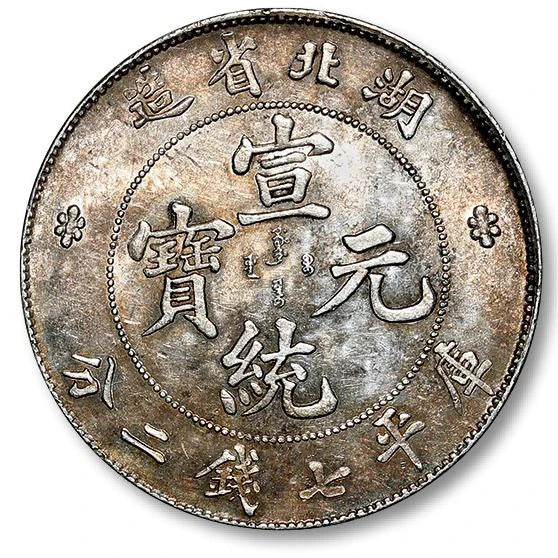
| Guangxu Yuanbao Seven Mace Two Candareens (Common Type) | Made in mainstream provinces like Guangdong, Hubei, etc., in fine to almost uncirculated (AU) condition. | $8,000 - $24,000+ |
| Xuantong Third Year Da Qing Silver Coin One Yuan | Famous curved mustache dragon type, requires original luster, un-repaired, excellent condition. | $48,000 - $160,000+ |
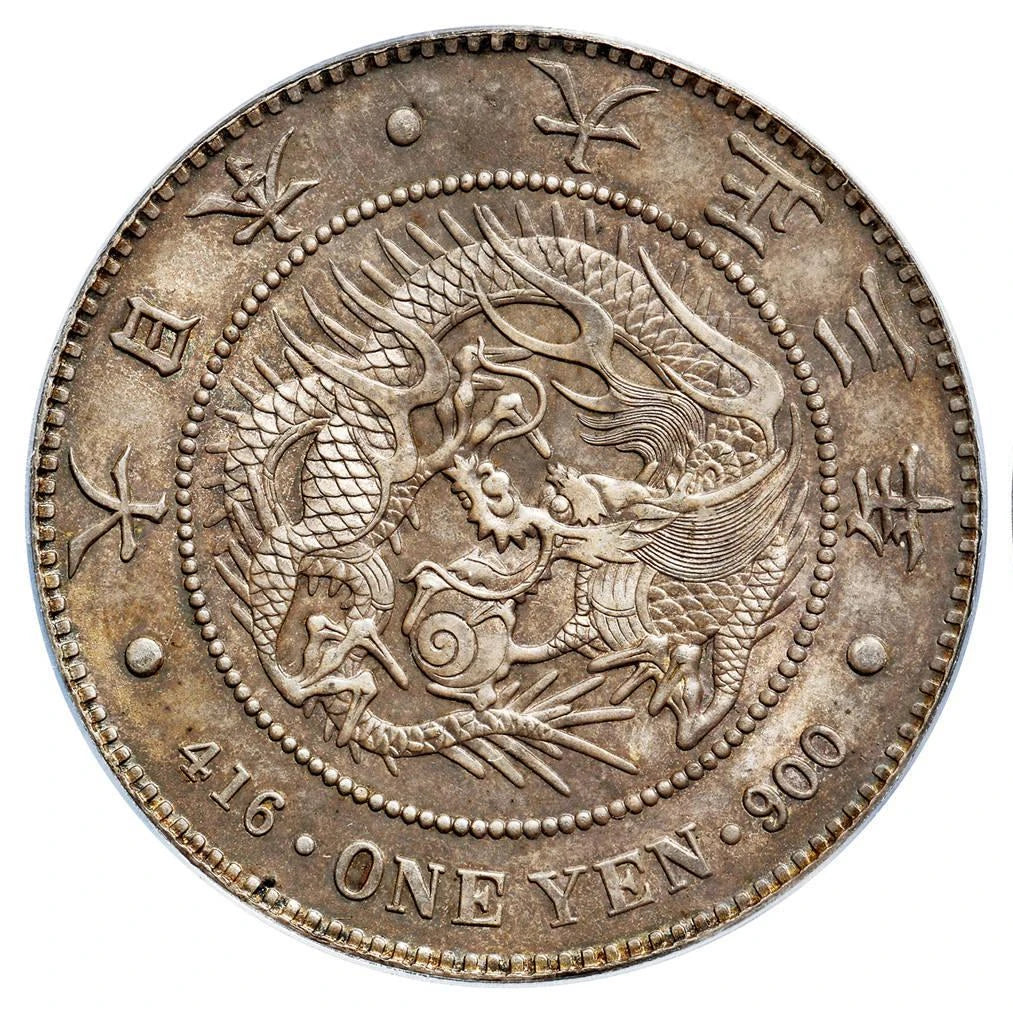
| Japanese One Yen Dragon Silver (Meiji Third Year) | Common round type, fine to extra fine condition, driven by the international silver market. | Approx. $3,000 - $8,000+ (depending on variety) |
(Note: The above prices are for reference only. The actual buyback price requires precise determination on-site by a professional appraiser based on the physical item's variety, patina, reeding condition, and grading score. The higher the condition, the rarer the error or special variety, the exponentially higher its premium.)
V. Conclusion: Professional Authentication, Safeguarding Your Treasure
Old silver dollars are not merely carriers of pure silver; they are epitomes of China's modern financial history. Whether it's the majestic dragon motif of the Guangxu Yuanbao or the historical imprint of Sun Xiaotou and Yuan Datou, every trace of patina and wear on their surfaces tells a story of a century of dramatic changes.

As a casual collector, mastering the three-dimensional authentication method of "listening to the sound, examining the edge, and identifying the characters" can help you avoid low-end scams; however, against modern high-tech counterfeiting, relying solely on eyesight and experience is no longer 100% safe. If you find old silver coins inherited from elders in your home, remember to keep them in their original state and never clean them.
Unsure about the value of your silver dollar? Worried about "on-the-spot price reduction" or counterfeit traps when trading independently?
Please leave this professional matter to us! Gujin Jianbao, with decades of industry experience, equipped with professional spectroscopic testing instruments and an authoritative appraisal team, is dedicated to breaking information asymmetry in the industry and providing the most transparent and fair coin buyback services to the public. We promise never to underprice and offer cash Buyback at the highest market rates.
📲 Contact us now for a free professional appraisal service! Shop Name: Gujin Jianbao Contact: WhatsApp: (852) 9834 2057 Send clear photos of the obverse, reverse, and edge, and our team of experts will provide you with an accurate appraisal and high-price acquisition plan instantly! Let your precious historical legacy be transformed into tangible wealth!
Found silver dollars while tidying up? Want to know their value?
No complicated procedures needed. Simply send a photo via WhatsApp to Gujin Jianbao. Our experienced appraisers will personally evaluate it. The entire process is transparent, with free appraisal and immediate cash payment. We have been operating with integrity for many years, and over 60% of our clients are referred by existing customers.