Complete Guide to Meiji Dragon Silver Coin Recycling: Besides the "One Yen" Silver Coin, What Other Japanese Old Banknotes Are Worth Collecting?
In the vast galaxy of East Asian coin collecting, the **Japanese Dragon Silver** undoubtedly shines brilliantly. For collectors in Hong Kong and Macau, Meiji-era Dragon Silver not only bears witness to the transformations of modern Asian finance but also serves as a tangible asset with extremely high hedging properties and appreciation potential.
As a professional recycler, **"Ancient Gold & Treasure Appraisal"** has discovered during daily appraisal work that many clients possess ancestral "Japanese One Yen" coins but are unaware of the value differences brought by their specific year and variation. Moreover, besides the well-known Dragon Silver, Japanese old banknotes from the Meiji, Taisho, and Showa periods also conceal an undeniable "gold mine." This article will provide an in-depth analysis of the recycling intricacies of Meiji Dragon Silver and introduce you to the charm of collecting old Japanese banknotes.
I. The Legend of Meiji Dragon Silver: Why is "Meiji 3rd Year" a Collector's Hotspot?
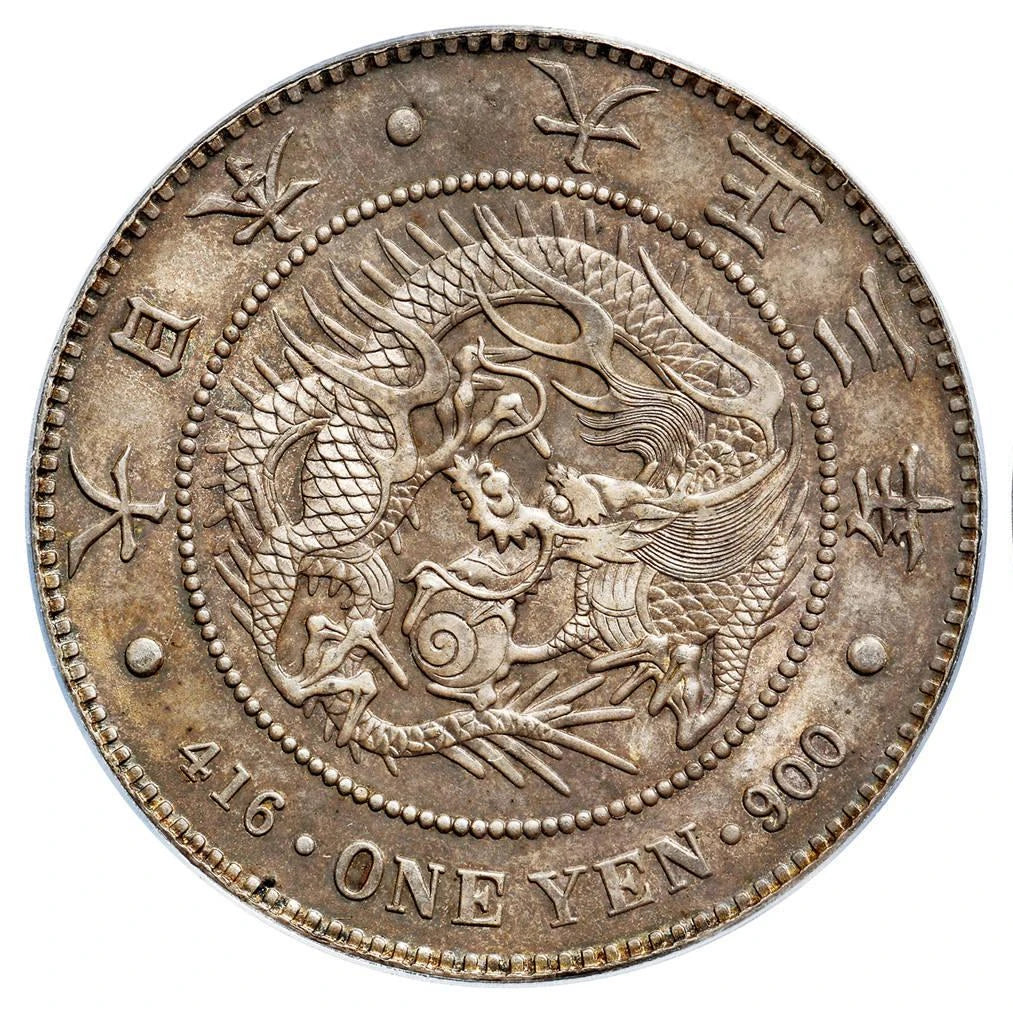
The minting of Japanese Dragon Silver began in Meiji 3 (1870), a symbolic product of Japan's currency reform after the Meiji Restoration. Its exquisite design features a vibrant flying dragon on the obverse, thus affectionately known as "Japanese Dragon Dollar" in the Chinese collecting world.
1. Meiji 3rd Year One Yen Silver Coin: An Early Artistic Pinnacle
The One Yen silver coin issued in **Meiji 3rd year** is considered a "foundational piece" by collectors. Its characteristics differ significantly from later versions: the obverse features a rising sun motif, and the reverse shows symmetrical double dragons. As this was the first silver dollar minted in Japan using advanced Western minting techniques, the craftsmanship is extremely meticulous, and there is currently huge market demand.

2. Trade Silver: A Legacy of Foreign Trade Finance
In addition to standard One Yen silver coins, Japan also issued **"Trade Silver"** specifically for international trade between Meiji 8 and 10 (1875-1877). These coins usually bear the inscription "TRADE DOLLAR," are slightly heavier than ordinary One Yen coins, and are rare, making them high-value items in the high-end recycling market.

II. Professional Authentication Techniques: How to Spot a Genuine Meiji Dragon Silver at a Glance?
As their collection value rises, the market has seen a proliferation of "genuine silver fake coins" or alloy imitations. Authenticating Dragon Silver requires a comprehensive defense built on four dimensions: material, sound, weight, and microscopic details.
1. Basic Physical Authentication
- Weight Standard: A genuine Meiji One Yen silver coin should weigh approximately 26.697 grams. During recycling appraisal, if the weight is less than 26.5 grams or more than 26.8 grams without obvious wear/adhering substances, one should be wary of its purity.
- Sound Test: Hold the center of the silver coin with your middle finger and lightly tap it with another silver coin. A genuine Dragon Silver should produce a **clear, soft, and prolonged ringing sound**. If the sound is high-pitched (steel core) or dull (copper-plated), it is likely a counterfeit.
2. Microscopic Craftsmanship Features
- Dragon Scale Details: The lines of a genuine Dragon Silver are smooth and exquisite, with naturally arranged dragon scales. Taking the Beiyang Dragon as an example, genuine dragon scales are typically distinct and not interconnected; while counterfeit dragon scales often appear blurry or form a connected mesh.
- Typography and Pressure: The Chinese characters and English "ONE YEN" on Meiji Dragon Silver coins are strong and powerful, with neat edges. Counterfeit typography often appears weak and uneven in thickness.
3. Patina: The Identity Card of Time (Do Not Clean!)
"Condition is life", and patina is the second life of Dragon Silver. The oxide layer (patina) formed on the surface of genuine pieces has a natural luster, often appearing light black, light gray, or with a faint iridescent sheen. **"Ancient Gold & Treasure Appraisal" specially reminds: Never casually wipe or bump silver coins.** Any improper chemical cleaning will degrade their condition, thereby significantly reducing their recycling value.

III. Meiji Dragon Silver Recycling Price and Variation Reference Table
To help collectors more accurately assess their assets, we have compiled the following table:
| Coin Name | Minting Year/Variation Reference | Key Authentication Points (Long-tail Keywords) | Market Reference Recycling Price (HKD)* |
|---|---|---|---|
| Meiji 3rd Year One Yen | Meiji 3 (1870) | Early Rising Sun double dragon motif, no "Yen" character stamp | HKD 8,800 - 25,000+ |
| Large Dragon Silver | Meiji 7 - Meiji 20 | Larger diameter, check if dragon eyes have "pinprick pupils" | HKD 2,500 - 15,000 |
| Trade Silver | Meiji 8 - Meiji 10 | Engraved with "TRADE DOLLAR" | HKD 18,000 - 65,000+ |
| Small Dragon Silver | Meiji 21 - Taisho 3 | Slightly smaller diameter, numerous variations | HKD 1,200 - 6,000 |
*Note: The above prices are for reference only. Actual recycling prices depend on PMG/PCGS grading scores and the physical patina condition.

IV. Deep Dive: Which Old Japanese Banknotes Have High Collection Value?
In addition to gold and silver coins, banknotes issued by Japan during the Meiji, Taisho, and Showa periods are also hot items in the recycling market.
1. Meiji Period: Reformed Banknotes and Exchange Notes
Early Meiji banknotes such as "Meiji Tsuho" or "reformed banknotes" with Western design styles, due to their short issuance period and extreme rarity, have become high-end collectibles in the numismatic world.
2. High-Value Old Japanese Banknote Authentication Indicators
Consistent with the "Four Golden Rules" of banknote recycling, the value of old Japanese banknotes depends on: **condition, serial number, rarity, and surviving quantity.**
- Condition: Banknotes graded 65 EPQ or higher by PMG command non-linear premiums. The EPQ designation indicates that the paper is in its original state, without cleaning or restoration.
- Fancy Serial Numbers: "Solid serial numbers" or "radar numbers" with identical ending digits (e.g., 888888) can double the recycling price.
-
Specimen Notes: Specimen notes marked with "見本" (sample), due to their non-circulating nature and extremely low print run, typically fetch several times the recycling price of ordinary circulating notes.

V. Collection and Preservation Secrets: Guarding Your Japanese Coin Assets
Both Japanese Dragon Silver and banknotes are fragile collectibles whose value can diminish with improper preservation.
- Temperature and Humidity Control: It is recommended to use an electronic dehumidifying cabinet to maintain relative humidity between 45% - 50%. Too high humidity can cause silver coins to rust or banknotes to mold, while too low can make paper brittle.
- Avoid Compression: Banknotes should be stored in high-quality acid-free currency sleeves, and albums/binders should be stored **vertically** to prevent long-term stacking and compression that can lead to sticking.
- Professional Tools: When handling collectibles, cotton gloves or round-tipped tweezers must be worn to prevent oils and salts from fingers from corroding metal surfaces or fostering mold growth.
VI. Why Choose "Ancient Gold & Treasure Appraisal" for Recycling Authentication?
In Hong Kong and Macau, "Ancient Gold & Treasure Appraisal" leverages years of professional authentication experience to provide a transparent and fair quotation environment for every collector.
- Professional Evaluation: We refer to the latest global auction transaction data (such as Zurich Asia, China Guardian) and real-time market trends to ensure competitive pricing.
- One-Stop Service: From online consultation and preliminary appraisal to arranging free on-site appraisal across Hong Kong and Macau, the process is simple and quick.
- Instant Settlement: After confirming the transaction, we offer various instant payment methods such as cash or Faster Payment System (FPS), ensuring security and confidentiality.
Three Steps to Recycling Appraisal:
- Photo Submission: Send clear front and back photos of your collectibles via WhatsApp.
- Online Estimate: Our experts will provide a preliminary quotation and professional analysis upon receiving the images.
- Appointment for Transaction: Once both parties agree on the quote, arrange for in-store or on-site verification to complete the transaction immediately.
Let every old coin shine with its rightful historical value, and let your cherished collections no longer gather dust!
Company Name: Ancient Gold & Treasure Appraisal Contact WhatsApp: (852) 98342057 Service Features: Free on-site service across Hong Kong and Macau, cash transactions, professional appraisal, honest purchasing
Click the link below to get a personalized quote for your collectibles now: 👉 WhatsApp 24-hour online consultation