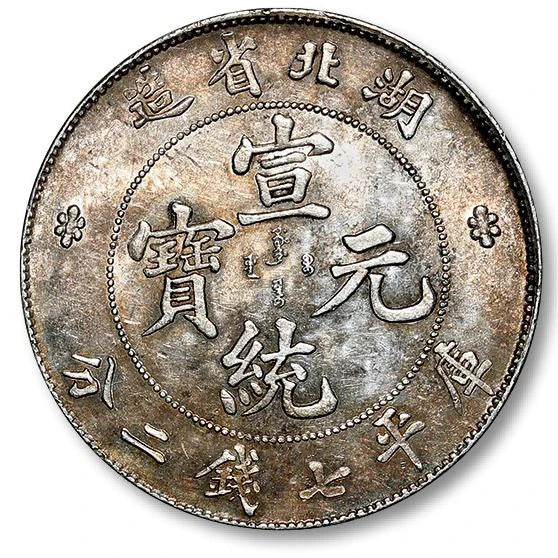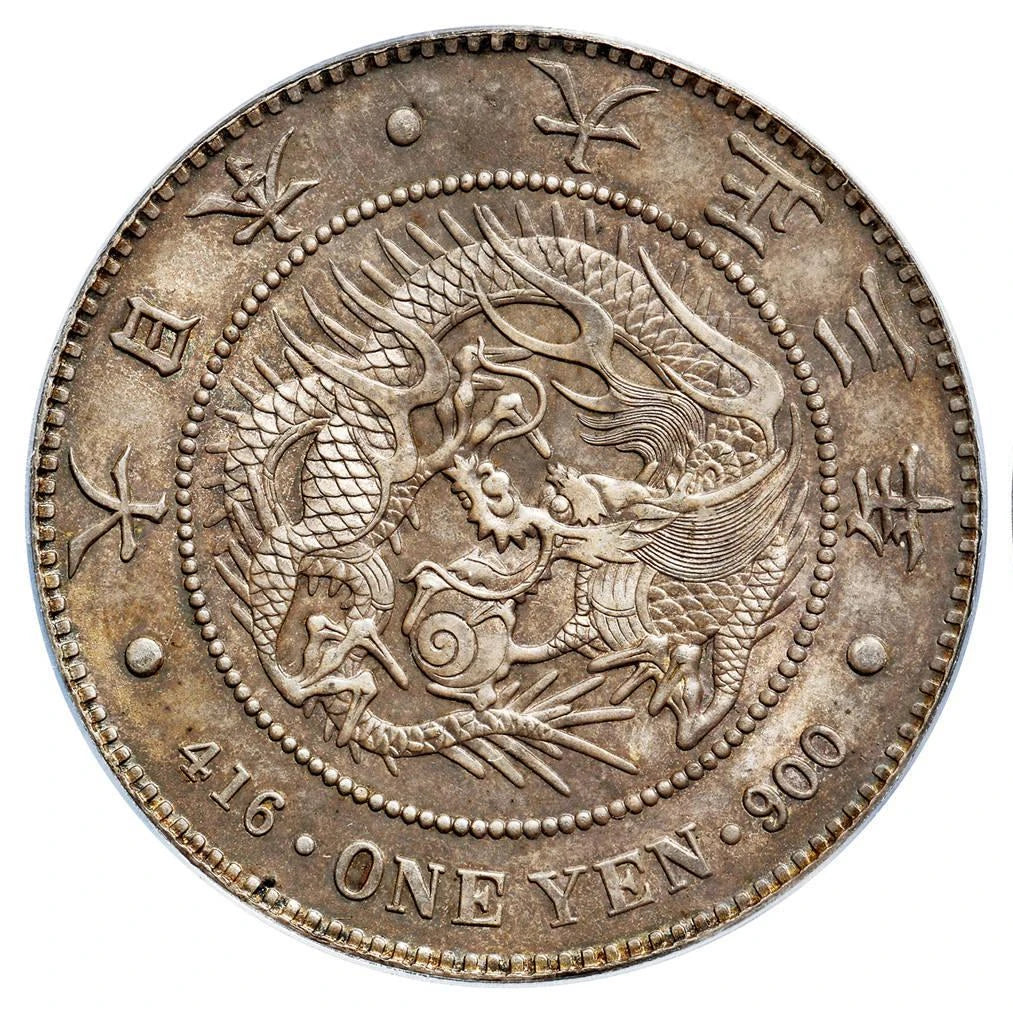
The First Sino-Japanese War behind Guangxu Yuanbao: A Historical Economic Perspective on the Issuance of | Gu Jin Jian Bao
Guangxu Yuanbao's large-scale mintage is directly related to the First Sino-Japanese War (1894-1895). The pressure of a 200 million tael silver indemnity for the defeat forced the Qing government to accelerate the establishment of mints in various provinces and expand the circulation of silver dollars to cope with the financial crisis. This historical background is a crucial clue to understanding the collection value of Guangxu Yuanbao.
I. The Background of the Late Qing Silver Crisis
In the late 19th century, the Qing government faced an unprecedented monetary crisis. At that time, China was on a "silver standard," and all large transactions were valued in silver. However, in the mid-to-late 19th century, international silver prices continued to fall:
- 1873 – Germany abandoned the silver standard for the gold standard, leading to an oversupply of international silver.
- 1879 – New silver mines discovered in the United States, causing silver prices to fall further.
- 1880-1894 – The exchange rate of silver to gold fell from 1:16 to 1:32 (meaning silver depreciated by 50%).
For the Qing government, which collected taxes and paid foreign debts in silver, this decline meant a financial disaster. At the same time, the forms of silver circulating in the market were chaotic – silver ingots, foreign silver dollars (Mexican dollars, Spanish dollars, trade dollars), and various silver notes coexisted, leading to extremely high transaction costs.
II. Guangdong Silver Mint: The First Provincial Attempt
In 1889 (the 15th year of Guangxu's reign), Zhang Zhidong, the Viceroy of Liangguang, established the Guangdong Silver Mint in Guangzhou, which was China's first formally operational provincial mint. The background and motivations were:
- Geographical location – Guangdong was the most active region for foreign trade and was most impacted by foreign silver dollars.
- Technology introduction – Machinery was imported from the Birmingham Mint in the UK, introducing Western coinage techniques.
- Political decision – Zhang Zhidong was an important official of the Self-Strengthening Movement in the late Qing, advocating learning Western technology to strengthen local finances.
The first batch of Guangdong Guangxu Yuanbao was issued in 1890, weighing 26.7g with 90% silver content, minted according to Western silver dollar standards. It was well-received in the market and quickly replaced some circulating foreign silver dollars.
III. The Impact of the First Sino-Japanese War (1894-1895)
The First Sino-Japanese War broke out in 1894, and in 1895, the Qing government was defeated and forced to sign the Treaty of Shimonoseki:
- Indemnity of 200 million taels of silver to Japan (approximately 3 years of the Qing government's total fiscal revenue).
- An additional 30 million taels for the "ransom of Liaodong."
- A large outflow of silver, further tightening domestic silver supply.
This astronomical indemnity dealt a devastating blow to the Qing government. The central government was unable to bear it, and various provinces had to find ways to generate revenue. The large-scale mintage of Guangxu Yuanbao began under this pressure.
IV. Provincial Mintage Boom from 1895-1900
Within five years after the defeat in the Sino-Japanese War in 1895, many provinces successively established silver mints:
| Province | Year Established | Main Motivation |
|---|---|---|
| Guangdong | 1889 | Foreign trade needs (established before the war) |
| Hubei | 1893 | Promoted by Zhang Zhidong of the Self-Strengthening Movement |
| Jiangnan (Nanjing) | 1896 | Post-war financial pressure |
| Beiyang (Tianjin) | 1896 | Demand in the metropolitan area |
| Fujian | 1896 | Southeast coastal trade |
| Fengtian | 1897 | Northeast border defense post-war needs |
| Jilin | 1898 | Northeast circulation needs |
| Sichuan | 1898 | Inland self-reliance |
| Yunnan | 1898 | Border trade |
| Xinjiang | 1900 | Border control |
This was the peak period of "provincial self-reliance." Each province hoped to generate local revenue by minting silver dollars – on the one hand, to reduce reliance on foreign silver dollars, and on the other hand, to share seigniorage profits (minting costs accounted for about 85% of the face value, allowing local governments to retain 15% of the mintage profit).
V. Why Do Guangxu Yuanbao from Different Provinces Vary So Much in Value?
The political stability, financial strength, and mintage scale of each province varied greatly, directly affecting the mintage and existing quantity of Guangxu Yuanbao:
Provinces with Large Mintage (10 million+)
- Guangdong (approx. 50 million), Hubei (approx. 30 million), Jiangnan (approx. 20 million), Beiyang (approx. 15 million)
- Commonly circulated items, 2026 Hong Kong buyback price approx. HK$1,500-5,000
Provinces with Medium Mintage (2-10 million)
- Sichuan, Fujian, Fengtian, Yunnan
- Significant rarity premium, 2026 Hong Kong buyback price approx. HK$5,000-30,000
Provinces with Small Mintage (under 2 million)
- Xinjiang, Jilin, Anhui, Hunan
- Extremely rare, 2026 Hong Kong buyback price approx. HK$30,000-500,000+
VI. The Birth of Special Varieties
Mintage processes and designs varied among provinces, leading to numerous variety changes:
- Guangdong "7-2" Reverse – The English "KWANG-TUNG" on the reverse is oriented upside down, extremely rare.
- Hubei "Bensheng" (Province) Variety – Early trial mint, with "Bensheng" characters on the obverse.
- Jiangnan "Gan Zhi Cyclic Year" Variety – The reverse has the Gan Zhi cyclic year markings such as Wuxu (1898), Jihai (1899), Xinchou (1901).
- Beiyang Year 34 Variety – The last version in the 34th year of Guangxu (1908), low mintage.
- Fengtian Gui Mao Variety – Trial strike in the Gui Mao year of Guangxu (1903), only a few exist.
These variety differences reflect not only minting technology but also the microcosm of local politics, tax policies, and commemorative events in each province. For example, the Jiangnan Gan Zhi cyclic year variety was a way for the Jiangnan Mint to record annual die changes, also reflecting the passage of time in the last 10 years of the late Qing dynasty.
VII. The End of Guangxu Yuanbao
In 1908 (the 34th year of Guangxu), Emperor Guangxu passed away, and Xuantong ascended the throne. In the same year, most provincial silver mints stopped minting Guangxu Yuanbao and began minting Xuantong Yuanbao. After the Xinhai Revolution in 1911, the Republican government began issuing unified national silver dollars (Yuan Datou), officially ending the provincial series. From the first mintage in Guangdong in 1889 to the fall of the Qing dynasty in 1911, the history of Guangxu Yuanbao mintage spanned 22 years, marking the beginning of China's modernization of silver coinage.
VIII. Implications for Collectors
Understanding this history allows for a re-examination of the collection logic for Guangxu Yuanbao:
Implication 1: Rarity is related to provincial history
Guangxu Yuanbao from provinces with large mintages (Guangdong, Hubei) have limited appreciation potential because too many exist. However, even common items from provinces with small mintages (Xinjiang, Jilin, Fengtian) possess a clear rarity premium.
Implication 2: Variety differences reflect historical details
Special varieties such as Jiangnan Gan Zhi cyclic year, Guangdong reverse, and Hubei Bensheng are not just collectibles but also physical evidence for historical research. Investing in these varieties means possessing both collection value and cultural value.
Implication 3: 1895-1908 was a golden 13 years
Guangxu Yuanbao minted during this period have stable craftsmanship, rich varieties, and high artistic value. Collecting a complete set of Guangxu Yuanbao from the main provinces during this period is a comprehensive goal for silver dollar collectors.
IX. How to Handle Guangxu Yuanbao at Home?
- Observe the obverse text to confirm the province ("X Province Minted Guangxu Yuanbao").
- Refer to the mintage data for each province in this article to make a preliminary judgment on rarity.
- Check for special variety features (Bensheng, reverse, Gan Zhi cyclic year, etc.).
- WhatsApp 98342057 to send pictures; Gujin Jianbao offers free appraisal + valuation.
- If it is a rare province or special variety, assistance will be provided for PCGS / NGC grading.
Conclusion
Every Guangxu Yuanbao is a witness to China's monetary modernization in the late 19th century. Its birth was not accidental but rather the convergence of three historical threads: the First Sino-Japanese War, the silver crisis, and provincial self-reliance. Understanding this historical economic background is essential to truly comprehend the silver dollar in hand – it is not just an antique but an untold piece of history.
Want to know the value of your Guangxu Yuanbao?
Gujin Jianbao provides free appraisals, valuation replies within 30 minutes, same-day doorstep collection, and instant cash payment. WhatsApp us a photo for an immediate valuation, no need to visit our store.