From Guangxu Yuanbao to Silver Dollars of the Great Qing: Dragon Silver Dollar Authentication for Novice | Gu Jin Jian Bao
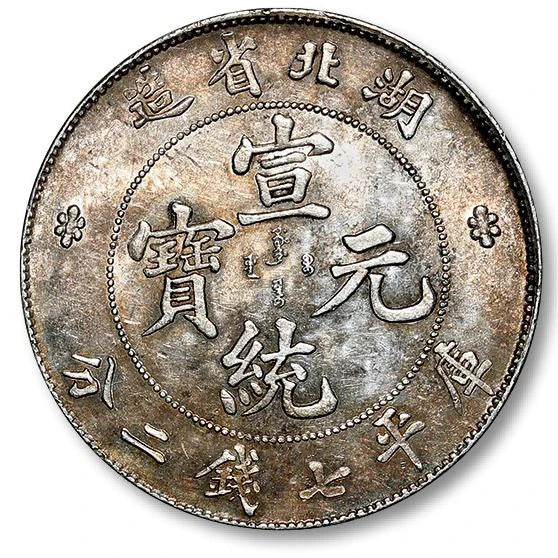
For the past two to three years, the popularity of silver dollars has not waned in Hong Kong and among Chinese communities worldwide. The story of unexpectedly finding several dark, toothed old silver coins while sorting through ancestral heirlooms is heard almost every month—"Guangxu Yuanbao" from the late Qing Dynasty, "Da Qing Silver Coin" from the Xuantong period, and the "Yuan Datou" and "Sun Xiaotou" from the Republic of China era. This batch of machine-struck coins, collectively known as "Dragon Dollars," represents a microcosm of China's modern finance and is also the segment with the most counterfeit coins on the market.
For the same variety, a one-grade difference in condition can lead to several times the price difference; a single character difference (e.g.,"Curved Whisker Dragon"changing to"Long Whisker Dragon") can skyrocket the price from tens of thousands to millions. This article will be divided into five parts: the historical background of Dragon Dollars, core physical authentication techniques, the auction legend of the Xuantong Three-Year Long Whisker Dragon, the latest silver dollar buyback market in Hong Kong for 2026, and common pitfalls for novice collectors.

I. Late Qing Currency Reform and the Birth of Dragon Dollars
The emergence of modern Chinese machine-struck silver coins occurred against the backdrop of the Qing government's desire to reclaim currency sovereignty. Starting in the 16th century, foreign trade silver dollars such as Spanish silver dollars and Mexican "Eagle Dollars" flooded into China, gradually replacing the traditional silver ingot system (measured in "taels," requiring cutting and weighing).
In the 15th year of Guangxu (1889), Zhang Zhidong, the Governor-General of Guangdong and Guangxi, pioneered machine-struck silver coinage in Guangdong, ushering in the two-decade era of "Dragon Dollars." Early machine-struck coins minted by various provinces were collectively called "Guangxu Yuanbao," but due to a lack of unified standards, their weight and fineness varied. It was not until the 31st year of Guangxu (1905) that the Qing government promulgated the "Regulations for Rectifying Currency System," stipulating the unified name "Da Qing Silver Coin" to centralize monetary authority. In the second year of Xuantong (1910), the Qing government formally established the silver standard, with the central government setting the standard weight and fineness for national currency, a crucial cornerstone of China's monetary modernization.
For details on the production and characteristic differences of Guangxu Yuanbao coins from various provinces, refer to the article Comparison of Hubei, Guangdong, and Jiangnan Dragon Dollars, which provides market price comparisons for each province.
II. Core Techniques for Physical Authentication of Dragon Dollars
For novice collectors, understanding the physical standards of silver dollars is the first line of defense against counterfeits. Even highly replicated fakes find it difficult to pass all tests for weight, dimensions, and edge reeding.

1. Physical Specification Reference Table
The table below summarizes the standard data for major machine-struck silver coins from the late Qing Dynasty and surrounding countries' Dragon Dollars for your reference:
| Coin Name | Minting Year | Denomination/Weight | Measured Diameter (mm) | Measured Thickness (mm) | Standard Weight (g) |
|---|---|---|---|---|---|
| Guangdong-minted Guangxu Yuanbao | 1889 | Kuping Seven Mace Two Candareens | 39.0 - 39.5 | 2.5 | 26.70 |
| Tianjin-minted Da Qing Silver Coin | 1907 | Kuping One Tael | 43.4 | 3.1 | 37.30 |
| Xuantong Three-Year Da Qing Silver Coin | 1911 | Kuping Seven Mace Two Candareens (One Yuan) | 39.0 | 2.5 | 26.80 |
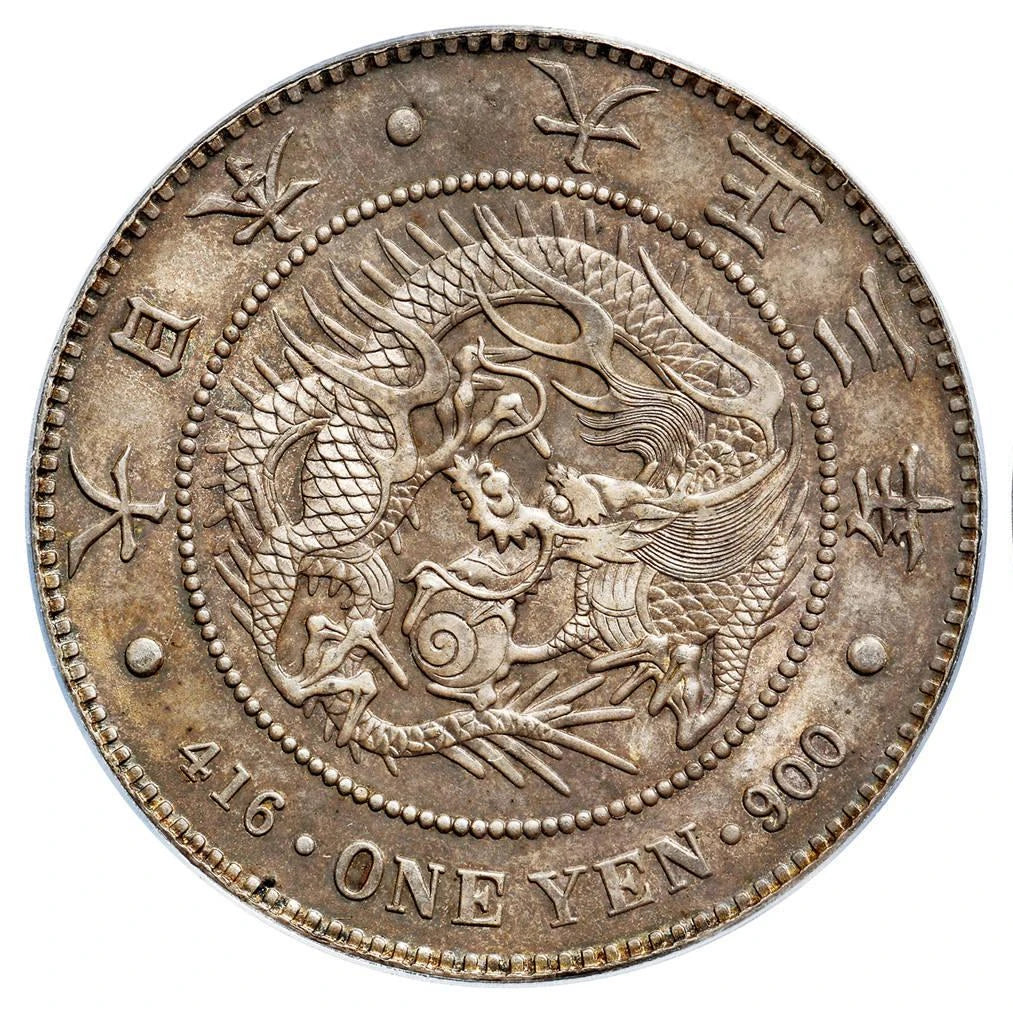
| Japanese One Yen Dragon Dollar | After Meiji 20th Year | One Yen | 38.1 | 2.6 - 2.8 | 26.69 |
Note: The weight error of genuine silver coins usually does not exceed 2%. If a silver coin nominally weighing seven mace two candareens is lighter than 25.5g, or its thickness exceeds 3.05mm, the metal composition is highly likely to be incorrect, indicating a high probability of it being counterfeit. For details on varieties and buyback prices of Japanese Dragon Silver, refer toJapanese Dragon Silver Buyback Practices.

2. Four Authentication Dimensions
In addition to measuring weight and dimensions, the following four dimensions can help you further rule out counterfeit coins:
- Sound identification: Gently tap the edge with your fingernail holding the center; a genuine silver dollar will emit a deep, mellow, and lingering "ommm" sound. Fake coins with a steel core plated with silver will have a sharp, short sound; fake coins made of lead-tin alloy will have a dull sound without an echo.
- Patina and metallurgical features: The "blackening" or multicolored appearance on the surface of circulated silver dollars is a silver sulfide film formed by the long-term reaction of silver with sulfur in the air (thin-film interference phenomenon), which forms naturally and has varying levels of texture. Fake patinas (shoe polish, scorching, chemical agents) are uniform in color, superficial, and often have a pungent smell. For detailed principles, see Patina and Key to Value Retention.
- Edge reeding craftsmanship: Edge reeding is known as the "fingerprint" of machine-struck coins. Genuine coins are pressed by heavy machinery, resulting in deep, regular reeding grooves. Counterfeit coins made by sand casting or manually retooled reeding will have grooves of inconsistent depth, size, or "disordered reeding."
- Pattern and spirit: Genuine coins are struck with tons of pressure, causing dragon scales to be distinct and not interconnected, and human figures to have a strong three-dimensional effect. Counterfeit coins have insufficient pressure, resulting in blurry details and weak lines.
For a more systematic method of sound identification, refer to the article Sound Identification: Three Tips to Authenticate Your Family's Silver Dollars for a more in-depth analysis.
Warning: Never clean the coin. Many novices believe that cleaning silver dollars until they are "snowy white and shiny" will increase their value, but the opposite is true. Acid washing or rubbing can create microscopic hairline scratches on the coin's surface, destroying the original cartwheel luster. PCGS and NGC grading will label them "Details (cleaned coin)," immediately dropping their market value by 50%–70%.
📷 Have one or two Dragon Dollars and unsure of their variety?
Send clear photos of the front, back, and edge reeding to us via WhatsApp 98342057. We will respond within half an hour with variety assessment, estimated range, and suggested handling approach, free of charge.
III. The Auction Legend of the Xuantong Three-Year "Long Whisker Dragon"
When discussing Dragon Dollars, the "Long Whisker Dragon" variety cannot be overlooked. The trial patterns for the Xuantong Three-Year Da Qing Silver Coin were designed by Italian engraver Luigi Giorgi, including varieties such as the Long Whisker Dragon, Short Whisker Dragon, Reverse Dragon, and Big-Tailed Dragon. Ultimately, the Qing government selected the "Curved Whisker Dragon" for circulation. The unissued Long Whisker Dragon, with its dragon whiskers extending to the coin's edge and majestic presence, combined with only approximately 30 graded by PCGS, became a legendary sky-high price at auctions.

Recent Auction Records for Long Whisker Dragon
| Auction House and Date | Variety Characteristics | Grading Score | Original Hammer Price | Equivalent HKD Value (approx.) |
|---|---|---|---|---|
| SBP Hong Kong (2022-05) | Long Whisker Dragon, Pointed Petal Variety | PCGS SP 63+ | USD 3,000,000 | $23,400,000 |
| Shanghai Hossen (2022-08) | Long Whisker Dragon, Pointed Petal Variety | PCGS SP 62+ | RMB 11,500,000 | $12,650,000 |
| Nanjing San Sheng (2022-05) | Long Whisker Dragon, Pattern Coin | NGC SP 64 | RMB 11,500,000 | $12,650,000 |
| Beijing Poly (2023-12) | Long Whisker Dragon, Yang Leaf Variety | PCGS SP 61 | RMB 4,945,000 | $5,439,500 |
Note: Exchange rates referenced: 1 USD ≈ 7.8 HKD, 1 RMB ≈ 1.1 HKD.
IV. 2026 Latest Silver Dollar buyback market in Hong Kong
As an important hub for antique Chinese coin transactions, Hong Kong has a relatively complete numismatic ecosystem. The area around Hollywood Commercial Centre in Mong Kok concentrates second-hand coin Buyback and instant quotation dealers; Sheung Wan's Shun Tak Centre and Hollywood Road area are home to international auction houses and established appraisal centers, suitable for handling millions of dollars worth of rare coins.

Below are the reference Buyback ranges for mainstream Dragon Dollars in 2026. The actual quotation for a physical coin still depends on its condition (presence of chops, cleaning, or repair), grading score, and the silver price on the day. The prices in the table are based on transaction records of coins with original, untouched patina:
| Coin Name | Common (G-VG) | Fine (VF) | Extremely Fine (XF) | About Uncirculated/Uncirculated (AU-MS) |
|---|---|---|---|---|
| Guangxu Yuanbao (Guangdong/Hubei minted Seven Mace Two Candareens) | $6,000 | $8,000 | $12,000 | $24,000 - $56,000 |
| Da Qing Silver Coin (Xuantong Three-Year One Yuan Curved Whisker Dragon) | $9,000 | $12,000 - $48,000 | $15,000 - $90,000 | $30,000 - $160,000 |
| Yuan Shikai Dollar (Yuan Datou Three-Year Circulation Version) | Approx. $1,100 onwards | Depends on wear and patina | Depends on luster | Up to tens of thousands (Triangle Yuan version can reach HK$100,000+) |
| Da Qing Gold Coin (Guangxu Bingwu One Tael Pattern) | Extremely Rare | -- | -- | Over $2,299,000 |
Note: If you encounter "Coin Dragon" automatic coin machines on the street, absolutely do not deposit antique silver dollars into them. These machines only process modern circulating currency; rare old silver coins must be professionally authenticated by hand. The price difference between Yuan Datou varieties is significant; the article Practical Authentication of Yuan Datou O-version and Triangle Yuan provides a comparison of features for each version.
V. Novice Avoidance Guide
When first getting into Dragon Dollars, it's easy to fall into these three traps:
- Street vendor fakes and "high-quality silver fakes": Counterfeiting technology has advanced in recent years, now capable of recasting with equal amounts of pure silver. These "high-quality silver fakes" have virtually no difference from genuine coins in weight, sound, and specific gravity. Identification can only be done by examining the pattern's spirit and the polishing marks on the edge reeding. A 10x magnifying glass to examine blade marks on the coin's edge is the most cost-effective authentication tool.
- Fake grading slabs: Unscrupulous individuals use fake PCGS/NGC slabs to house high-quality silver fakes. Collectors can check the barcode on the PCGS or NGC official website and meticulously compare the scratches and patina characteristics of the coin inside the slab with the official website photos. Any slightest discrepancy between the physical coin and the online photos indicates a fake. Even rarer versions like Guangxu Yuanbao from provinces with million-dollar potential require even greater caution.
- Improper storage: Absolutely do not store silver coins in poor-quality plastic bags containing polyvinyl chloride (PVC), as acidic substances released by PVC can cause green corrosion. It is recommended to use acid-free paper holders or acrylic grading slabs, then place them in a dehumidifying cabinet with a relative humidity of 35%–55%.
Regarding how to choose a recycler in Hong Kong, you can compare the centralized appraisal logic for old silver dollars across different channels.
VI. Contact Information
From Guangxu Yuanbao to Da Qing Silver Coin, each Dragon Dollar represents a slice of China's monetary modernization from a century ago. To ensure they receive a fair market valuation, choosing a recycler with experience in varieties is crucial. Gu Jin Jian Baohas been in the business of Buyback silver dollars, old banknotes, and old gold in Hong Kong for years, offering free on-site appraisal, immediate cash payment, and complete transparency.
👉 Do you have old silver dollars whose authenticity or value you're unsure of? Don't let them languish in a drawer. 📲 Contact us immediately:
- WhatsApp Hotline: (852) 98342057
- Friendly Reminder: Keep the coin in its original state before taking photos. Do not attempt to clean or polish it yourself, as this may damage the patina and affect its value.
Want to know the value of your Guangxu Yuanbao?
Free appraisal, valuation within 30 minutes, same-day on-site collection, instant cash payment. WhatsApp us a photo for an immediate estimate, no need to visit our store in person.