From Guangdong Longyang to Yuan Datou: The Forty-Year Process of"Abolishing Taels and Adopting Dollars"in | Gu Jin Jian Bao
China's transition from"weighing and pricing silver by taels"to"pricing silver dollars by piece"took a full forty years (1889-1935). This history of"abolishing the tael and adopting the yuan"involved the pulling and pushing of three forces: foreign invasion, inter-provincial struggles for power, and regime change. Every silver dollar from the late Qing Dynasty and early Republican era is a physical testament to this journey of monetary unification.
I. Western Influence Spreads East: The Birth of Dragon Dollars and Provincial Chaos (Late Qing Dynasty)
Silver dollars were not originally minted in China. In the mid-to-late Ming Dynasty, Portuguese and Spanish merchants brought Spanish"Carolus dollars"to the southeastern coast of China through maritime trade. Chinese merchants found these silver dollars exquisitely made, uniformly standardized, and much easier to use than local silver ingots, so they gradually became accustomed to using them by counting individual pieces.

During the Qing Dynasty, attempts by the private sector to mint silver dollars never ceased. During the Daoguang reign, there were"Shouxing Silver Cakes"and"Zhangzhou Military Pay"; during the Xianfeng reign, there were Shanghai silver cakes. All were bottom-up explorations by the private sector. It wasn't until the 16th year of Guangxu (1890) that the Qing government officially opened a mint in Guangdong to cast the first machine-made silver dollars – the"Guangxu Yuanbao,"with a coiled dragon design on the reverse, known in the trade as"Guangdong Dragon Dollars."
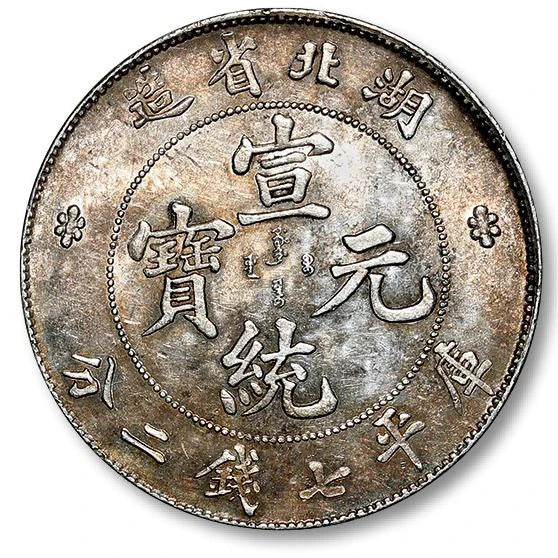
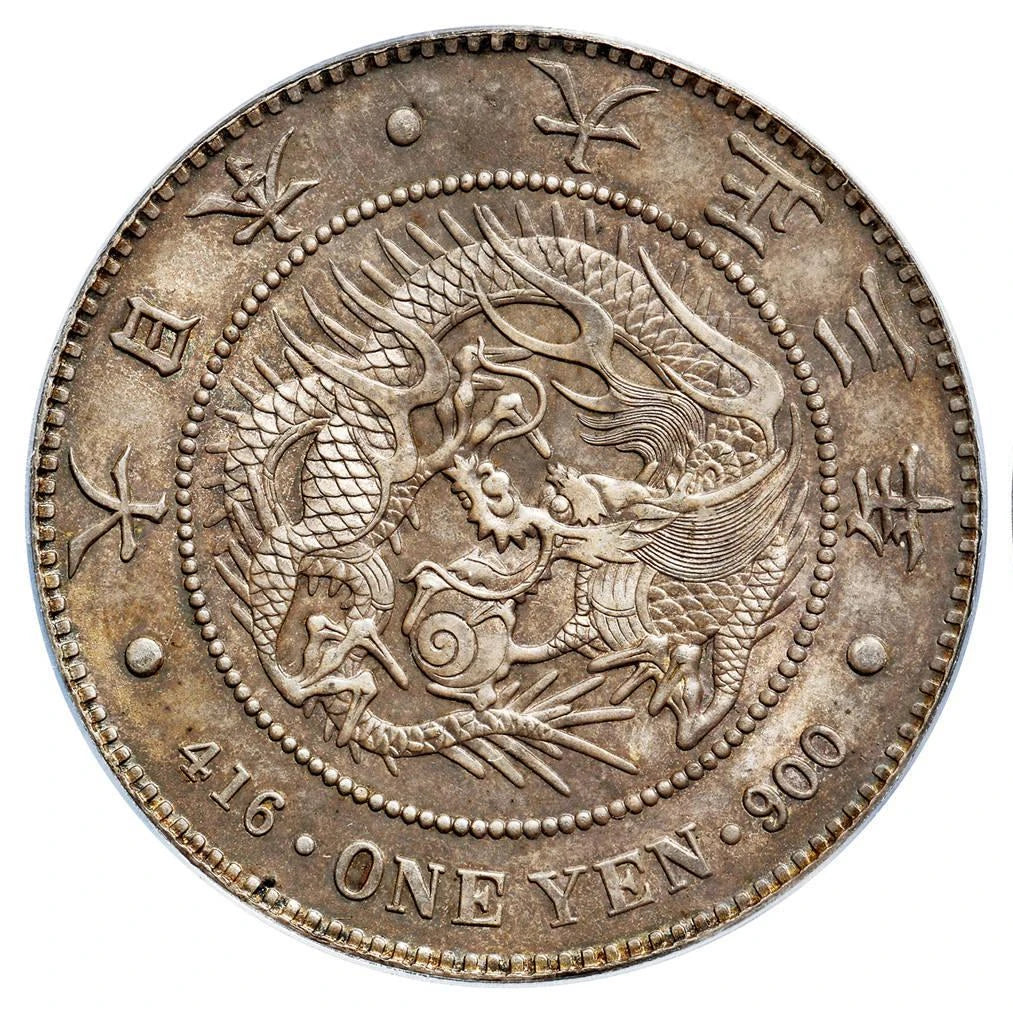
The problem arose: once Guangdong Dragon Dollars were issued, other provinces rushed to imitate them. Yunnan, Hubei, Jiangnan, Beiyang... everyone scrambled to buy new machines and hire foreign artisans, setting off a wave of"Guangzhou-style dragon dollar minting."Although they all bore the name"Guangxu Yuanbao,"each provincial mint operated independently, and their weight and fineness differed. When a dragon dollar left its province of origin, it had to be re-assessed for fineness and re-weighed, meaning the monetary chaos was not truly resolved. The variations in coin types from provinces like Yunnan and Hubei remain an important topic in collecting circles today; the article onprice differences for Hubei, Guangdong, and Jiangnan Dragon Dollarsprovides a detailed comparison.
II. The"Tael vs. Yuan"Debate: The Late Qing Government's Last Attempt
The Qing government was aware of the need to unify the currency system but was long stuck on the core unit: should the new silver dollar use the traditional"tael"as its unit, or the Western"yuan"(7 mace and 2 candareens)?
- "Tael"Faction:The main coin would weigh one tael, inheriting the traditional silver tael system, supported by the conservative old guard in the court.
- "Yuan"Faction:The main coin would weigh 7 mace and 2 candareens, aligning with the Spanish"Carolus dollar,"facilitating international trade, supported by most regional governors.
In the 33rd year of Guangxu (1907), the Qing government sought opinions from twenty-four governors and ultimately leaned towards adopting the"tael"as the unit. However, within a few years, Guangxu and Cixi both passed away, and this decision was shelved. During the Xuantong reign, Zaize, the Minister of the Ministry of Revenue, strongly advocated for the"yuan"unit. In the second year of Xuantong (1910), the"Regulations on Currency System"were promulgated, officially establishing the silver standard with the"yuan"as the unit."Da Qing Silver Coins"were minted, weighing 7 mace and 2 candareens of Kuping (customs tael weight), and the minting rights were centralized at the Tianjin Mint General Factory.
It was originally planned that the new currency would be issued in the tenth month of the third year of Xuantong (1911), and old silver dollars would be recalled within a time limit to achieve national unification. However, the Wuchang Uprising broke out, leading to the collapse of the Qing government. These meticulously prepared"Da Qing Silver Coins,"unable to fulfill their mission of unification, entered the market as military pay, becoming one of the circulating silver dollars.

The"Guangxu Yuanbao Kuping 7 Mace 2 Candareens from the General Mint"version was minted by the Qing government's Ministry of Revenue General Mint, but it actually carried the unfulfilled mission of the Qing government's last monetary reform. Due to its clear historical significance and fine craftsmanship, this coin type has always had a relatively stable price in collecting circles. According to recent auction records in Hong Kong, Macau, and mainland China, a PCGS AU50 grade Guangxu Yuanbao from the General Mint can fetch over HK$60,000, and an XF40 grade also goes for around HK$30,000. For the market potential of rare provincial Guangxu Yuanbao varieties, the articleProvincial Guangxu Yuanbao with Million-Dollar Potentialprovides a more detailed analysis of the varieties.
📷 Found a Da Qing Silver Coin or Guangxu Yuanbao at home?
In a market rife with counterfeits, it's hard to distinguish genuine coins with the naked eye. Send clear photos of both sides and the rim; we'llWhatsApp 98342057respond within half an hour with a variety assessment and preliminary valuation range. Authentication is free.
III. The Republic Establishes Itself: How the"Yuan Datou"Unified National Silver Dollars
The task of unification left uncompleted by the late Qing Dynasty was taken over by the Republican government. In the early years of the Republic, provincial silver dollars carried imperial connotations and were no longer suitable as the national currency for the new era. The provisional government first minted the"Republic of China Founding Commemorative Coin"featuring Sun Yat-sen's portrait (i.e.,Sun Xiaotou), but it was the subsequent Yuan Shikai government that truly achieved unification.

On February 7, the third year of the Republic (1914), Yuan Shikai signed the"National Currency Regulations"– this was the first time in Chinese history that the concept of"national currency"was officially proposed, explicitly stipulating that the primary currency, the"One Yuan Silver Coin,"would weigh 7 mace and 2 candareens in total, with an initial fineness of 90%, later changed to 89% for easier Buyback of old coins. By the end of the same year, the Tianjin Mint General Factory and the Nanjing Mint began coining silver coins featuring Yuan Shikai's portrait on the obverse and grain ears on the reverse, officially named"Guobi"(National Currency), colloquially known as"Yuan Datou"(Big Head Yuan).
The success of theYuan Datouwas due to several key reasons:
- Strict Standardization:The Beiyang government abolished provincial silver dollar mints, retaining only six sub-mints in Nanjing, Hubei, Sichuan, Guangdong, Yunnan, and Changsha. Molds were uniformly distributed by the Tianjin Mint General Factory.
- Unified Design:The Yuan portrait and grain ear motif were highly recognizable, unlike the varied provincial dragon dollars, making them easily accepted by the public.
- Rapid Replacement:By 1915, it had already replaced dragon dollars and Mexican eagle dollars in the Shanghai financial market, and by 1917, it became the sole primary currency among circulating silver coins.
Thus, the silver dollar system finally replaced the silver tael system. The standardization of the Yuan Datou laid the foundation for the National Government's official abolition of the tael and adoption of the yuan in 1933, and the unified circulation of the"junk dollar"(boat dollar). Yuan Datou coins have numerous varieties; years 3, 8, 9, and 10 each have distinct characteristics. Both theYuan Datou Buyback sectionand thesilver dollar Buyback sectionprovide corresponding market prices.
IV. Practical Buyback: How to Distinguish Genuine Yuan Datou and Guangxu Yuanbao
In the silver dollar collecting market, the proportion of counterfeits is extremely high. Recent transaction records in Hong Kong and Macau show that a significant portion of the silver dollars submitted for preliminary authentication are modern fakes. If you have a suspicious item at home and want to make a rough judgment yourself, you can start with the following points:
- Silver Color:Genuine silver dollars have a soft, lustrous, white color with a natural sheen. Counterfeits often have a bluish-white color with an unnatural"sharp glare"(Zei Guang), giving them a stiff visual appearance.
- Sound:Gently tap the edge with another silver dollar; a genuine coin will produce a clear, melodious sound with a long resonance; steel-core counterfeits have a sharp sound, while copper-core counterfeits have a dull sound.
- Rim Serrations:Genuine coins have neat, uniform rim serrations that are slightly curved; high-quality counterfeits have uneven serrations, often showing filing marks.
- Patina:The natural oxidation (patina) on genuine coins is lighter on raised areas and darker in recessed areas, with a natural transition. Chemically aged counterfeit patina is stiff in color, unevenly distributed, and will come off easily when boiled in alkaline water. Remember,never clean it– a cleaned silver dollar instantly loses more than half its market value, and PCGS/NGC will assign a"Cleaned"label. For detailed principles and preservation methods, the articlePatina and Preservation Key to Valueprovides illustrated explanations.
- Professional Grading:If the silver dollar you have is estimated to be of high value, it is recommended to send it for grading by PCGS or NGC. A graded slab not only addresses authenticity issues but also provides a quantifiable score for resale. The articleHong Kong Dragon Dollar Valuation Guideprovides a more detailed correlation between grading and valuation.
Conclusion
The"abolition of the tael and adoption of the yuan"took over forty years, from the birth of the Guangdong Dragon Dollar in the 1890s to the National Government's official legislation to abolish the tael in 1933. Every Guangxu Yuanbao, Xuantong Da Qing Silver Coin, and Yuan Datou is a snapshot of this institutional evolution. If you have silver dollars from the late Qing or early Republican era, regardless of their condition, do not attempt to clean or polish them prematurely. Take clear photos and consult a professional for a preliminary assessment before deciding on the next steps.
Contact Information
Gu Jin Jian Bao offers free on-site appraisals in Hong Kong, Kowloon, and the New Territories. Arrangements can be made for pickup points in Macau. All authentication services are free:
- WhatsApp:98342057
- WeChat:john19998
- Phone:852-98342057
Send clear photos, and we will respond within half an hour with a reasonable valuation range.
Professional Buyback of Late Qing and Early Republican Silver Dollars ‧ Free Authentication
Transparent pricing ‧ Instant cash ‧ On-site purchase in Hong Kong, Kowloon, and New Territories. If you have Guangxu Yuanbao, Da Qing Silver Coins, or Yuan Datou, don't rush to sell them cheaply; you can WhatsApp for a valuation first.