There's an old saying in the coin collecting world:"Condition is life, patina is soul."When people first come across silver dollars, or find old silver coins while cleaning their homes, their initial reaction is often:"It's so dirty, should I use toothpaste to clean it until it's sparkling white to make it valuable?"
This misconception is something we see customers fall for at the appraisal counter every year. In reality, once the naturally formed oxidation layer on a silver dollar—professionally known as"patina"—is removed, its market value can instantly drop by more than half. If it's sent to international grading agencies like PCGS or NGC, it will even be labeled"Cleaned,"effectively barring it from entry into legitimate auction houses.
This article will clarify several points: what patina is, why it's considered the"second life"of a silver dollar, why you shouldn't clean it haphazardly, and how to identify fakes and properly preserve it. We'll also include the latest 2026 Hong Kong market buy-back price ranges to give you an idea of its value.
I. What is"Patina"? The Silver Dollar's Century-Spanning"Protective Film"
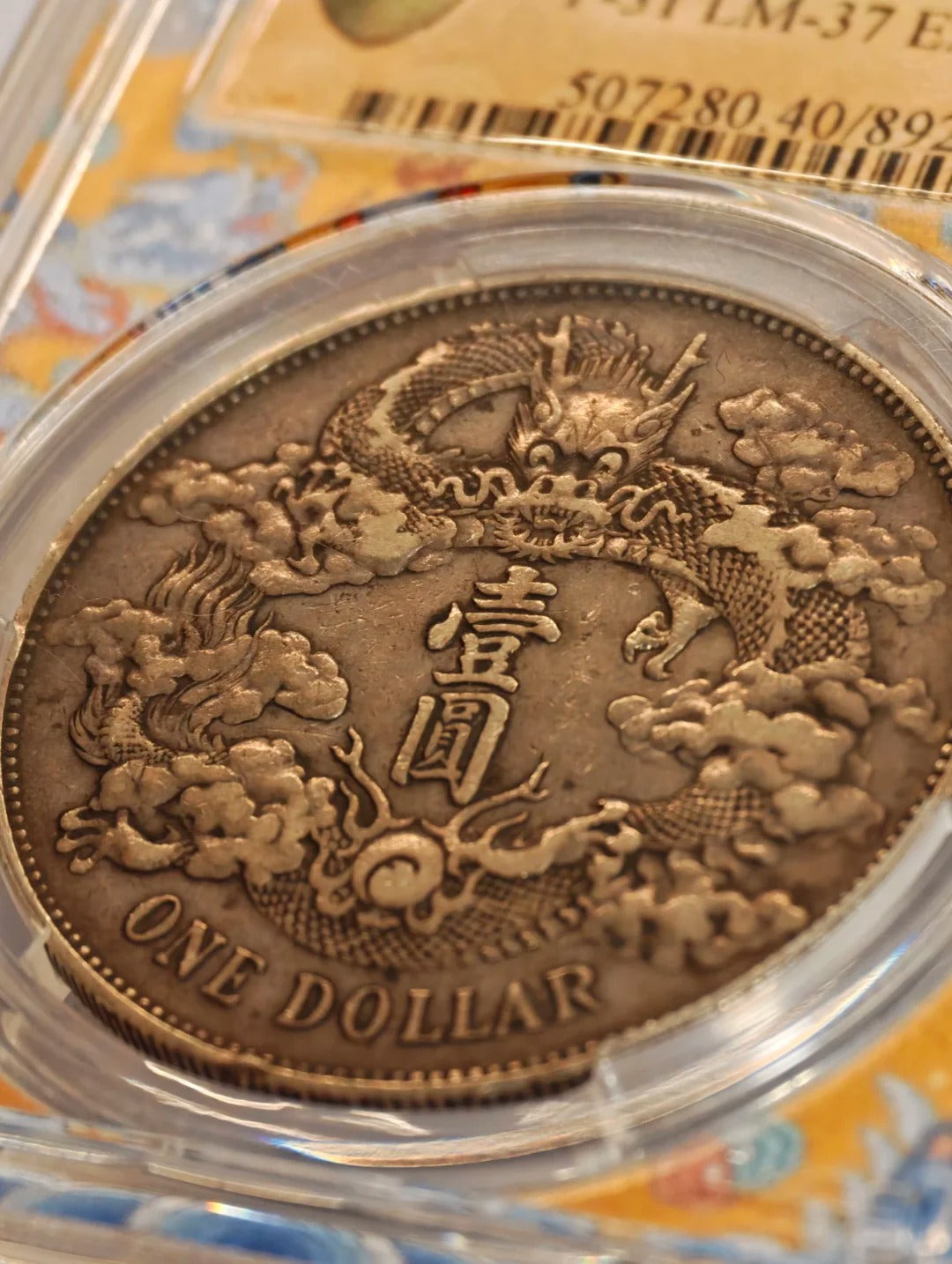
Patina, in essence, is a highly stable silver oxide film that slowly forms on the surface of a silver dollar through decades or even centuries of natural oxidation—the reaction of silver with sulfur and oxygen in the air, combined with the accumulated oils from prolonged handling.
This layer acts like the coin's"skin,"on one hand, isolating the inner silver from continuous external erosion, and on the other, documenting the coin's years in circulation. The patina on every genuine silver dollar is unique, making it a crucial physical basis for authenticating silver dollars.
Common Natural Patina Color Reference Chart
| Patina Type | Formation Environment | Visual Characteristics | Collection Value Rating |
|---|---|---|---|
| Circulated Patina | Long-term circulation among the populace, frequent handling | Light gray, light orange, or husked grain color, with a soft, deep luster | ⭐⭐⭐⭐⭐ |
| Rainbow Patina | Stored in specific paper envelopes or wooden boxes, causing thin-film interference | Surface displays rainbow-like blue, purple, red, and green colors, exceptionally beautiful | ⭐⭐⭐⭐⭐+ |
| Black Lacquer Patina | Long-term storage in a relatively sealed and dry environment | Surface is shiny black, but still reveals the spirit of silver when observed against light | ⭐⭐⭐⭐ |
| Excavated Rust | Buried as burial goods or underground (in water pits or soil pits) | Dark green, reddish-brown rust spots, with localized raised"silver bloom"dots | ⭐⭐⭐ |

II. Why is Patina Called the"Second Life"? Three Principles of Value Preservation
1."Anti-Counterfeiting Mark"for Authentication
Modern counterfeiting techniques can mimic patterns and weight, but they cannot mimic time."Fake patina"on counterfeit coins is usually applied with shoe polish or burned wax, resulting in dull colors and uneven distribution, easily spotted by experts. Genuine natural patina will be lighter in color on raised areas due to circulation wear, while recessed areas will have deeper, heavier tones, showing distinct transitions.
2."Bonus Point"for Condition Grading
In international grading systems like PMG and PCGS, silver dollars with"original"patina will consistently receive higher scores than cleaned counterparts. Once chemically cleaned, the coin's surface will retain microscopic scratches invisible to the naked eye, and its original luster will be damaged. The grading slab will bear a"Cleaned"label, and its market value will immediately shrink.
3. Embodiment of Historical Value
Each layer of patina carries information from its time. For example, during the late Qing Dynasty and Republican era, banks often stamped"chop marks"on silver dollars. These marks, integrated with the patina, are evidence of their authentic circulation history—silver dollars with natural patina and chop marks have an extremely low probability of being counterfeit.

📷 Not sure if the patina on your coin is original?
Take three clear photos with your phone—front, back, and edge—and send them to us viaWhatsApp 98342057. We'll provide preliminary feedback within half an hour. If you can't see the patina layers, don't clean it arbitrarily; wait for appraisal.
III. Why Does"Cleaning"Depreciate Assets?
Many people believe that silver dollars look better when cleaned and sparkling white, but from the perspective of the professional Buyback market, this action is equivalent to"physical destruction"of cultural relics.
- Damages Coin Surface Structure: Toothpaste contains abrasives, and silver cleaner contains acid, which can abrade the microscopic crystalline layer on the silver dollar's surface, making the coin"pale"and losing its charm.
- Eliminates Uniqueness: Once cleaned, a silver dollar becomes indistinguishable from modern mass-produced handicrafts, and its appeal in auction houses is virtually zero.
- Accelerates Oxidation: A silver surface stripped of its protective patina is directly exposed to the air, which can lead to faster and more varied dark spots, resulting in a worse condition than before.
 Sun Yat-sen commemorative coin"style="margin-bottom: 16px; float: none;">
A similar principle is further explained from another angle inHear to Authenticate: Three Tips to Identify Heirloom Silver Dollars; reading both will provide a more comprehensive understanding before appraisal.
IV. Ten Elements for Silver Dollar Authentication: Preliminary Checks You Can Do at Home
If you have an inheritedYuan Datou,Dragon Dollar, or an unknown old silver dollar, you can refer to the ten points below for a preliminary assessment. Let me reiterate:DO NOT attempt any cleaningbefore authentication.
| Authentication Point | Description of Genuine Features | Common Flaws in Fakes |
|---|---|---|
| 1. Silver Luster | Lustrous white, soft sheen | Dull color, greenish, blackish, or grayish tinge |
| 2. Sound Test | Clear, melodious sound with a long resonance | Sharp, high-pitched sound (steel) or dull thud (copper-clad) |
| 3. Patina Layers | Natural transition, varied depth, difficult to remove | Artificially applied, fishy smell, washes off when boiled in lye |
| 4. Rust Characteristics | Hard rust layer, tightly integrated with the metal | Pale green, scrapes off with a fingernail, sour smell |
| 5. Natural Wear Marks | Raised areas show significant wear, recessed areas retain original condition, varying lengths | Sanding marks, overly consistent direction |
| 6. Spirit of Inscription | Fluid lettering, consistent depth, clear and legible | Weak and lacking vigor, uneven thickness, blurred edges |
| 7. Design Details | Smooth lines, full rice ears, distinct dragon scales | Dragon scales appear netted, details blurred, poor three-dimensionality |
| 8. Edge Reed Craftsmanship | Formed by mechanical pressure, consistent depth of reeding | No trapezoidal shape in the reeding, obvious manual filing marks |
| 9. Standard Weight | Approximately 26.5 to 26.7 grams (for one yuan specification) | Overweight or underweight, difficult to match precisely |
| 10. Magnified Observation | No repairs, no welding, patina allows viewing through to the coin surface | Sand holes from casting visible under high magnification |

Each item on the list can be checked with the naked eye or the simplest tools. If points 1, 3, 6, and 7 already don't match, there's no need to scrutinize the remaining points; take it directly to a professional appraisal service. The variety differences for Yuan Datou are particularly significant; you can also refer toReal-World Authentication of Yuan Datou"O-version"and"Triangle Yuan"for more details.
V. 2026 Hong Kong Market: Common Silver Dollar Buy-Back Price Ranges (HKD)
The table below is compiled from actual transaction records over the past three months for your reference. The specific price of an actual coin still depends on its condition, variety, and grading slab score.
(Note: Converted at an exchange rate of 1 Renminbi ≈ 1.1 HKD)
| Coin Name | Common Years | Average Condition (with patina) | Top Condition (PMG Graded) | Remarks |
|---|---|---|---|---|
| Yuan Datou One Yuan | Year 3 of Republic | HK$1,100 - $1,650 | HK$5,500+ | O-version, Triangle Yuan are more valuable |
| Sun Xiaotou Founding Coin | Year 1 of Republic | HK$880 - $1,320 | HK$4,400+ | "Top Five-Star"variety is the rarest |
| Hubei Province Dragon Dollar | Guangxu/Xuantong | HK$2,200 - $4,400 | HK$16,500+ | Priced according to dragon scale wear |
| Japanese One Yen Silver Coin | Meiji Era | HK$1,320 - $2,750 | HK$8,800+ | Rising sun on obverse, double dragons on reverse |
| Qing Dynasty Silver Coin | Xuantong Year 3 | HK$3,300 - $8,800 | HK$55,000+ | Rare varieties such as Long-whiskered Dragon, Curved-whiskered Dragon |

The price differences for Guangxu Yuanbao from provinces like Hubei, Guangdong, and Jiangnan can be substantial. The articlePrice Differences of Hubei, Guangdong, and Jiangnan Dragon Dollarsprovides detailed comparisons for each version.
VI. Four Protections for Silver Dollar Preservation: How to Store Coins You Don't Plan to Sell to Prevent Deterioration?
If you don't intend to sell your silver dollars immediately, it's recommended to follow the"four protections"principle for storage to ensure their condition doesn't significantly degrade for at least several years:
- Moisture Protection: Hong Kong's summer humidity often exceeds 80%. The safest method is to use an electronic dry cabinet, setting the humidity to 45%–55%.
- Touch Protection: Salts in sweat can slowly corrode silver surfaces. When handling, wear pure cotton gloves or use stainless steel tweezers.
- Stacking Protection: Avoid loosely storing several silver dollars in a tin can, as they can bump against each other and leave permanent scratches. It's best to use individual round holders for each coin.
- Light Protection: Prolonged exposure to strong light can cause patina to discolor. Store coins in a cool, dark place.
VII. Conclusion: What's Valuable Isn't Whiteness, It's Time
Every silver dollar with natural patina carries a history of actual circulation. The perspective of collectors on silver dollars is never"which one is the whitest,"but rather"which one best preserves the traces of time."
If you find old coins, banknotes, or stamps while cleaning your home and are unsure of their value, do not attempt to clean or polish them. It's much safer to keep them in their original condition, take a photo, and seek professional advice.Gu Jin Jian Baohas been collecting silver dollars, old banknotes, stamps, old gold, and porcelain in Hong Kong and Macau for years, offering free online preliminary appraisals, on-site transactions, and cash settlements, making your next steps convenient.
🌟 Contact Information 🌟
Business:Gu Jin Jian Bao
Collection Scope:Silver dollars, old Hong Kong banknotes, Renminbi, rare stamps, old gold, antique porcelain
WhatsApp:(852) 9834 2057
Service Promise:Free on-site service across Hong Kong and Macau, cash transactions, accurate appraisals, absolute confidentiality
Send a clear photo, and we'll reply with an estimated value within 24 hours.
Want to know how much your silver dollar is worth?
Free appraisal, estimated value within 30 minutes, same-day on-site purchase, instant cash payment. WhatsApp a photo to us for an immediate estimate, no need to visit the store in person.


