Japanese Silver Dragon Coin Buyback Guide: Key Authentication Points for Meiji and Taisho Era Old Silver | Gu Jin Jian Bao
In the Asian coin collection market,Japanese Dragon Silverhas always been a focal point for many collectors due to its exquisite minting craftsmanship, rich historical background, and stable preservation value. Especially the"One Yen Silver Coin"from the Meiji and Taisho periods, with its majestic dragon design and excellent silver quality, it consistently maintains high popularity in the old coin Buyback markets of Hong Kong and Macau.
Quick Conclusion:When choosing a dragon silver buyback service, the most important things to check are whether the inspection is transparent, whether the quotation lists each item, and whether the settlement method is clear.
As a professional coin Buyback merchant,Gu Jin Jian Baodeeply understands the value behind every ancient coin. This article will provide you with an in-depth analysis of the core identification, market potential, and Buyback strategies for Japanese old silver coins from the Meiji and Taisho periods, helping you accurately assess the"Oriental wealth"in your hands.
I. Historical Status and Collecting Appeal of Japanese Dragon Silver
The issuance of the Japanese One Yen Silver Coin (commonly known as"Dragon Yen"or"Dragon Silver") began in Meiji 3 (1870), when the Japanese government introduced advanced Western minting equipment to unify its currency system.
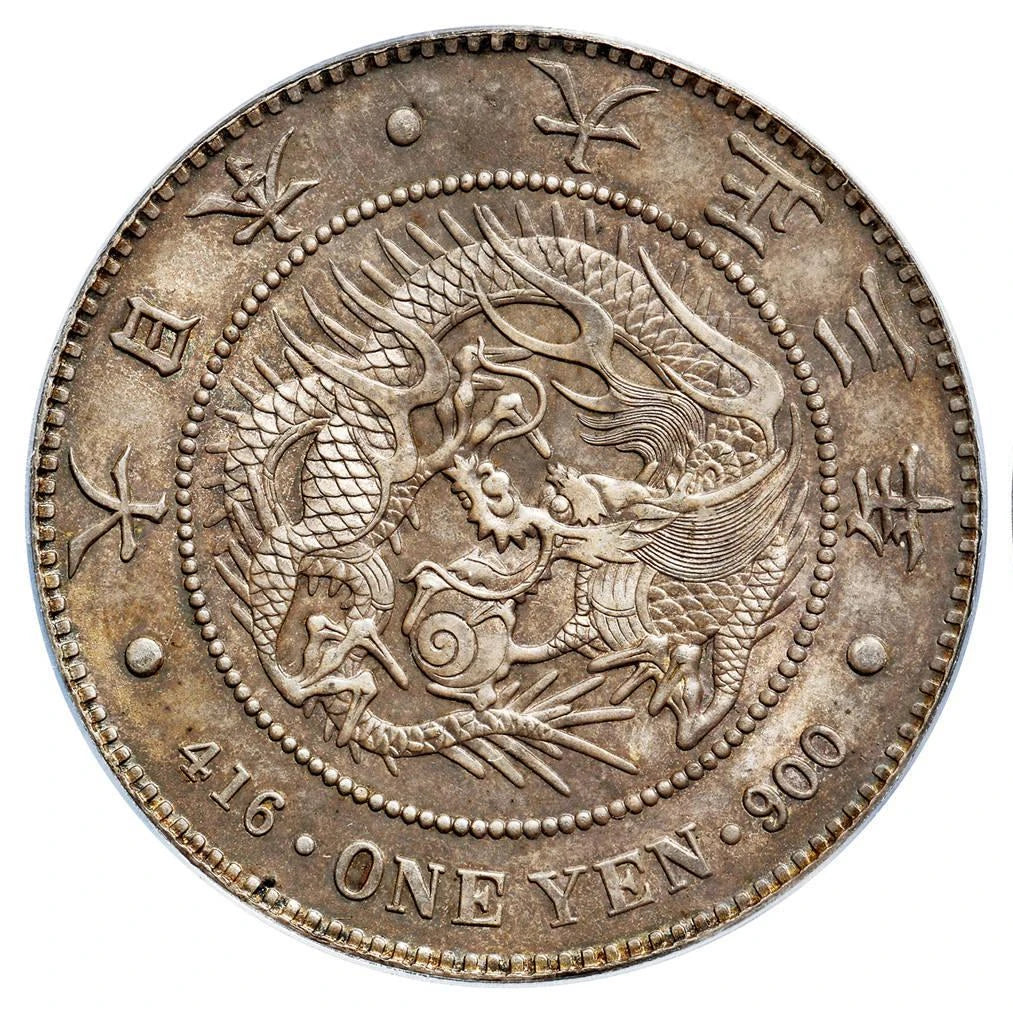
- Meiji Period (1870-1912):This was the peak period for Japanese Dragon Silver. Early versions, such as"Meiji 3", featured a distinct rising sun pattern and a double dragon playing with a pearl motif. The design style was deeply influenced by both Chinese culture and Western aesthetics, leading to extremely high market demand.
- Taisho Period (1912-1926):With the adoption of the gold standard, the circulation function of silver coins gradually diminished, and the Chinese collectible edf036 (issuance quantity) relatively decreased. The rarity of some scarce years even exceeded that of the Meiji period.
In Gu Jin Jian Bao's purchasing practices, Japanese Dragon Silver is regarded as an"evergreen tree in the coin collecting world"due to its standardized fineness (typically 90% silver content) and numerous variants.

II. In-depth Appraisal: How to Distinguish Genuine from Counterfeit Japanese Dragon Silver?
As collecting value soars, a large number of counterfeits made from steel, copper-lead, and even metal powder have appeared on the market. Professional appraisal requires combining microscopic physical characteristics with minting logic.
1. Identification of Silver Quality and Luster (Silver Quality Identification)
Genuine coins are minted from high-purity silver, with a soft luster and a moist white appearance. Over time, genuine pieces develop a natural"patina"(silver oxide layer) on their surface, ranging in color from light gray, light orange, to chestnut. If a silver coin exhibits a dazzling, fiery shine, or turns yellowish or greenish after cleaning, it is highly likely to be counterfeit.
2. Sound Identification (Acoustic Characteristics)
This is a basic and effective physical appraisal method. Hold the silver coin in the middle with your middle finger and tap it lightly with another silver coin. A genuine coin will produce a clear, melodious sound with a lingering echo.
- Steel counterfeits:High-pitched sound.
- Copper-tin counterfeits:Hoarse sound.
- Lead-tin counterfeits:Dull sound.
3. Physical Parameters and Weight Inspection
Japanese One Yen silver coins had strict weight standards during minting (approximately 26.96 grams, similar to Chinese Yuan Datou coins).
- Genuine coin range:Typically between 26.5 grams and 26.7 grams (depending on wear).
- Counterfeit characteristics:Due to different material densities, counterfeit coins are often either too heavy or too light, making it difficult to achieve perfect consistency.
4. Design and Details (Long-tail Keywords: Dragon Scales, Font)
The essence of Japanese Dragon Silver craftsmanship lies in its"dragon scales"and"font."
- Dragon Scales:The dragon scales on genuine coins are clearly layered, with fine details like needle points, separate from each other, and possessing a three-dimensional quality.
- Text:Whether it's the Chinese characters"Chinese collectible f1e58b"or the English"ONE YEN,"the lettering is fluid, deep, and without any sense of weakness or lack of strength.

III. Value Reference: Common Varieties and Market Valuation of Japanese Dragon Silver
The table below summarizes common Buyback categories from the Meiji and Taisho periods and their key identification points (prices converted to HKD for reference at a CNY 1:1.1 exchange rate):
| Coin Name | Minting Year/Variety | Identification and Collection Keywords (SEO) | Valuation Potential (HKD Reference) |
|---|---|---|---|
| Meiji 3 One Yen | 1870 | Rising sun motif, double dragons, early version, market scarcity | Very High(rare specimens can exceed ten thousand) |
| Meiji Period One Yen | Meiji 7 to 45 | Round dragon pattern, 90% silver content, numerous varieties | Medium to High(depending on year and condition) |
| Taisho Period Silver Coin | Taisho 3, etc. | Relatively small mintage, strong liquidity | Medium(approx. HK$1,000 - $3,500+) |
| Trade Dollar | Meiji 8 to 10 | Specifically for foreign trade, rare in existence | Very High(top-grade specimens) |
Note: The prices above are for reference only. Actual buyback prices require precise evaluation based on"condition,""presence of repairs,"and the exchange rate on the day.

IV. Core Factor Affecting buyback prices: Condition is Key
In Gu Jin Jian Bao's appraisal system,Conditionis the"first iron rule"in determining price. The price difference between a perfectly preserved coin and a damaged one can be several times, or even ten times.
Professional Grading Indicators (referencing PMG/ASG/CSIS standards):
- Perfect (95-99 points):The note or coin surface is as it was when issued, with bright luster and no signs of circulation.
- Excellent (80-90 points):Allows for very slight wear or even toning, with an overall perfect appearance.
- Average (50-70 points):Exhibits noticeable folds, scuffs, or small tears; value rapidly decreases with wear.
【Gu Jin Reminder】: If your silver coin's surface is blackened,please do not attempt to clean it yourself!Naturally formed"patina"is an important basis for authenticating genuine items. Any chemical washing or physical damage will drastically reduce its value.

V. Asset Preservation and Investment Potential of East Asian Coins
With the growing demand for safe-haven physical assets globally, Japanese Dragon Silver demonstrates strong market competitiveness:
- Scarcity:Due to thorough Buyback and historical losses, high-grade Dragon Silver coins are becoming increasingly rare.
- Cross-regional Recognition:Japanese silver coins have mature trading systems in Asia and worldwide (such as ASG, NGC grading), offering strong liquidity.
- Cultural Resilience:As a testament to East Asia's modernization process, its cultural value gives it a premium beyond mere precious metals.

VI. Gu Jin Jian Bao: Professional One-Stop Buyback Process
Want to know how much your collection is worth? We offer professional free valuation services in Hong Kong and Macau:
- Online Consultation:Send clear front and back photos of your collection via WhatsApp.
- Preliminary Quotation:Our experts will provide an initial estimate based on the images and the latest market trends.
- In-person Appraisal:Schedule an appointment (door-to-door service available across Hong Kong and Macau), where a senior appraiser will verify the condition, variety, and authenticity on-site.
- Immediate Payment:Once both parties agree, settlement will be made immediately viacashorFPS (Faster Payment System), ensuring security and confidentiality.
Let your cherished collection realize its maximum value. Gu Jin Jian Bao safeguards your historical assets.
Merchant Name:Gu Jin Jian BaoContact WhatsApp:(852) 98342057
Contact us now to schedule your exclusive appraisal consultation!
Information to Verify Before Choosing a Service
- Inspection Method:Confirm that the other party will explain each inspection tool, basis for judgment, and that they cannot provide only verbal estimates.
- Quotation:Request a detailed breakdown of the type, condition, weight or variety, deduction items, and the final actual amount received.
- Settlement Security:Before an in-person or in-store transaction, confirm payment method, identity verification, receipt, and confidentiality arrangements.
The value of a service-oriented article is to help you check if the process is transparent; before an official transaction, you should ask the other party to list each inspection method, quotation basis, and payment method.
Service Quotation Boundary (2026-06-03)
A commitment to a service process does not mean that every collectible has a fixed purchase price. Before an official transaction, each item should still be calculated based on its authenticity, condition, purity, weight, variety, grading results, and the prevailing market price on the day of transaction.
Frequently Asked Questions
How to determine if a buyback service is transparent?
See if the other party is willing to explain each inspection method, quotation breakdown, deduction items, and payment method, rather than just providing a total price.
What should I prepare before an in-person transaction?
First, take clear photos of your collectibles, organize the quantity and source information, and confirm the transaction location, payment method, receipt, and privacy arrangements.