Skip to product information
1 of 2

古金鑒寶

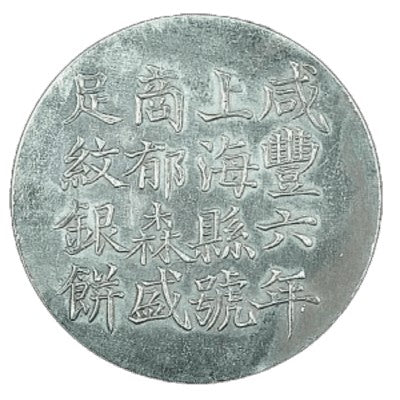
Buying and selling silver ingots cast in Shanghai during the sixth year of the Xianfeng reign (1856) / | Gu Jin Jian Bao

Buying and selling silver ingots cast in Shanghai during the sixth year of the Xianfeng reign (1856) / | Gu Jin Jian Bao

The Historical Origin and Precious Varieties of the Shanghai Silver Biscuit from the 6th Year of Xianfeng

Beyond its basic form and issuance purpose, the birth of the Shanghai silver biscuit in the 6th year of Xianfeng (1856) was actually closely tied to the turbulent historical backdrop of the time. Affected by the Taiping Rebellion, traffic along the Yangtze River was disrupted, leading to a shortage of circular foreign silver dollars (such as "Eagle Dollars") in the Shanghai region. To address the financial instability caused by the scarcity of "foreign money" in the market, the Shanghai Daotai (Circuit Intendant) commissioned several reputable large trading houses and silver shops at the time to independently cast silver biscuits of standard weight and fineness to stabilize market transactions.

This batch of officially recognized currency, cast by private trading houses, holds a significant "pivotal" position in the history of modern Chinese currency. It is not only a precious physical artifact marking the Qing Dynasty's departure from traditional silver ingots (sycees) and its transition to modern machine-minted coins, but also an important testimony to the history of Qing Dynasty ancient coins and the economic history of Shanghai in its early days as a treaty port.

Common Varieties and Collection Value Reference Table of Shanghai Silver Biscuits from the 6th Year of Xianfeng

In the current auction market for ancient Qing Dynasty coins, the Shanghai silver biscuit from the 6th year of Xianfeng has several distinctive varieties formed by different commissioned trading houses. Below is a compilation of the most popular trading house varieties and a reference for Qing Dynasty silver biscuit price valuation in the auction market:

Commissioned Trading House / Variety Common Denomination Specifications Design Features and Inscription Details Collection Rarity Auction Market Popularity
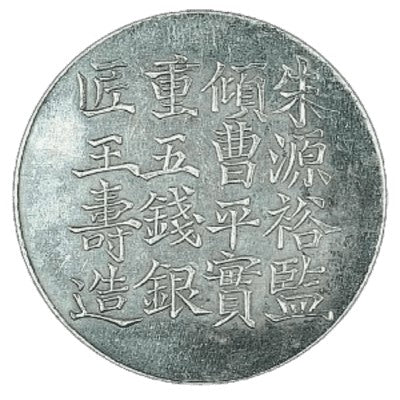
Wang Yongsheng One Tael / Half Tael Obverse often inscribed with "Xianfeng Sixth Year Shanghai County Trader Wang Yongsheng Pure Silver One Tael (or Half Tael)", with dignified characters. Extremely High ★★★★★
Yu Sensheng One Tael / Half Tael Inscription includes"Trader Yu Sensheng", reverse or edge often bears unique artisan inspection marks (e.g., the character"Ping"(ping - flat/level)). High ★★★★☆
Jing Zhengji One Tael / Half Tael Casting style is more rustic, obverse inscribed with "Trader Jing Zhengji", overall circulation is relatively scarce, highly favored by advanced collectors. Extremely High ★★★★★
Ping Zheng (Trading House) One Tael A rarer variety, extremely limited in circulation, if in good condition, often achieves excellent results in high-priced antique coin auctions. Rare ★★★★★

(Note: Market prices can vary significantly depending on the actual condition of the coin, its patination, and whether it has been graded by international authoritative organizations such as PCGS/NGC.)

Expert Advice: Three Key Points for Authenticating Shanghai Silver Biscuits from the 6th Year of Xianfeng

As the auction prices for Shanghai silver biscuits from the 6th year of Xianfeng rise, many counterfeits have appeared on the market. For collectors looking to monetize ancient coins or add them to their collection, mastering the following authentication techniques for Xianfeng silver biscuits is crucial:

  1. Observe the Natural Patina and Silver Tone: Genuine old Qing Dynasty silver biscuits, after over a hundred years of aging, develop a mellow, natural oxidation layer (patina), often appearing light gray, dark gray, or with iridescent luster. Counterfeit patinas are usually chemically induced, appearing harsh, glaring, and unnaturally distributed.
  2. Examine the Casting Craftsmanship and Calligraphic Spirit: Genuine items were early hand-struck or semi-hand-cast, with characters (such as "Xianfeng", "Shanghai") that are deep and powerful, exhibiting the unique calligraphic spirit of Qing Dynasty writing. Fakes are often modern machine-sand-cast or pressed, with character edges that tend to be smooth, stiff, and lacking the rustic three-dimensionality.
  3. Identify Historical Chop Marks and Wear Patterns: During circulation, silver biscuits were often stamped with "chop marks" by banks or shops to verify purity. Genuine chop marks blend naturally with the coin surface, and the edges of wear marks are rounded; new counterfeit chop marks often have sharp metallic burrs on their edges.

Why Choose Professional Ancient Coin buyback services?

Determining the true value of an ancient silver coin requires deep professional knowledge and market acumen. If you have ancient coins passed down from elders in your family, or if you wish to know the latest buyback price for a Shanghai silver biscuit from the 6th year of Xianfeng, it is highly recommended to seek a professional ancient coin purchasing agency in Taiwan with a physical store and a good reputation.

We provide transparent and fair free ancient coin appraisal services. Through precise instrument assistance and the rich experience of our senior appraisers, we ensure that your collection reflects its rightful historical value and the highest market price, making your high-priced Xianfeng silver biscuit Buyback process safe, professional, and swift.

Gukin Jianbao is based in Hong Kong, specializing in the appraisal and purchase of ancient coins, old banknotes, gold and silver jewelry, and various antiques. You are welcome to WhatsApp 98342057 at any time to send photos for inquiries, and our master appraiser will respond with an initial valuation as soon as possible. We operate our business with integrity—authentic appraisal, fair pricing, and reliable transactions.


Recommended Related Buyback Series

You Might Also Be Interested In: Popular Related Buyback Items

Want to sell your silver dollars but unsure about the market price? WhatsApp 98342057 to send us photos, and we will respond with an up-to-date market valuation on the same day. For more services, please browse our Buyback Product Series.
View full details

Frequently Asked Questions (FAQ)

Q: What is the current recycling price per gram for gold jewelry?

A: The recycling price per gram for gold jewelry is close to the international gold price of the day (for 999 fine gold), with a small handling fee deducted. For example, if the gold price is HKD X per gram, 1 gram of 999 fine gold jewelry will be recycled for approximately HKD X. WhatsApp 98342057 for a real-time quote.

Q: Can I get paid immediately after my gold jewelry is recycled?

A: Yes. After Gukgum Appraisals completes the gold jewelry appraisal and both parties confirm the price, cash payment will be made immediately (for small amounts). For larger amounts, instant bank transfer or FPS (Faster Payment System) is available.

Q: If gold jewelry is non-magnetic, does it necessarily mean it's pure gold?

A: Magnetic testing can only provide a preliminary assessment, but it cannot detect tungsten-filled fake gold. Gukgum Appraisals uses both XRF fluorescence and specific gravity tests to double-verify gold jewelry, ensuring accuracy.

  • 1) Clients should first provide basic information about their collections via WhatsApp (852) 98342057. You can also contact us directly via this link.

  • 2) We will provide a preliminary quote after receiving your information.

  • 3) Both parties agree on a time and place (on-site inspection is available) to inspect the collection. We will provide a precise quote based on the actual condition of the collection.

  • 4) Confirm the sale and make payment in various forms such as bank transfer or cash.