Silver Dollar Market Before and After the Holiday: A Real Discussion on Yuan Datou Republic Dollar Price Ranges by Year
Before and after major holidays (Lunar New Year, National Day, May Day), the silver dollar recycling market experiences short-term fluctuations – collectors sell off their holdings before the holidays, and buyers enter the market after. This seasonal fluctuation affects the various years of Yuan Datou to different degrees. Below are the actual recycling price ranges before and after the 2026 major holidays.
I. Is there a pattern in the silver dollar market before and after major holidays?

First, the conclusion: statements like "prices always rise before holidays and fall after holidays" do not show a clear pattern in actual transaction records, but transaction volumes do become concentrated. There are several reasons for this:
- Sellers release large quantities: Household expenses increase before and after long holidays, prompting some holders to sell, leading to a concentrated supply of silver dollars in a short period.
- Silver price linkage: For widely circulated varieties like Yuan Datou and Dragon Dollars, ordinary specimens generally fluctuate in sync with international silver prices. If international silver prices remain high before a long holiday, recycling prices will naturally stay firm.
- Market sentiment: Transactions for high-grade, rare varieties are less correlated with silver prices and depend more on collectors' available funds. After long holidays, when funds return, transactions for these fine pieces become more active.
Therefore, don't blindly assume that "you will definitely sell for a higher price before the holidays." If you only have ordinary Yuan Datou with circulating condition, the impact is actually limited, with fluctuations typically in the hundreds of dollars. However, if it's a rare item like an O-version, Triangle Yuan, or Signed version, waiting or not doesn't matter; finding a buyer who knows their value is most important.
II. Why Yuan Datou always remains a popular item for recycling
Among old silver dollars most commonly found in Hong Kong homes, Yuan Datou still accounts for the majority. The reason is quite practical – during the Republic of China period, they were minted in large quantities and circulated widely, so almost every Southern family had a chance to collect a few. Their features are also easy to remember: the obverse shows a profile of Yuan Shikai with the year below, and the reverse features two sprigs of jiahe (auspicious grain) with the characters "壹圓" (One Yuan) in the middle.
Yuan Datou are divided by face value into four denominations: One Yuan, Half Yuan (5 Jiao), Two Jiao, and One Jiao. However, the mainstream circulating and recycled ones are still the One Yuan. Regarding years, they were minted in the 3rd, 8th, 9th, and 10th years of the Republic of China. Among these, the 3rd, 9th, and 10th years have larger existing quantities, while the 8th year was minted in smaller quantities and is significantly rarer, making it consistently the most valuable of the four years.

III. Recycling Price Ranges for the Four Years (2026 Hong Kong Market Reference)
The price ranges below are compiled based on actual local transaction records over the past three months, combined with current silver prices. The actual quote for a physical coin still depends on its condition, whether it has nicks or dents, cleaning marks, or rare variety features.
| Year/Variety | Common Condition (Good Circulated) | Fine Condition (Original Luster with Patina) | Rare Variety / High-Grade Certified |
| Year 3 (1914) | HK$1,100 – $1,300 | HK$1,500 – $2,200 | O-version / Triangle Yuan / Signed version by negotiation |
| Year 8 (1919) | HK$2,600 – $3,200 | HK$3,500 – $5,500+ | Recent high-grade examples have risen to HK$10,000+ |
| Year 9 (1920) | HK$1,100 – $1,400 | HK$1,500 – $2,500 | Fine Hair version, Bull-head version by negotiation after differentiation |
| Year 10 (1921) | HK$1,100 – $1,400 | HK$1,500 – $2,500 | "Year" character varieties have the largest price difference |
(Note: The above are reference prices in HKD; actual valuation of physical items is subject to the daily quote after authentication. "Common condition" refers to coins with natural circulation wear on the surface but clear patterns and complete lettering.)
There are two often-overlooked details to mention here: First, don't assume that "the whiter, the more valuable." The original patina of silver dollars is a bonus; it's not uncommon for a cleaned coin to lose half its market value immediately. Second, although ordinary Year 8 coins have the highest price, they are also the most frequently counterfeited, so "fake Year 8" high-quality fakes are most common. Being able to distinguish genuine from fake significantly affects the transaction.
📷 Have a Yuan Datou at home, but not sure which year it is?
Take three clear photos with your phone – front, back, and edge – and WhatsApp them to us at 98342057. We'll provide a reasonable estimated price range within 30 minutes. Authentication is free, and there's no obligation to sell.
IV. Stamped Yuan Datou: Are they still valuable?
This is the most frequent question we receive on WhatsApp these days. Old Yuan Datou coins found at home sometimes have small stamps on their surface – perhaps a character, a symbol, or even a small hole. Some online sources say that stamps are considered damage and significantly reduce value, while others claim they are evidence of circulation history and even increase value. What's the actual situation?
It depends on the situation:
- Money changer stamps (most common, holds value): During the late Qing Dynasty and Republican era, when money changers and businesses received silver dollars, they would stamp them with their own mark (usually a character or a small pattern) to verify they had handled and checked the coin. These stamps actually serve as strong evidence of a genuine coin's circulation history, and collectors are generally open to them – as long as the stamp is small and doesn't obscure the main design, the price usually won't drop. In fact, some rare money changer stamps may even be particularly sought after.
- Post-engraving, knife marks, artificial damage: Knife cuts, hammer marks, or obvious post-production scratches directly affect the coin's condition grade. If the marks are deep and obstruct Yuan Shikai's profile or the jiahe pattern, the price for a common coin can drop by 10%–30%.
- "Scraped character" or "repaired" versions: Grinding off original stamps or filling them with silver is a deceptive practice. The market immediately penalizes such coins, and they may even be suspected of being cast counterfeits.
Conclusion: Don't worry about natural money changer stamps; you can still sell them. For artificially damaged coins, you should anticipate a price drop. If you're truly unsure, you can bring them in for direct comparison. For other details on authenticating coins, you can refer to our previous article Listen to identify genuine from fake: Three tips to authenticate your inherited silver dollars.

V. How to prepare for cashing out before a long holiday: Four steps
If you've decided to sell before the long holiday, we recommend preparing in the following order. Do not rush to a gold shop or pawn shop to weigh them by weight – gold shops usually do not account for the craftsmanship and collector's premium of silver dollars.
- Take clear photos: Use your phone with good lighting to take flat photos of the front, back, and edge. The main design should clearly show the lettering and patina layers. WhatsApp them to us for an initial assessment.
- List quantities and years clearly: If you have more than a dozen coins, it's best to sort and count them by year. A batch valuation may have room for a premium.
- Compare quotes from two or three dealers: Don't sell after hearing just one quote. You can also check the "per gram" quotes from chain gold stores as a lower bound reference.
- Confirm delivery method: Whether it's home pick-up or in-store verification, cash or bank transfer, confirm with both parties and complete the transaction in one go to avoid delays.
By the way, if you have old gold or gold bars that you also wish to sell along with silver dollars, you can have them all appraised together. This simplifies the process and avoids separate trips. For detailed gold jewelry cash-out procedures, you can refer to Hong Kong Old Gold Recycling Guide, or When is the best time to sell gold for a more detailed market analysis.

VI. Market comparison of similar popular silver dollars
Besides Yuan Datou, the following varieties are also popular in the Hong Kong market for long-term collection. If you find several different silver dollars at home, you can have them appraised together; a batch usually fetches a slight premium.
| Variety | Common Condition Range | Notes |
| Guangxu Yuanbao (Beiyang 34th Year) | HK$2,500 – $4,500 | Entry-level choice for Dragon Dollar series, provincial mints vary greatly in price |
| Sun Yat-sen Founding Commemorative Coin (Small Head) | HK$880 – $1,500 | Six-star / Five-star versions have significant price differences |
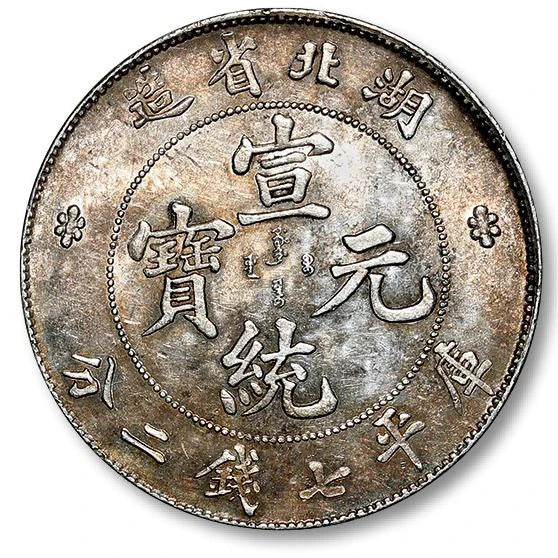
| Da Qing Silver Coin (Xuantong 3rd Year) | HK$3,300 – $8,800 | Long-whiskered dragon, curved-whiskered dragon varieties are rare |
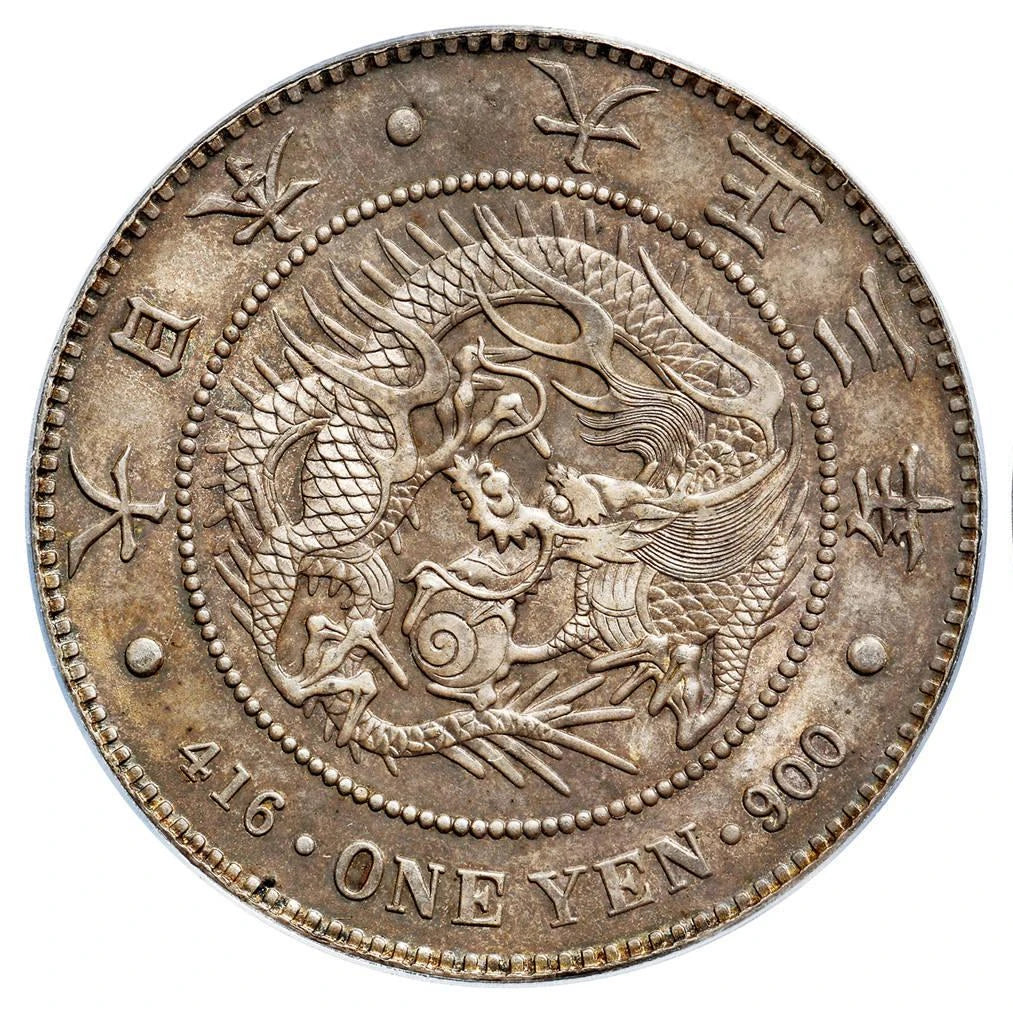
| Japanese One Yen Silver Coin (Meiji) | HK$1,300 – $2,800 | Obverse with rising sun, reverse with two dragons |
The price differences for various provincial versions of Guangxu Yuanbao can be quite substantial. The article Comparison of Hubei, Guangdong, and Jiangnan Dragon Dollars provides detailed comparisons for each version. To learn about Japanese silver coins, you can read Japanese One Yen Dragon Silver Recycling Guide.
VII. Frequently Asked Questions
Q1: There's something black on the silver dollar. Should I clean it to make it more valuable?
Absolutely not. That dark brown to black layer is "patina," formed by natural oxidation over a hundred years, and it's an important basis for authenticating the coin. Once cleaned, the silver surface structure is damaged, and its market value can immediately drop by more than half.
Q2: If I'm unsure of its authenticity, can I just send photos via WhatsApp?
Yes, preliminary opinions are free. If there's interest, we can then arrange for an in-person or in-store physical verification.
Q3: I only have three to five coins at home. Is it worth arranging an in-home visit?
For Hong Kong, Kowloon, and New Territories, free home visits are typically offered for three or more coins. For smaller quantities, you can come to our shop or arrange to meet near an MTR station; there's no need to force yourself to accumulate a certain number.
Q4: If the quoted price isn't satisfactory, can I choose not to sell?
Of course. Authentication is free, and if the quote isn't suitable, you can take your items back; there's no pressure to sell.
VIII. Contact Information
When cleaning out your home before or after holidays, if you find old silver dollars, banknotes, old gold, or stamps, instead of letting them gather dust in a corner, find a professional team to assess their true market value. Gukim Keen Bo offers free home visits across Hong Kong, Kowloon, and the New Territories:
- WhatsApp: 98342057
- WeChat: john19998
- Phone: 852-98342057
Send us a clear photo, and we'll reply with a reasonable price range within 30 minutes.
Yuan Datou Professional Recycling ‧ Free Authentication
Transparent pricing ‧ Instant cash ‧ Home collection service across Hong Kong, Kowloon, and New Territories. If you have Yuan Datou, Dragon Dollars, or other old silver coins, don't rush to sell them cheaply. You can first WhatsApp us for an appraisal to understand the true market value.