
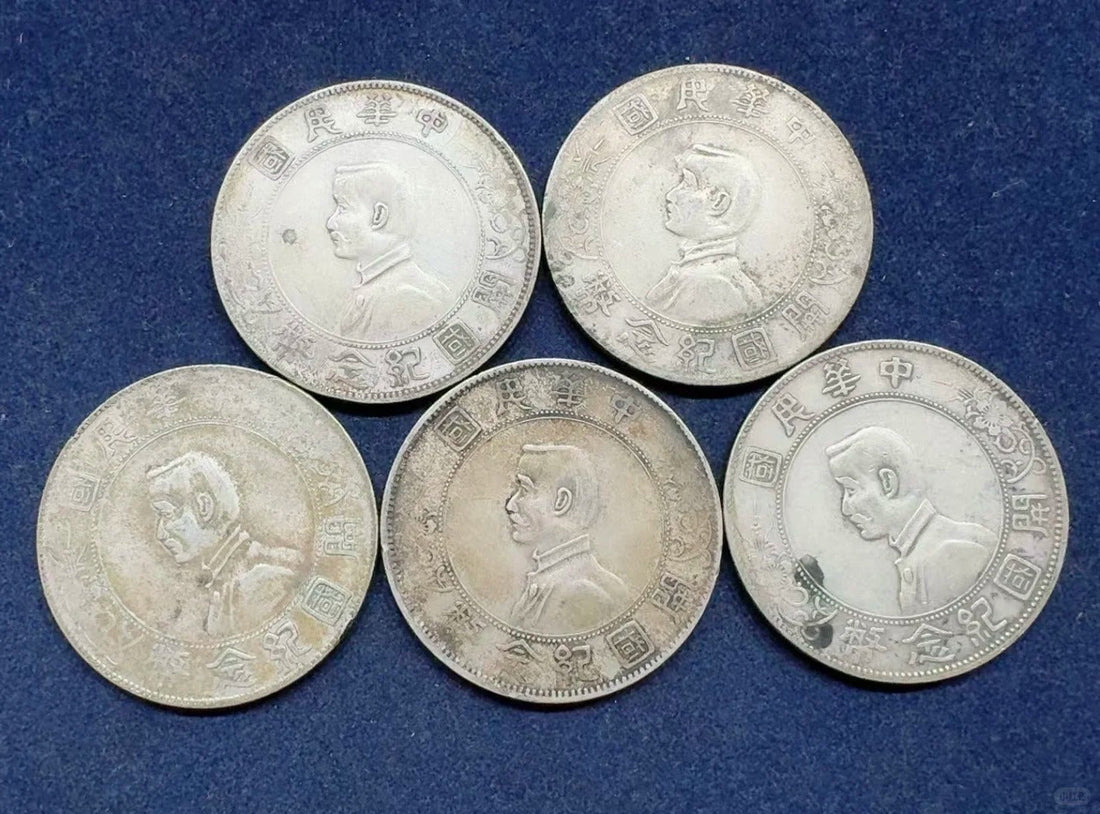
Write the visible Sun Xiaotou condition before naming a variety
Do not identify the coin from an old label or a similar online image. Begin with patina, wear, knocks and possible cleaning traces, retaining the camera direction and coin number.
Place the paper sleeve, grading holder and earlier labels in the provenance section and match them to the same identifier. Keep every required image, reading and attachment available.
Points that remain open
If the portrait, commemorative legends, denticles or beaded border are incomplete, retain original measurements separately from any conversion. Mark illegible wording, unsupported statements and sealed areas one by one.
Locate damage only after securing both faces
Countermarks, old sleeves and provenance accounts may add context, but they cannot replace examination of portrait lettering, commemorative text, grain wreath, surface and rim.
Capture the portrait side and grain-wreath side with their full circumferences. Then add details of the portrait, lettering, stars, wreath, denticles and beaded border under the same coin number.
Keep whole views, details, dimensions, packaging and documents together so later additions cannot drift to another piece. List every hidden area for the next check.
Let unknown features stay unknown
For a group of Sun Yat-sen portrait coins, arrange the visible face designs and star positions first, then number each piece so its faces, edge, weight and diameter remain connected.
Upper-six-star, lower-five-star and other market names must be verified against complete faces and located stars; a close-up alone cannot establish the variety.
Any issue, production or historical comparison should name its reference and consultation date. Treat oral accounts, labels and web pictures as indexing aids rather than findings.
Keep one physical coin behind every description
Enter the working name, visible text, design, dimensions or weight, packaging and current condition. A field hidden by the holder remains open.
Describe natural toning, circulation rub, weak strike, wiping hairlines and chemically altered colour in separate observations. A dark surface is not an instruction to clean.
Rim Access Depends on a Named Unresolved Feature
Photograph the edge in overlapping segments around the entire circumference. Leave joins, reshaped areas, piercings, solder and former jewellery mounts exactly as found.
Photography can show obvious damage and help classify the coin, but metal composition, subtle repairs and holder-covered areas may call for direct inspection.
Condition evidence for this Sun Xiaotou coin
Review the portrait, commemorative wording and grain wreath without demanding an immediate attribution. Secure patina, wear, knocks and cleaning evidence first, and state any missing whole or raking-light view.
Place portrait details, commemorative legends, denticles and beaded border under identification; put the full edge, weight, diameter, tool and unit under measurements. Both sections must return to one coin.
When documentation and the coin disagree, transcribe each wording with its date. Leave the variety, period or material open rather than completing it from a similar example.
The next examiner should be able to locate the same coin and repeat every observation. A clear note about an obscured, sealed or unsupported detail is better than a forced conclusion.
For an enquiry, bring the existing enclosure and evidence set and identify the gaps in the surface and rim photographs before the coin is handled.
