Japanese Silver Coins from Edo to Showa: Dragon, Chrysanthemum, and Collection System Review | Gu Jin Jian Bao
The collection system for Japanese silver coins is simpler than that for Chinese silver dollars, primarily following three timelines: handmade silver coins from the Edo period (e.g., Ichibu-gin, Chogin), machine-struck silver coins from the Meiji to Taisho periods (e.g., Dragon silver, Asahi silver coins), and Chrysanthemum crest silver coins from the Showa period. The design styles and collection logic of these three periods differ, and they will be detailed in the following sections.
I. Edo Period (1603–1868): Rectangular Silver Coins and the Ginza System
Under the Tokugawa Shogunate, Japan adopted a "three-currency system" of gold, silver, and copper, with silver and gold coins belonging to different circulation systems. The form of silver coins at that time was very different from the circular silver dollars of China and Europe, mainly consisting of rectangular or square Ichibu-gin, Ni-shu-gin, and Ichi-shu-gin, minted by the Shogunate's official "Ginza" (silver mint).
These silver coins bear the"Yin"(silver) character and an era mark, with their weight and silver content varying by issue batch. Some later batches even saw a significant reduction in silver content, reflecting the financial pressures of the late Shogunate. For collectors, the appeal of Edo silver coins lies in their unique form and exquisite calligraphy, marking an important starting point in the evolution of Japanese coinage. The market price for common circulated pieces ranges from several hundred to two or three thousand Hong Kong dollars, but rare varieties such as the famous"Bunsei Ichibu-gin"and"Tenpo Ichibu-gin"can fetch over ten thousand.

II. Meiji Restoration (1868–1912): Dragon Silver and Trade Dollars
After the Meiji Restoration in 1868, Japan began to extensively emulate Western methods of minting modern circular silver coins. In 1871 (Meiji 4th year), the "New Currency Act" was promulgated, establishing the "Yen" as the basic currency unit and initiating the minting of a series of silver coins, among which the Dragon Silver series is the most well-known.
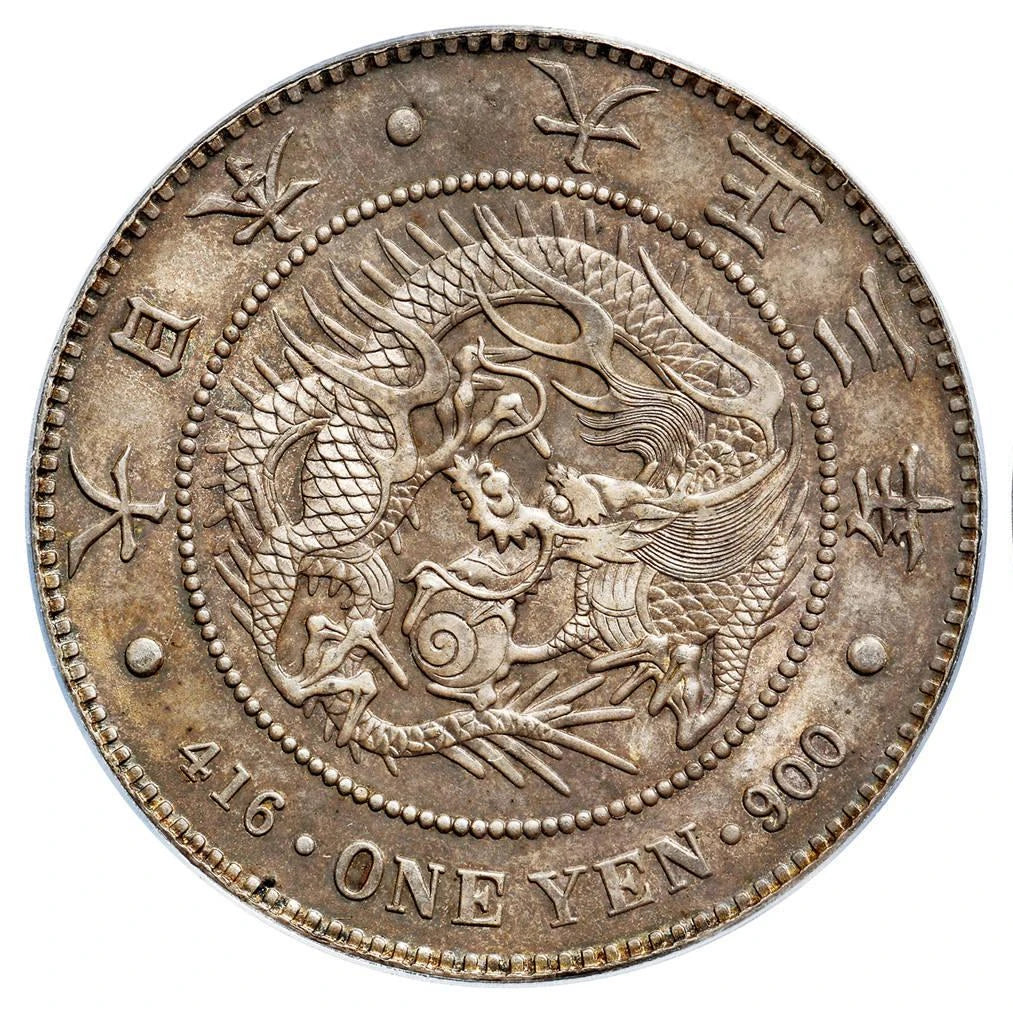
The obverse of Dragon Silver coins features a divine dragon amidst clouds, while the reverse displays a chrysanthemum crest and a rising sun/halo. Main denominations include:
- Meiji 3rd Year (1870) 1 Yen Silver Coin: Japan's first modern circular silver coin, with both"Rising Sun Dragon"and"with/without'Yin'character"stamp versions. Scarce in existence, highly sought after by collectors.
- Dragon Silver from Meiji 7th Year (1874) to the Meiji 10s: 90% silver, weighing 26.96 grams, these were one of the de facto settlement currencies in East Asian trade.
- Trade Dollar: Issued from Meiji 8th Year (1875) to Meiji 10th Year (1877), specifically for foreign trade. Slightly heavier than regular Dragon Silver (27.22 grams), with"Mao Yi Yin"(Trade Silver) on the reverse. Scarcer than common Dragon Silver.
- Smaller Denomination Dragon Silver: Includes "Dragon 5 Sen," "Dragon 10 Sen," "Dragon 20 Sen," and "Dragon 50 Sen," progressively issued from 1873 onwards, serving as subsidiary coins for daily circulation.
In addition to the dragon motif, "Asahi Silver Coins" and "Kiri Mon Silver Coins" were also issued in the later Meiji period. The mintage quantity varied greatly for each era and variety—for instance, a 50 Sen coin from the late Meiji 30s can fetch several thousand Hong Kong dollars due to its low mintage; while a common circulated 1 Yen Dragon Silver from certain years starts at HK$1,000–2,500.
For information on varieties, authentication, and the 2026 buyback price of the Meiji 3rd Year 1 Yen silver coin, please refer to Meiji 3rd Year 1 Yen Dragon Silver Authentication and 2026 Buyback Price Guide.
III. Taisho and Showa Periods: Evolution of Silver Coins Pre and Post-War
During the Taisho era (1912–1926), Japan entered a phase of large-scale industrialization. The silver coin minting system continued the pattern of the late Meiji period, but silver content and weight were gradually reduced. The 1 Yen silver coin ceased minting after Taisho 3rd Year (1914), while subsidiary coins (5 Sen, 10 Sen, 50 Sen) continued to be issued. Due to varying mintage numbers, some Taisho era silver coins have significant premiums; for example, a Taisho 5th Year 50 Sen in common condition already commands HK$600–1,500.
Entering the Showa era (1926–1989), silver coins underwent several specification changes before and after World War II:
- Early Showa (1926–1937): Continued the Taisho system, with the 50 Sen remaining the primary silver coin.
- Mid-to-Late War (1938–1945): Due to metal resource shortages, most silver coins were replaced with other metals, and silver content significantly decreased or was eliminated entirely.
- Post-War Buyback (1945–1957): Japan's economy had not fully Bought back, and silver coin minting was temporarily suspended.
- Post-War Revival and Commemorative Coin Era: From 1957, silver 100 Yen coins were re-issued, and commemorative silver coins gradually appeared. Among them, the 1964 Tokyo Olympics Commemorative Silver Coins (two types: 1,000 Yen and 100 Yen) were Japan's first truly collectible commemorative silver coins. Despite a mintage of over ten million, well-preserved, high-grade MS pieces still have a stable demand among collectors.
Subsequently, commemorative coins were also issued for events such as the 1970 Osaka Expo, the 1972 Sapporo Winter Olympics, and the 1985 Tsukuba Science Expo. For Hong Kong collectors, the biggest advantage of these commemorative coins is their generally better condition (mostly uncirculated), while the drawback is their large mintage, limiting the appreciation potential for entry-level pieces.

📷 Japanese silver coins inherited from your elders?
Send clear photos of the obverse, reverse, and edge to us via WhatsApp 98342057. We will identify each variety, compare with recent transaction records, and provide an estimated price range within half an hour. Authentication is free, with no obligation to sell.
IV. Popular Collectibles: Why are Dragon Silver and Trade Dollars Most Sought After?
More than 70% of transactions in the Japanese silver coin market are concentrated on Dragon Silver and Trade Dollars from the Meiji period. There are three main reasons:
- High Historical Significance: Meiji Dragon Silver is a monetary symbol of Japan's transition from the Shogunate to a modern nation, and it served as a de facto settlement currency in 19th-century East Asian trade, with extensive circulation records in China, the Korean Peninsula, and Southeast Asia.
- Exquisite Design and Craftsmanship: The dragon motif on Meiji Dragon Silver employs a "Western printmaking" style of engraving, offering a three-dimensional feel and detail far superior to contemporary Chinese silver dollars. It is highly praised by international collectors.
- Stable Silver Content: The Meiji 4th Year regulation stipulated that 1 Yen silver coins weigh 26.96 grams and are 90% silver. This purity and weight remained largely unchanged during the Meiji era, offering strong predictability for collectors and investors.
For in-depth stories and international auction trends regarding Japanese Dragon Silver, please refer to Japanese Dragon Silver 1 Yen Coin Buyback Guide, or Japanese Dragon Silver Valuation and Market Analysis.
V. Authentication Essentials: How to Distinguish Genuine Japanese Silver Coins from Fakes
Japanese silver coins are a popular target for counterfeiting, especially 1 Yen Dragon Silver from Meiji 3rd Year to the Meiji 10s. When inspecting physical coins, you can start with these points:
| Authentication Dimension | Genuine Characteristics | Common Flaws in Fakes |
| Weight/Diameter | 1 Yen: 26.96 grams, 38.1 mm diameter; Trade Dollar: 27.22 grams | Too light, too heavy, or incorrect diameter |
| Dragon Scale Details | Scales distinct, strong three-dimensional feel, vivid dragon eyes | Net-like, flat, blurry dragon eyes |
| Chrysanthemum Crest Craftsmanship | Clear petal layers, deep Wen Lu | Weak lines, shallow and flat Wen Lu |
| Edge Reeding | Machine-struck, uniform depth | Obvious filing marks, irregular spacing |
| Sound | Clear, prolonged ringing sound when lightly tapped | Sharp sound (steel core) or dull sound (copper-clad) |
| Patina | Natural oxidation, layered tones in recessed and raised areas | Dull color, smudging marks, easily wiped off |
Listening to the sound, weighing, and visually examining the patterns are preliminary checks you can do at home. For any key varieties (Meiji 3rd Year, Trade Dollar, late Meiji 10s years), it is recommended to send them to PCGS/NGC for professional grading. For authentication methods, you can refer to Hearing the Truth: Three Methods for Authenticating Family Silver Dollars, and for patina preservation and value, refer to Why Patina is the Second Life of Silver Dollars.
VI. 2026 Hong Kong Market: Common Buyback Price Range for Japanese Silver Coins
| Variety | Common Years | Common Condition | Top Grade |
| Edo Ichibu-gin / Ni-shu-gin | Tenpo, Ansei | HK$300–2,500 | HK$10,000+ |
| Meiji 3rd Year 1 Yen Dragon Silver | Meiji 3 | HK$3,000–8,000 | HK$30,000+ |
| Meiji Era 1 Yen Dragon Silver (Common Years) | Meiji 7–14, 16–30 | HK$1,200–2,800 | HK$8,000–18,000 |
| Meiji Trade Dollar | Meiji 8–10 | HK$4,000–9,000 | HK$25,000+ |
| Meiji / Taisho 50 Sen | Meiji 30s–Taisho | HK$200–1,500 | HK$4,000+ |
| 1964 Tokyo Olympics 1,000 Yen | Showa 39 | HK$600–1,200 | HK$3,000+ |
(Note: The above ranges combine recent Hong Kong market transaction records. Actual transaction prices depend on condition, variety details, and the silver price on the day.)
VII. Frequently Asked Questions (FAQ)
Q1: How to distinguish between Meiji 3rd Year Dragon Silver with and without the"Yin"character stamp?
Some Meiji 3rd Year 1 Yen Dragon Silver coins have an additional"Yin"(silver) character stamped on the coin face, added at the time to address purity disputes. There is a significant market price difference between stamped and unstamped versions, and professional expertise is needed for authentication.
Q2: Can Japanese silver coins be valued together with Chinese silver dollars?
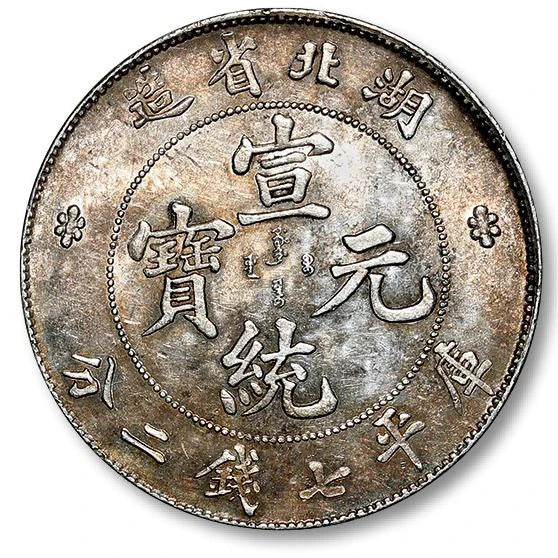
Yes. It is common to find Yuan Datou, Sun Xiaotou, Dragon Dollars, and Japanese Dragon Silver together when clearing out old collections. We can provide a combined valuation.
Q3: Should black spots on silver coins be cleaned?
No. Black spots or dark patina are formed by natural oxidation and also serve as a security feature. Cleaned silver coins will be graded as "Cleaned," reducing their value by more than half.
Q4: Are commemorative silver coins (Tokyo Olympics, Osaka Expo) worth collecting?
It depends on the condition and preservation of the original box. Common circulated pieces have limited premium, but high-grade MS graded pieces still have stable demand. Original boxes and complete certificates add value.
VIII. Contact Information
If you have Japanese silver coins, old banknotes, other silver dollars, or old gold, and are unsure of their value, you can WhatsApp us clear photos for a preliminary estimate:
- WhatsApp: 98342057
- WeChat: john19998
- Phone: 852-98342057
Free appraisal, transparent quotation, immediate cash payment. Gugam Jianbao offers on-site collection services in Hong Kong, Kowloon, and the New Territories.
Professional Buyback of Japanese Silver Coins ‧ Free Appraisal
Transparent quotation ‧ Immediate cash payment ‧ On-site collection service in Hong Kong, Kowloon, and the New Territories. If you have Japanese Dragon Silver, Trade Dollars, commemorative silver coins, or other old silver dollars, you can first WhatsApp us a photo for an estimate.