
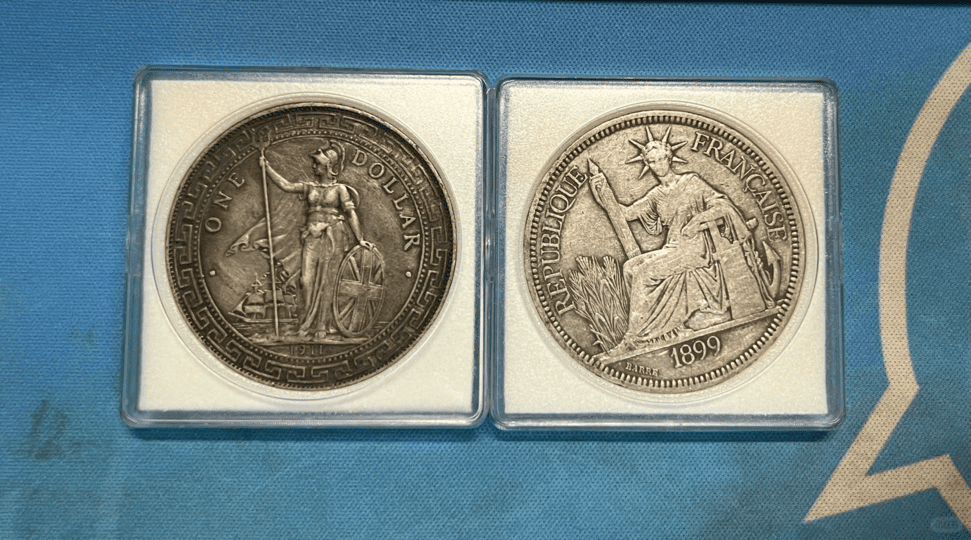
Prepare complete and raking-light views before describing a British Trade Dollar
A familiar market name is useful for finding references, but it is not an attribution. Number the coin first and assemble complete views, raking-light images and located damage details before describing its weight, diameter or surface.
Keep attribution and measurement evidence distinct
Record weight, diameter, tool and original unit together. In a separate check, transcribe the date, denomination, principal design and border inscriptions so the two evidence groups can be compared without collapsing them into one claim.
Verify that the photographs share one orientation and list anything missing. If a holder cannot be opened safely, name the obscured area and continue without disturbing it.
Stories about people, places or transactions may be retained as provenance. The assessment itself concerns the British Trade Dollar visible in the images and measurements.
Photograph the entire circumference
Where the coin has reeding, edge lettering or another edge design, cover it in overlapping sections. Do not smooth a seam or alter a hole, soldered area or suspected repair before it has been photographed.
Separate stable toning from worn relief, strike softness, wiping marks and colours that may result from chemical treatment. Explain any proposed contact inspection before touching the coin; darkness alone is no reason to clean it.
Record patina and wear as they appear
Separate British Trade Dollars from junk dollars, piastres, Morgan dollars and other foreign silver coins. Give each example a number that remains with both faces, the edge, weight and diameter.
A grading holder provides label and grade information, but the enclosed type, date, mintmark, two principal designs and visible surfaces still need to agree with it.
Give each silver coin its own identity
Transcribe the date, denomination, country or territory wording and principal designs before comparing dimensions with the correct specification. A similar coin cannot supply an unreadable feature.
Start with uncropped views of both faces and the whole circumference. Add located details of the central devices, border wording, mintmark, denticles and edge, explaining the effect before any closer contact.
Know when photographs are not enough
Preserve chop marks, an old paper sleeve and provenance accounts as background. They do not replace the coin's inscriptions, designs, metal surface or edge.
Use the Chinese market name as an index only. The formal description should be built from the date, denomination, country wording, mintmark and designs on this coin, all connected to its number.
A focused check for the British Trade Dollar
Save the weight, diameter, measuring tool and original unit together, then locate every chop mark, hole, soldered point or altered-edge area. Both sets need the individual coin number and should be interpreted only after the type is established.
Confirm that the date, denomination, principal designs, border wording and complete edge sequence belong to the same example. Date conversions, oral accounts and later additions so none silently replaces the original evidence.
Photographs may support inscriptions, design, proportions and conspicuous damage. They may not establish metal, a concealed crack or minute later work, so describe those limits under the corresponding coin number.
Keep the silver surface and edge untouched: no washing, polishing, scrape test or filing. Do not open an original box or sealed holder before the reason and possible effect have been considered.
Before comparing a site reference, number each British Trade Dollar separately. Let its dimensions and surface observations travel only with that coin, not with a batch photograph or loose accessory.
