
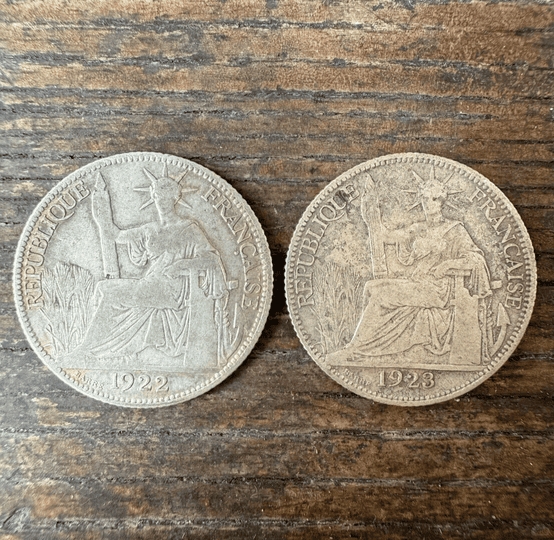
Separate seated-figure trade coins before comparison
Coins sharing one packet may have different conditions. Give each seated-figure trade coin its own identifier and establish a consistent front, back and edge direction before noting details.
- Identification: principal designs, denticles and visible mintmark positions
- Condition: patina, wear, knocks and possible cleaning traces
- Images: uncropped faces, raking-light views and located damage close-ups
Make an individual evidence set for every coin and mark an old label for later checking. A claim unsupported by the photographs remains open, with any seal or handling limit stated.
Keep earlier stories apart from the coin; the visible seated-figure trade silver is the basis of this comparison.
A specification is only one part of the check
Distinguish ship dollars, seated-figure coins, standing-figure trade dollars, Morgan dollars and other foreign silver. Number each one so its faces, edge, weight and diameter cannot be exchanged.
A holder label and grade add supporting information, but the type, year, mintmark, main designs and surface of the enclosed coin still require comparison wherever visible.
Transcribe inscriptions and designs first
Read the year, denomination, country or regional wording and principal designs across the two faces. Establish the type before using either weight or diameter as a comparison.
Retain uncropped views showing the entire circumference, followed by locatable details of the main motif, border legends, mintmark, denticles and edge. Leave indistinct areas unresolved.
Whole views must precede close-ups
Where the edge has reeding, wording or a design, photograph overlapping sections around the circumference. Preserve joints, reshaped rim areas, piercings and solder exactly as found.
Treat tone, circulation rub, strike softness, wiping hairlines and cleaning-related colour as five separate observations. Never clean a dark surface merely to make the photograph clearer.
Keep the holder and provenance in their own evidence group
Chop marks, an old sleeve and provenance accounts can add context, but they cannot replace examination of inscriptions, principal designs, metal surface or edge.
Treat the Chinese collector name as an index. Formal details should come from the visible year, denomination, country wording, mintmark and designs on this coin, not another foreign silver issue.
What Weight and Surface Can Establish on Seated-Figure Silver
Start with the principal designs, denticles and mintmark positions. If the weight, diameter, instrument or original unit is missing, state the gap and confirm that every detail still belongs to the same coin.
Keep complete, raking-light and damage views together while noting the year, denomination, main designs and border legends separately. Later conversions or oral accounts must not overwrite the first evidence.
If a document name conflicts with the coin, preserve both exact wordings and dates. Leave the type, period or material open until the physical evidence can be compared again.
Another reviewer should be able to locate the same seated-figure coin and repeat the sequence. State what is hidden, sealed or unsupported, then return to the main designs and mintmark positions.
Before an enquiry, check the complete views, close-ups, measurements and packaging. Photograph any missing face, inscription or edge section without altering the coin.
