
 WhatsApp item photos
Name each trade-silver family from visible evidence
Junk dollars, French Indochina piastres and British Trade Dollars should not share a single generic description. Number the coins first and note which proposed name still needs checking.
A practical order for the evidence
Under identification, copy the visible date, denomination, country or regional wording, mintmark and principal designs from both faces.
Under photography, keep uncropped faces, raking-light views and located details separate from any conclusion about type or condition.
Begin with Inscriptions and Dimensions
Before adding a measurement, match the holder, sleeve and physical coin number. Describe any obstruction that cannot be removed safely.
A seated-figure trade coin and a standing-figure trade coin can differ fundamentally despite similar circulation histories. Let their own legends, dates and designs establish the comparison group.
Keep Packaging Limits Visible
Secure both complete faces before enlarging the junk, seated figure, standing figure, border text, mintmark or denomination, and record what packaging hides.
Separate junk dollars from French Indochina piastres, British Trade Dollars, Morgan dollars and other foreign silver before measuring. Each piece retains its own edge, weight and diameter.
Chinese collector names may help an index, but formal identification returns to the words and motifs on the metal. Do not transfer a specification from a neighbouring coin.
Preserve the Surface
Keep overviews, located details, readings and paperwork under one number, leaving the silver unwashed while evidence is gathered.
Compare weight and diameter only within a sufficiently established type. Include the instrument, original unit and measuring position so another person can repeat the reading.
Know When Photographs Are Not Enough
Images can support lettering, proportions and prominent damage, while composition, concealed cracks and delicate later work may require an in-hand check.
If edge lettering, reeding or another pattern is present, photograph the entire circumference in overlapping segments. Leave solder, piercings and reshaped rims untouched.
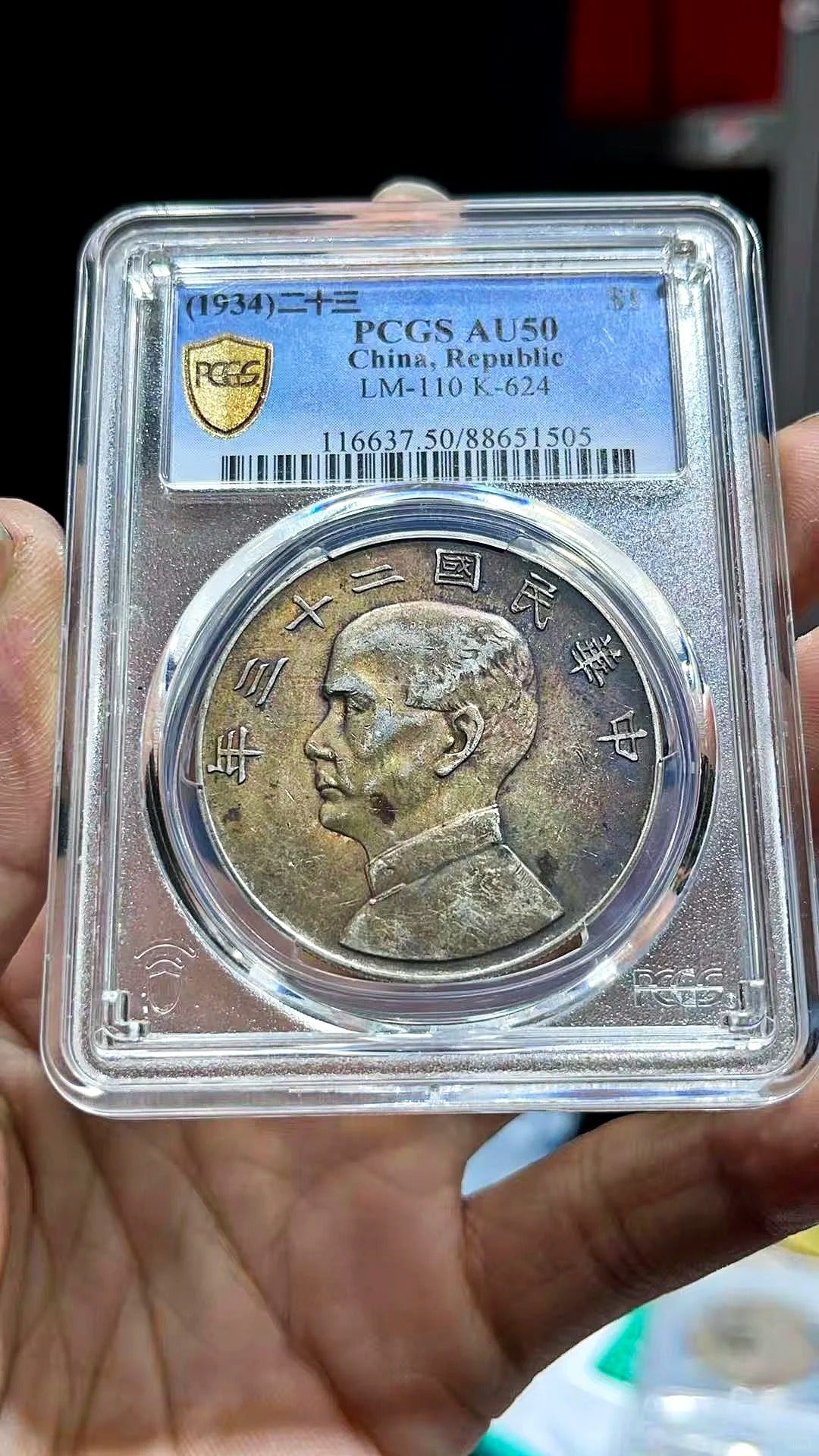
A holder label supplies a proposed identification and grade, not a substitute for the date, value, designs and surface of the enclosed coin.
Keep Provenance as Context
Attach references and consultation dates to historical statements; old sleeves, family stories and online pictures should remain separate from the coin fields.
For a junk dollar, locate the ship design, date, denomination and surrounding wording before turning to measurements. For a piastre, transcribe the French Indochina legends and seated figure without relying on a nickname.
On a British Trade Dollar, connect the standing figure, date, mintmark where present, reverse design and edge to that specimen. Do not merge its dimensions with a seated-figure example.
Describe patina, circulation wear, weak strike, wiping lines and chemical-cleaning colour as separate observations. Comparable lighting matters when surfaces are being contrasted.
Use Comparable Light Across the Group
Repeat the edge and measurement work for every coin, even when two pieces appear alike. Batch photographs demonstrate quantity, not the identity of individual readings.
Leave Incomplete Legends Open
Before handover, reconcile each obverse, reverse, circumference, weight, diameter and sleeve. No three trade-silver families should share a photograph or measurement.
Respect Albums and Sealed Groups
Prepare an enquiry from the gaps, not a promised attribution. List the exact inscription, edge segment or measurement that still needs direct examination.
Retain the first neutral-light photographs so later colour or condition comparisons can return to the same visual baseline.