
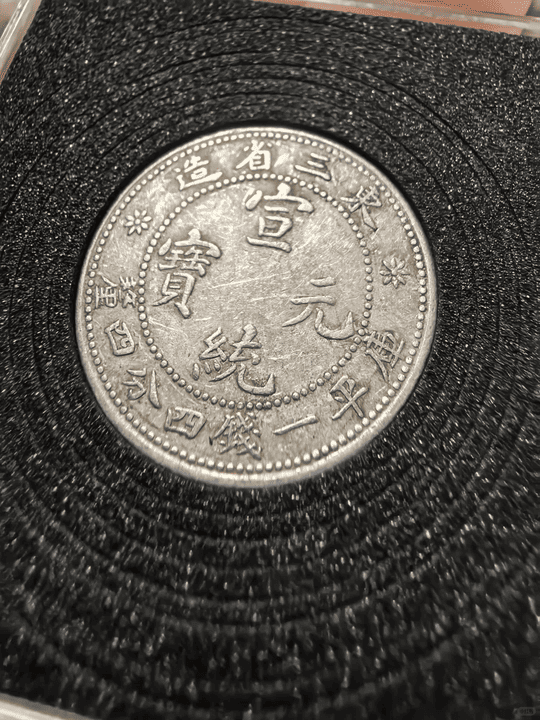
Identify the evidence gaps on the Xuantong Yuanbao
Take complete legend-side and dragon-side photographs, retaining the rim. Copy the authority, date and Kuping denomination only as visible.
Evidence available now
Record the dragon, beaded border, denticles and English lettering with located images, while describing surface condition separately.
Evidence to retain for later
Mark missing edge frames, weak wording and holder-obscured positions. Do not complete them from another provincial issue.
A former story or market label cannot establish origin; keep the working description tied to the physical coin.
Read the legends before dimensions
Transcribe the Eastern Three Provinces wording and complete Kuping value, then compare dragon details within the supported issue family.
Keep every enlargement locatable on an uncropped face, especially the lettering, inner border and dragon features.
Specifications do not replace identification
Number each dragon coin individually and retain its two faces, edge, weight and diameter without borrowing a neighbour's reading.
A slab label contributes context, but visible authority, denomination and surface must still agree with it.
Complete views come before close-ups
Photograph one overlapping circuit around the edge, preserving seams, knocks, holes, solder, filing and old mount evidence.
Separate toning, high-point wear, strike softness, wipe lines and cleaning sheen. Dark colour is not a cleaning instruction.
Keep provenance outside the metal description
Transcribe old envelopes and source claims under linked numbers without allowing them to fill an unreadable character.
Group similar coins by visible province, date and denomination before comparing dragon, border or punctuation details.
Verify the provincial wording before naming a subtype
Reconcile authority wording, denomination, dragon, edge circuit and measurements against the item number before proposing a subtype.
Retain first photographs and readings when new evidence appears, adding a dated explanation rather than rewriting the original entry.
Cite issue history with the reference consulted; another specimen should only identify positions worth checking.
Define any question requiring direct examination, such as holder-hidden edge work or metal, before handling the enclosure.
Keep patina and packaging intact at handover. No dip, scrape, file or scratch test strengthens the attribution.
