
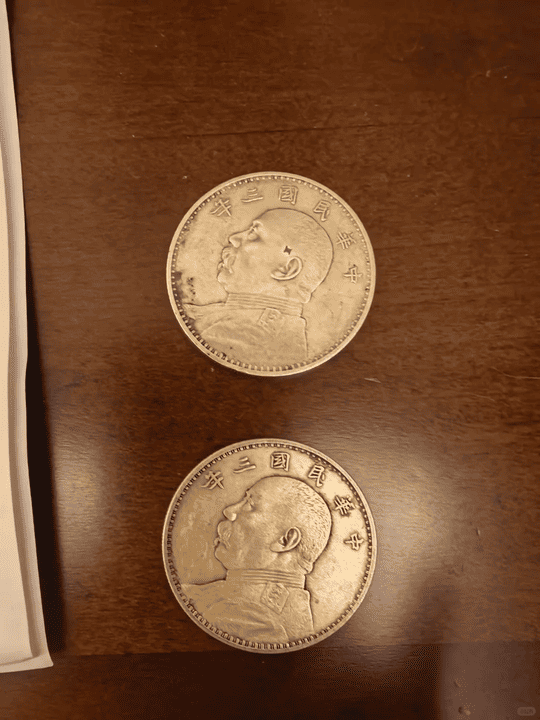
Write Only What the Yuan Shikai Coin Shows
Do not assign a date or variety from an old label or a similar online image. Begin with the year, denomination and wording visible on matched complete faces.
Keep the complete edge, weight, diameter, instruments and native units under the same coin number as the portrait and grain-wreath photographs.
What Must Remain Open
List unclear year strokes, hidden rim sections, unsupported claims and locations that cannot be viewed without changing the enclosure.
Keep contextual stories and packaging descriptions outside the physical coin fields, with their own dates and identifiers.
Reconstruct the Entire Edge
Photograph overlapping circumference sections in sequence, preserving seams, rim work, piercings, solder and former-mount evidence without filing.
Describe patina, circulation wear, weak strike, wiping lines and chemical colour separately under consistent lighting.
Sort Several Coins by Visible Evidence
Group Yuan Shikai coins by readable year and proposed design family, then give each specimen its own portrait, reverse, edge and measurements.
A holder contributes its printed description and stated grade, but the enclosed year, portrait, grain wreath and surface require independent checking.
Read the Portrait and Reverse in Order
Transcribe the year, denomination and face lettering before enlarging portrait hair, ear, epaulette, denticles or another proposed marker.
On the reverse, locate the wreath, grain heads, knot, denomination and border with enough context to return every detail to the full face.
Define the Need for Direct Access
Keep old sleeves and provenance accounts as background, and arrange direct examination only for a named hidden or conflicting feature.
Use signed type, O variety, triangular-yuan variety or regional terminology only when the required marker is visible on the complete coin.
Reading Worn Yuan Shikai Letters Without Inventing a Variety
A broken or weak year stroke is recorded in its position on the full portrait face, with the unreadable portion left open rather than restored from a catalogue.
The reverse wreath, grain heads, knot and denomination provide an independent orientation check for photographs that might otherwise be assigned to a similar coin.
Holder wording contributes a dated proposal, whereas hair, epaulette, denticles and edge evidence determine whether the proposed diagnostic is actually visible.
New images are appended when a letter or rim area becomes clearer, preserving the earlier reading and the reason for revision.
The final note names the unresolved stroke or variety marker and keeps the Yuan Shikai coin in its recorded, uncleaned state.
