
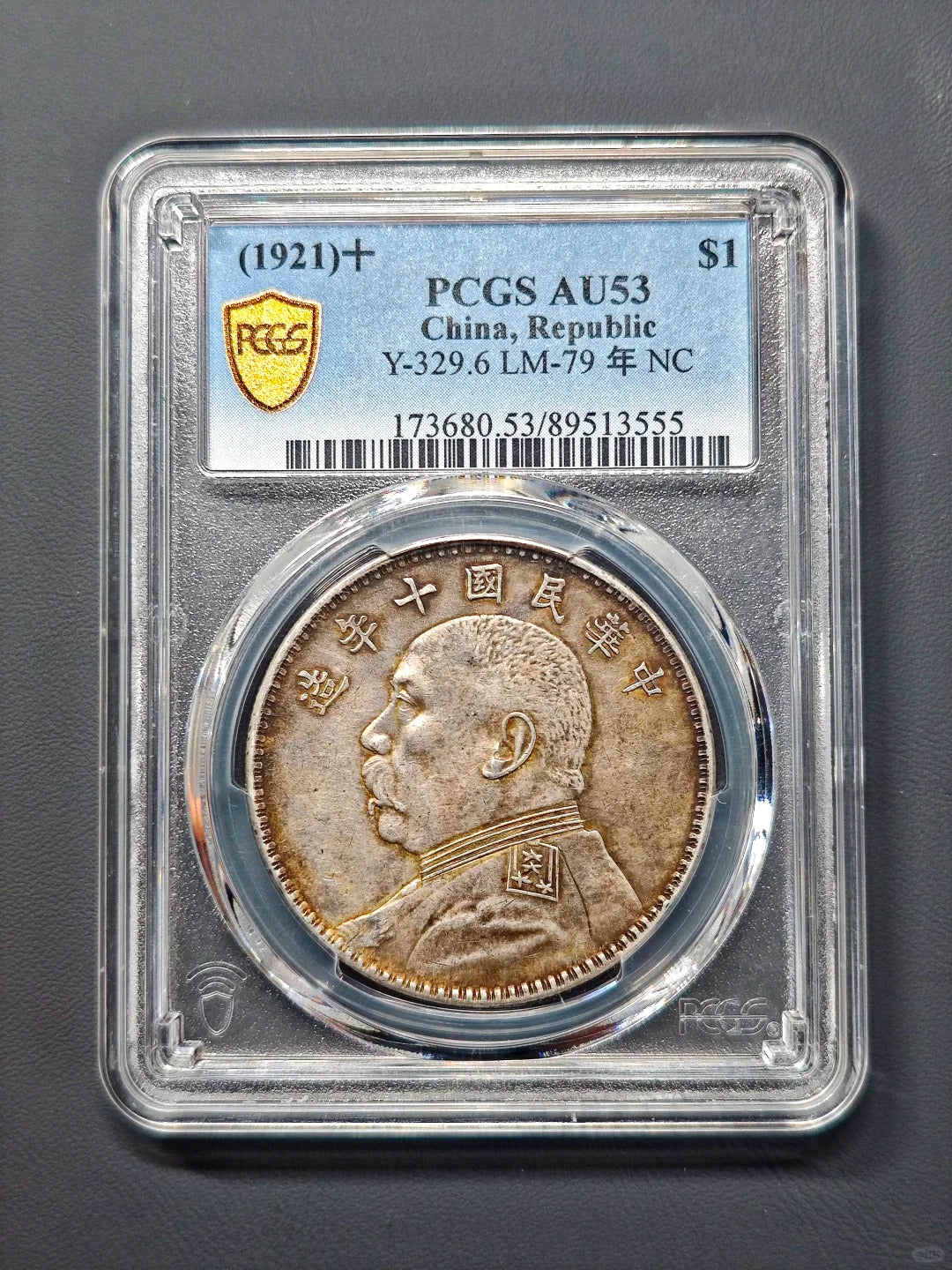
Anchor variety markers to one Yuan Shikai dollar
Start with the grain wreath, tied ribbon, denomination characters and any proposed variety marker, then locate them on the uncropped reverse. A nickname cannot supply a missing stroke.
Put visible minting marks, countermarks, holes and rim work in the condition record. Each observation keeps the same item number as the complete portrait and wreath photographs.
File sleeves, grading holders and old labels as supporting material. First check that neither full face has been cropped and that every attachment still belongs to this coin.
Read the relationship between whole and detail
Separate stable toning, circulation wear, weakly struck detail, wiping lines and colour associated with chemical treatment. None of these conditions calls for cleaning.
A paper sleeve or provenance account can guide research, but it cannot prove portrait lettering, wreath form, strike quality, metal surface or edge construction.
Keep complete views, located close-ups, measurements, packaging and documents together. Add a new dated layer whenever an attribution or photograph changes.
Record first and name later
Enter visible legends, design, available dimensions, enclosure and current surface condition before assigning a variety. Mark covered or blurred fields for another review.
Transcribe date, denomination and wording on both faces. Compare weight and diameter only within a coin type supported by those observations.
Make the paperwork answer to the object
Preserve the full circumference on both faces, then photograph portrait hair, epaulette, date characters, wreath, ribbon, inner denticles and the precise position of a proposed marker.
Number multiple portrait dollars before grouping them. The portrait face, wreath face, circumference, weight and diameter of one coin must never be completed with another coin's evidence.
Give every historical or production source a consultation date. Handwriting, oral history and web images remain attributed notes rather than object observations.
Set a threshold for direct review
Signed, O-variety, triangular-yuan and regional names are conclusions only after their defining features are visible in context. Until then, preserve the wording as an unresolved lead.
Original images can show lettering and obvious damage, while alloy, fine repair and areas beneath a holder may still require inspection of the metal.
Reconcile the portrait side with the wreath side
Begin the final comparison with the visible date and denomination, then return every portrait-lettering and wreath-marker claim to an uncropped side. Record the orientation of each close-up.
Describe patina, high-point wear, knocks, cleaning lines and rim changes by position. These condition facts remain separate from the proposed variety name.
Keep raw measurements with their tool and unit, even if a later conversion is useful. Repeat a conflicting reading on the same coin before seeking an explanation.
If a holder label, old sleeve or certificate disagrees with the metal, retain both statements and their dates. The disagreement is part of the record.
A final checklist should connect the two faces, edge, measurements, documents and unresolved fields. Only located features enter the variety summary.
