
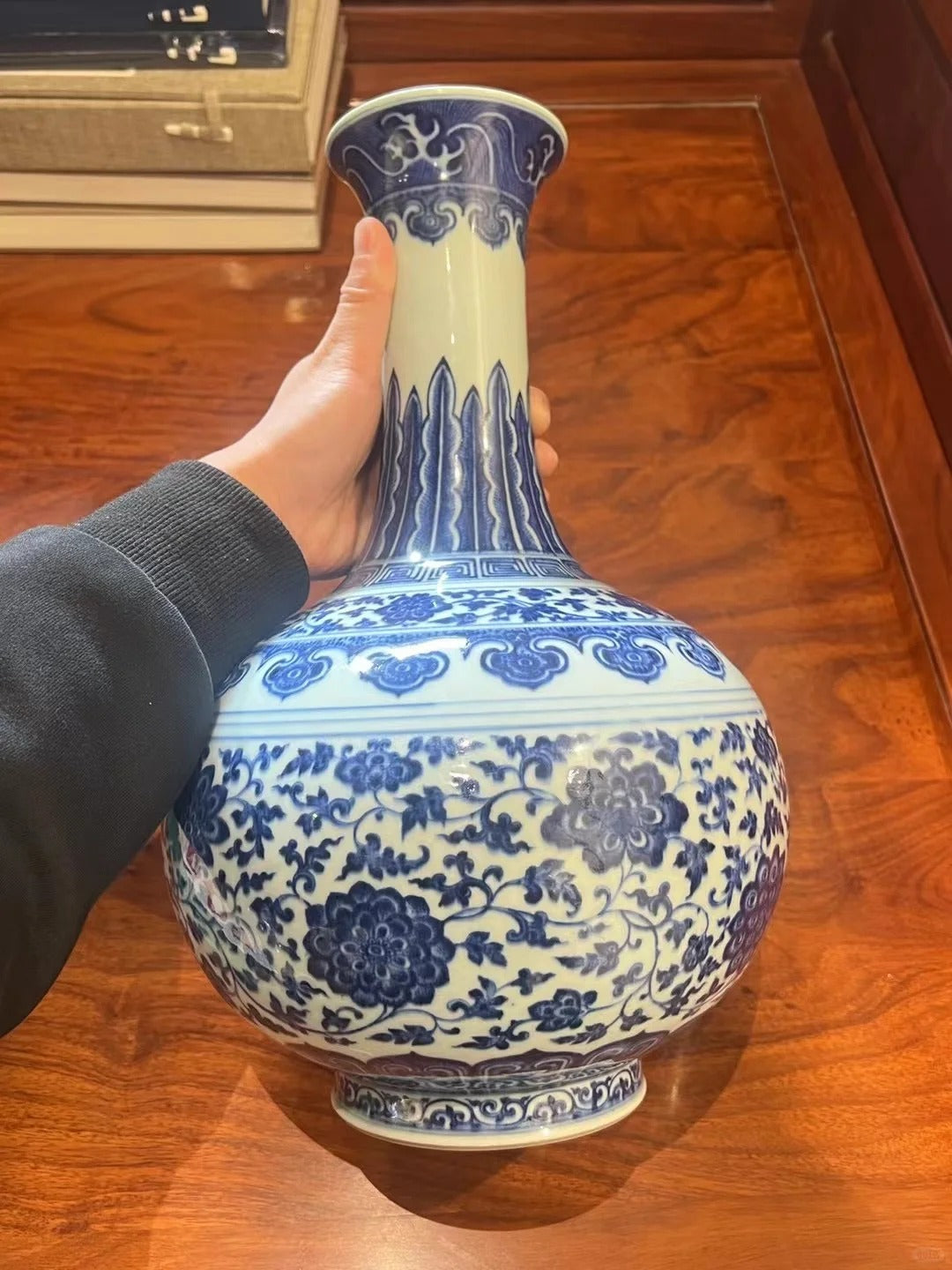
Start the Porcelain Record with the Whole Form
Photograph the complete object from several fixed directions, including its profile, mouth, interior, handles or attachments and relation to any stand.
Give the vessel and each detachable base, lid or accessory separate identifiers while recording which pieces were found together.
What Must Remain Unresolved
Leave period, kiln, material and maker claims open when marks, body, glaze or construction cannot be seen safely, and preserve an old label only as context.
Measure the Form Without Stressing It
Record height, maximum width, mouth diameter and foot-ring diameter with the tool, native unit and exact contact points.
Support the body and base during measurement, avoiding pressure on handles, rims, applied decoration, old joins and unstable repairs.
Read the Base in Full Context
Capture the complete underside before enlarging the foot ring, exposed body, trimming direction, kiln grit, firing marks and any inscription.
Keep the mark within a full base view so its orientation, relationship to the foot ring and any cropped or hidden portion remain clear.
Describe body colour, glaze thickness, pooling, crazing and firing features without using one trait alone to assign a date.
Map Damage and Old Restoration
Locate rim chips, hairline cracks, concealed cracks, glaze loss, joins, fill, overpaint, gilded repair and movement by direction and nearby feature.
Use diffuse and raking light for suspicious boundaries, retaining uncertainty where a photograph cannot distinguish glaze variation from restoration.
Handle the Vessel Conservatively
Do not tap the body, pour in hot water, apply dye or remove an old repair to search for hidden damage.
Keep padded support beneath the base and main body, moving lids and paired pieces separately rather than lifting them as one unit.
Photograph a pair together for scale and profile comparison, then complete separate bases, dimensions, marks and damage records for each object.
Qianlong-Style Lotus Decoration Is Not a Date by Itself
The source image describes Qing Qianlong blue-and-white scrolling lotus decoration, which is recorded as visible motif and colour before any period claim is accepted.
Profile, mouth, interior, base and foot ring show how the decoration relates to the vessel's form, body and glaze rather than leaving a detached motif close-up.
Chips, hairlines, old joins and overpaint can interrupt the lotus design, so their locations and lighting remain part of the reading.
Dimensions and a full underside image allow comparison, whereas an old wooden stand or paper label remains contextual evidence with its own identifier.
A period or kiln question stays open when unstable repair, packaging or an inaccessible cavity prevents the body, glaze or construction evidence from being examined safely.
