
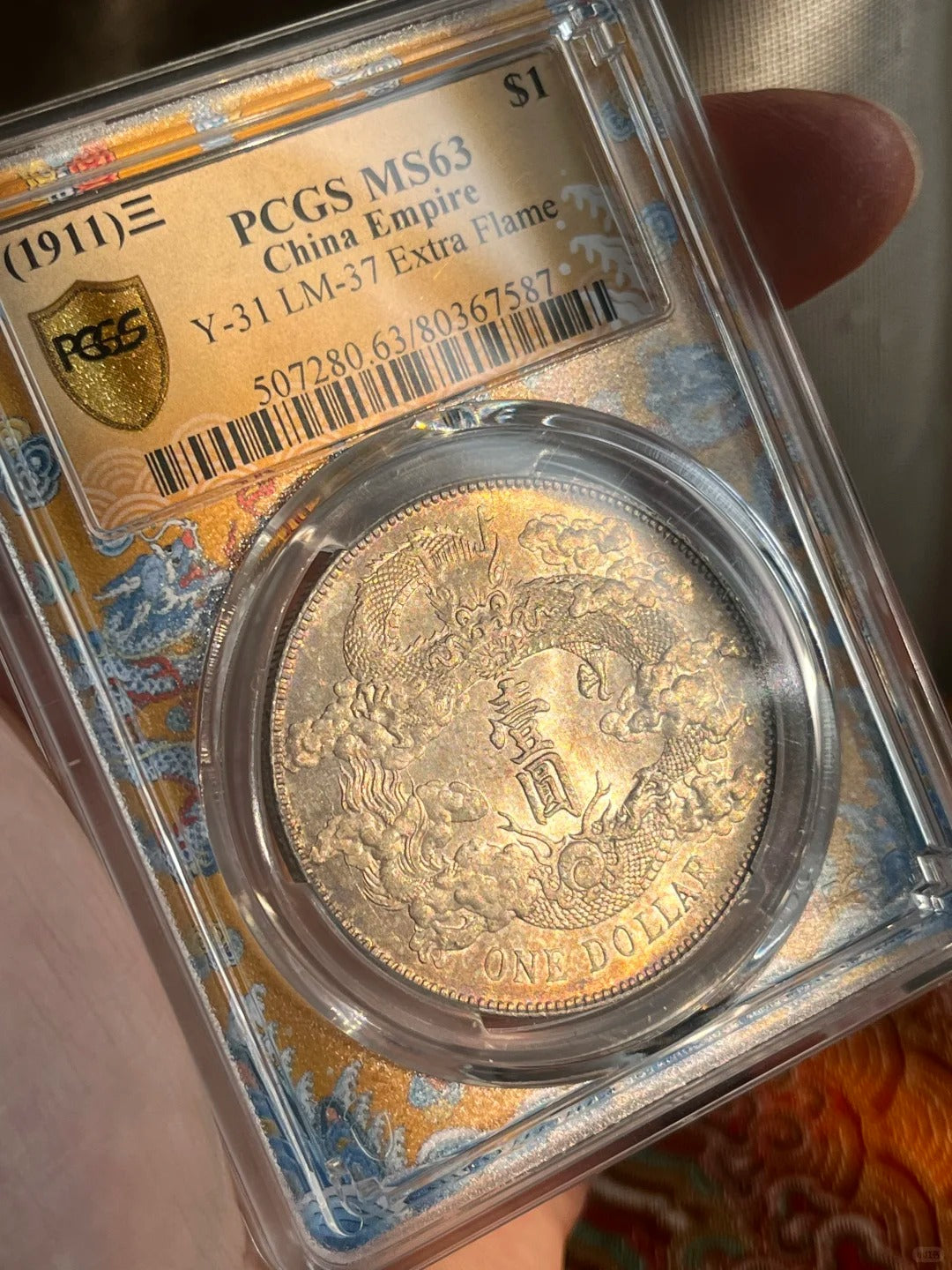
Sort dragon dollars before interpreting varieties
Number every coin and keep its complete faces, dimensions and accessories together instead of describing the batch by a total count.
- Identity — visible province or mint, date, Kuping denomination and legends.
- Measurements — continuous edge, weight, diameter, tools and units.
- Condition — chops, holes, filing and altered-rim locations.
Retain unfiltered original images and mark any contact or package restriction.
Preserve positional relationships
Group broad types by visible wording before comparing dragon, border or punctuation details.
Photograph the full edge from one landmark, keeping repairs, holes, solder and filing untouched.
Use one number on complete views, located details, readings and documents.
A working name can remain open
Record visible wording, design, dimensions, enclosure and surface even if the precise issue is not yet confirmed.
Keep every coin’s authority, date, denomination, dragon, edge and readings individually linked.
Match documents to the coin
A slab contributes a label and score; verify the enclosed authority, denomination, dragon and condition independently.
Copy legends before comparing dimensions, leaving weak characters unresolved.
Cite issue history and keep envelopes, oral accounts and internet images in background notes.
Know which points require direct review
Separate toning, wear, weak strike, wiping and cleaning sheen, retaining all related images under the coin number.
Photographs may not settle metal, fine tooling, a concealed repair or surface beneath a holder.
Reconcile authority wording with the dragon-side evidence
Authority wording and denomination belong in the transcription, while complete-face and dragon-detail imagery supplies located support.
Altered areas are recorded apart from sleeves and holder labels, so neither form of evidence implies an attribution.
Precise locations give condition and edge anomalies more value than a broad grade.
At handover, the count, packages, measurements and unresolved fields are reconciled under their item numbers.
Transcribe authority, date and Kuping wording first
The starting transcription follows every visible character on the subject coin; market nicknames and old envelopes remain in provenance.
Keep full faces, dragon details and edge under one number
An inscription-side view, dragon-side view and complete circumference establish the whole coin before any isolated variety position is compared.
Review measurements and surface separately
Measurements retain the tool, unit and first reading, while toning, wear, wiping and cleaning evidence receive separate located descriptions.
A single item number prevents extensive photo sets from crossing between coins.
