
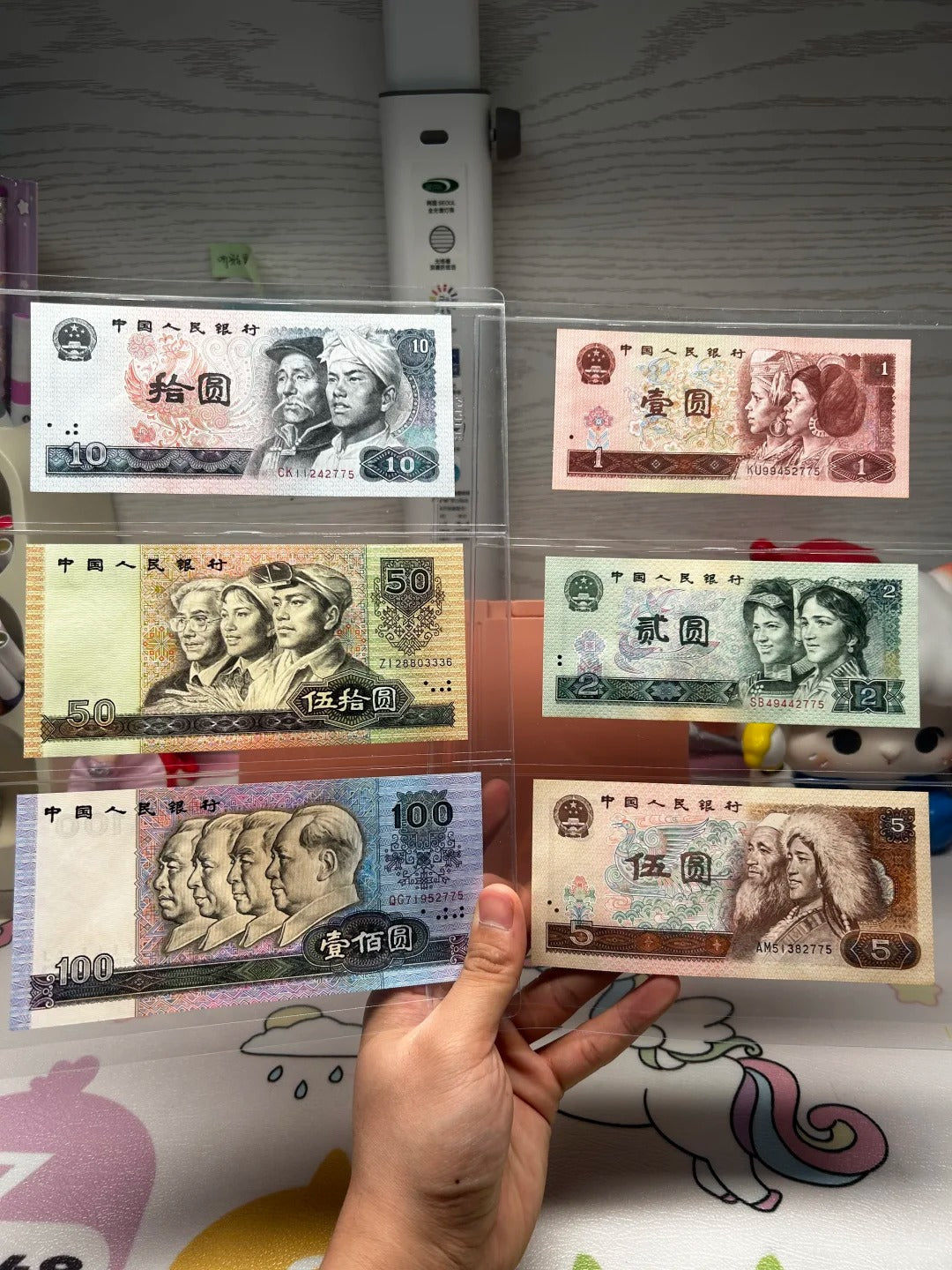
Sort the group before cataloguing Fourth Series Renminbi
With a complete set or mixed batch, confirm the actual count and number every Fourth Series note. Establish front and back—or, for packaging, inside and outside—before transcribing, photographing or describing condition.
- Identification notes: serial prefix, full serial number and print position
- Photographs: transmitted-light observations and any watermark not yet confirmed
- Condition: evidence of filled holes, colour retouching, pressing and replaced corners
Finish with an item-by-item checklist and list every unresolved point during review. Do not turn an unsupported photographic impression into a conclusion; note restrictions on opening or handling.
Cite sources for issue information
Interpret a special prefix or number within the correct issue and variety. An attractive serial number does not override paper, ink colour, corner condition or repair evidence. Use the checklist to catch anything omitted.
Sort the notes by series, denomination and design before comparing the original images. The front, back, four corners, prefix, full number, dimensions and transmitted-light watermark view must belong to one piece.
Attach a citation and consultation date to any statement about issue, manufacture or history. Keep an old label, oral provenance or web image as background material rather than evidence from the note.
Separate the varieties before arranging the evidence
For every Fourth Series note, capture its provisional identity, readable face details, principal design, dimensions, enclosure and paper condition. Anything indistinct goes back for a fresh check.
Quarantine a note showing mould, stuck areas, a split or legacy tape, but do not try to remove any of it. A brush, iron or damp cloth would introduce further change.
Never overwrite the original reading with a conversion
Separate ration coupons, foreign currency, commemorative notes and uncut notes during handover. Their issue histories and market categories should not be folded into the Fourth Series group; check the inventory when sorting is complete.
Washed paper, pressing, filled holes, trimming, colour retouching and replaced corners leave different evidence. Raking light usually reveals paper relief more clearly than strong frontal light.
Keep full views, enlargements, measurements, packaging and documents under the note's item number. Use that number for every later addition so the photographs cannot migrate to another banknote.
Trace the note during a later review
Keep a strap, consecutive-number run or originally sealed packet intact for the first photographs. Capture the band or seal, boundary serial numbers, thickness from the side and stated count before deciding whether individual notes need inspection. Then check the inventory for omissions.
Original photographs help with sorting and visible damage. Paper composition, subtle repairs and areas hidden by packaging may still need direct examination.
Priorities for a Fourth Series Renminbi check
Do not force a final decision on series, variety or condition at the first pass. Transcribe a visible serial prefix, full number and print position, and state any evidence gap affecting folds, tears, stains or mould. The complete front, back, corners and edges remain under the same item number.
Put filled holes, colour retouching, pressing and replaced-corner evidence in the condition notes. Keep the complete front and back, four corners and edges with the photographs. Link both to the same number and preserve the original material alongside later conversions or oral accounts.
If paperwork and the note disagree, transcribe both wordings and dates. Variety, period or material remains open until examined; a similar piece cannot fill the gap. Folds, tears, stains and mould provide the route back to the object.
The checklist must allow another person to find the same Fourth Series note and repeat the review. State anything illegible, inaccessible or unsupported. Repair evidence that cannot be matched to the note stays pending.
For an enquiry, return to the numbered note and confirm both faces, corners, edges and holder. Add any missing view of its denomination, design or serial number without altering the paper.
