
 WhatsApp item photos
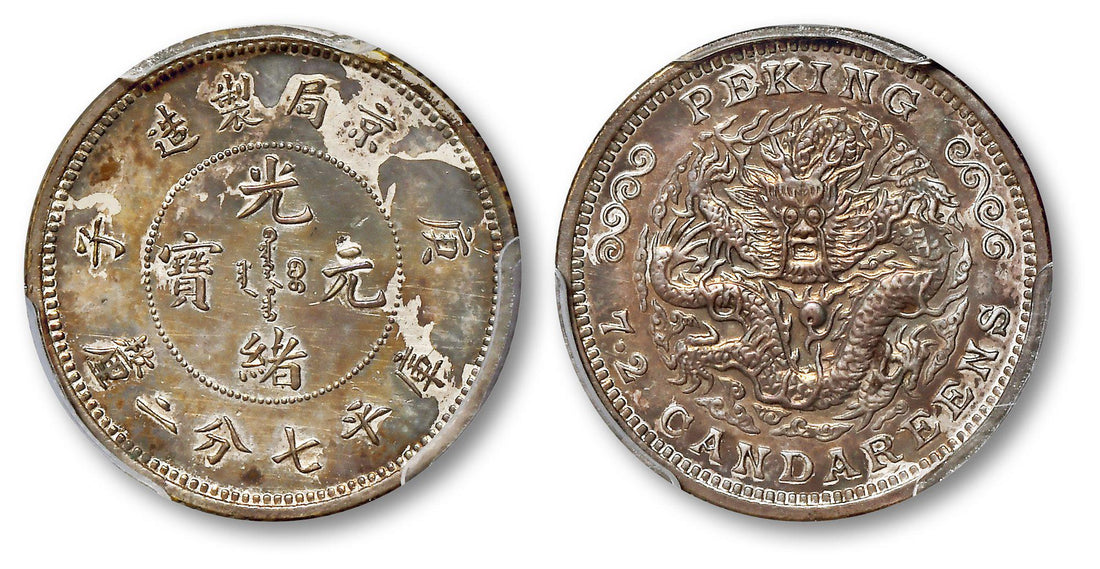
Sort the Guangxu Yuanbao coins before comparing details
A shared dragon-dollar name can conceal different provincial mints, dates and denominations. Give each coin a number before moving its sleeve, holder or handwritten label.
- Identification: transcribe the provincial mint or mint name, reign or cyclical date, Kuping denomination and every legible surrounding character.
- Measurements: keep the complete edge sequence, weight, diameter, instrument and native unit beside the same coin number.
- Condition: map chops, piercings, rim work and other visible interventions without polishing or filing the metal.
Complete both faces before consulting a comparison image. An unreadable character remains unresolved rather than being supplied from a similar Guangxu Yuanbao.
Let the photographs preserve position
Photograph the inscription face and dragon face with the entire circumference visible. Add close-ups only after those orientation views have been secured.
Cover the edge in overlapping sections and retain the order in which they were taken. Seams, solder, former mounts and reshaped areas should remain exactly as found.
Use one identifier on photographs, readings, packaging and documents. A later examiner can then trace a close-up back to the physical coin instead of relying on appearance.
A working name is enough at the first pass
Begin with the characters that are genuinely legible, the main motifs, dimensions or weight, enclosure and present surface. Make a follow-up list for anything hidden by plastic or shadow.
When several examples are present, group them by provincial mint, date and Kuping wording. Only then compare dragon details, beaded borders, denticles and English legends.
Keep labels beside, not inside, the attribution
A grading holder contributes its printed description and stated grade. It does not replace inspection of the enclosed legends, dragon, rim or surface.
Historical and production claims need a named reference and an access date. Family notes and dealer labels are useful context, but neither can complete missing coin text.
Compare weight and diameter only after the basic type has been established. Preserve the first reading even when a repeat measurement gives a different result.
Read the surface separately from the design
Natural patina, circulation rub, weak strike, wiping lines and chemically altered colour describe different evidence. Dark colour alone is not a reason to clean the coin.
Photographs can locate obvious damage, whereas subtle repair, metal composition and holder-covered areas may still need direct examination under suitable light.
When Guangxu Legends and Kuping Readings Conflict
Start with provincial mint, date and Kuping denomination, then reconnect the complete inscription and dragon faces. The edge, weight and diameter follow under the same identifier.
Write the exact tool, original unit and measuring point beside every reading. A converted figure is secondary and should never overwrite the observation made at the time.
Describe each mark by its position relative to a fixed character or motif. General phrases such as good condition cannot guide a second examination.
If the coin and an old label disagree, retain both wordings with their dates. Leave the finer variety open until the required character, dragon feature or edge can be located.
Before an enquiry, check that every image, measurement and enclosure note points to the intended coin. State all views that remain unavailable.