
 WhatsApp item photos
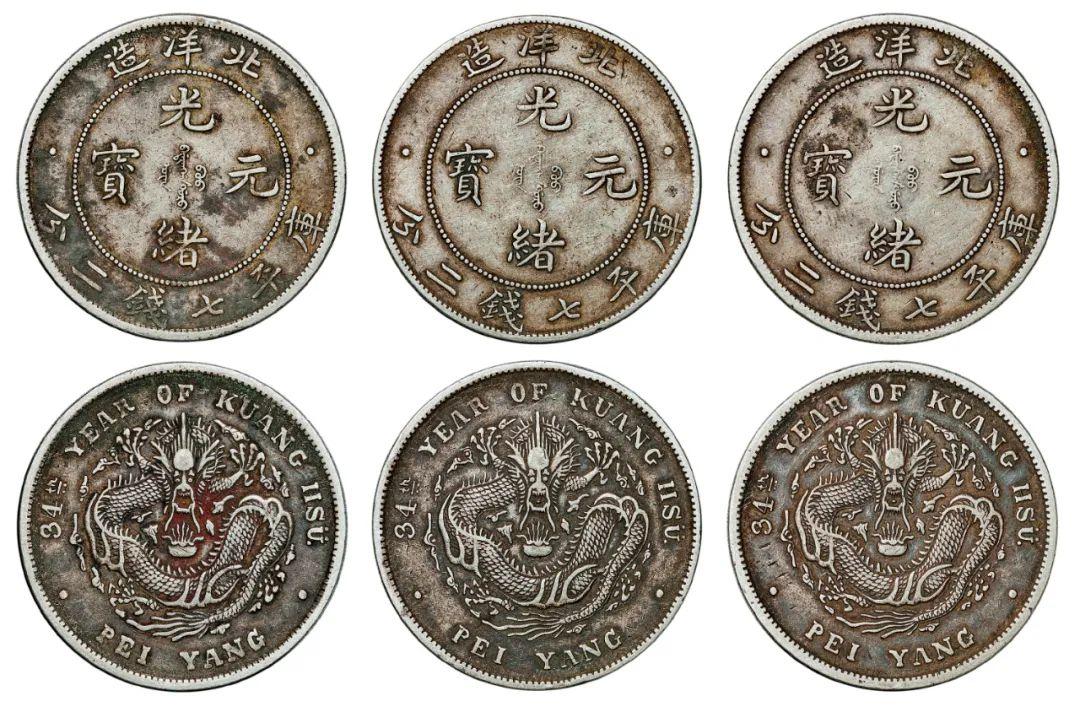
Start with the provincial inscription, not a familiar nickname
Photograph both faces before deciding which mint, date or denomination the coin represents. Copy every legible character in order, including the provincial wording and any Kuping value, without completing a worn passage from another Guangxu Yuanbao.
Give the coin a single reference number. Put the uncropped obverse, reverse, holder and first measurement card under that number, so a later close-up cannot migrate to a similar dragon dollar.
If part of the legend is weak, covered or outside the photograph, say exactly which part remains unreadable. A blank conclusion is safer than a confident attribution built from a market nickname.
Follow the dragon and lettering around the whole coin
After the full views, add located details of the date inscription, provincial name, Kuping wording, dragon head, claws, scales, beaded border and denticles. Each enlargement should be easy to place on the complete face.
Record the circumference in overlapping sections with the same starting point and direction. Note seams, filing, knocks, solder, holes or former mounting without scraping the edge to expose cleaner metal.
Keep weight, diameter and thickness with the instrument, unit and measuring position. These readings help compare a supported variety; they cannot identify an uncertain coin by themselves.
Separate attribution evidence from surface condition
Describe stable toning, high-point wear, strike softness, wipe lines and unnatural brightness as different observations. Do not let dark colour become a reason to polish the dragon or lettering.
An old envelope, grading label or family account may help trace the coin, but it does not supply a missing mint name. Transcribe such material separately and match it to the numbered object.
Use comparisons without borrowing their facts
Sort multiple Guangxu Yuanbao first by visible province, date and denomination. Only then compare smaller differences in dragon form, punctuation, lettering or border.
A comparison photograph should explain where to look, not what the answer must be. Keep another coin's weight, inscription and edge out of this record even when both pieces share a broad catalogue name.
For historical or production context, identify the reference consulted and the date of consultation. Retain that research beside, rather than inside, the observations taken from the metal.
Know when photographs have reached their limit
Clear images can establish legible inscriptions, design relationships and conspicuous damage. They may not resolve metal, fine hairlines, a repaired rim or detail hidden by a holder.
Where the Kuping text or edge remains concealed, leave the enclosure intact and name the missing view. Direct examination should answer a defined question, not become an excuse to open or clean the coin.
Resolve the provincial and Kuping reading against the edge circuit
Return to the provincial inscription and Kuping wording, then check that the date, dragon details and full edge sequence all belong to the same reference number. Compare the first readings with later measurements without overwriting either set.
Locate every chop mark, hole, altered rim and cleaning trace on an overall image. General phrases such as ‘good condition’ do not tell the next reviewer what is actually present.
Keep oral history and online comparisons in the background section. The confirmed description should contain only features visible on this coin or supported by a cited document.
At handover, count the coin once, retain its sleeve or holder, and pass on the unresolved list. No polishing, chemical dip, scrape test or edge filing is needed to make the record useful.
A final read should answer three questions: what can be seen, what remains hidden, and which evidence supports the proposed attribution. If those answers are distinct, the file is ready for specialist review.