In Hong Kong, stamp collecting is more than a nostalgic hobby; it is also a specialised form of alternative-asset investment. When renovating an old flat or sorting through a family home, many people uncover long-forgotten stamp albums and immediately ask, “Are these Queen Elizabeth II stamps and 1997 handover issues still worth anything today?”
Having worked in the Hong Kong and Macau markets for many years, professional buyer Gu Jin Jian Bao understands the history behind each stamp and the market movements it has experienced. This article examines the Hong Kong stamp-buyback market, the logic used in appraisal and ways to maximise the value of a collection from a professional buyer’s perspective.
1. Queen Elizabeth II Stamps: Hong Kong Collectors’ Affection—and a Potential “Gold Mine”
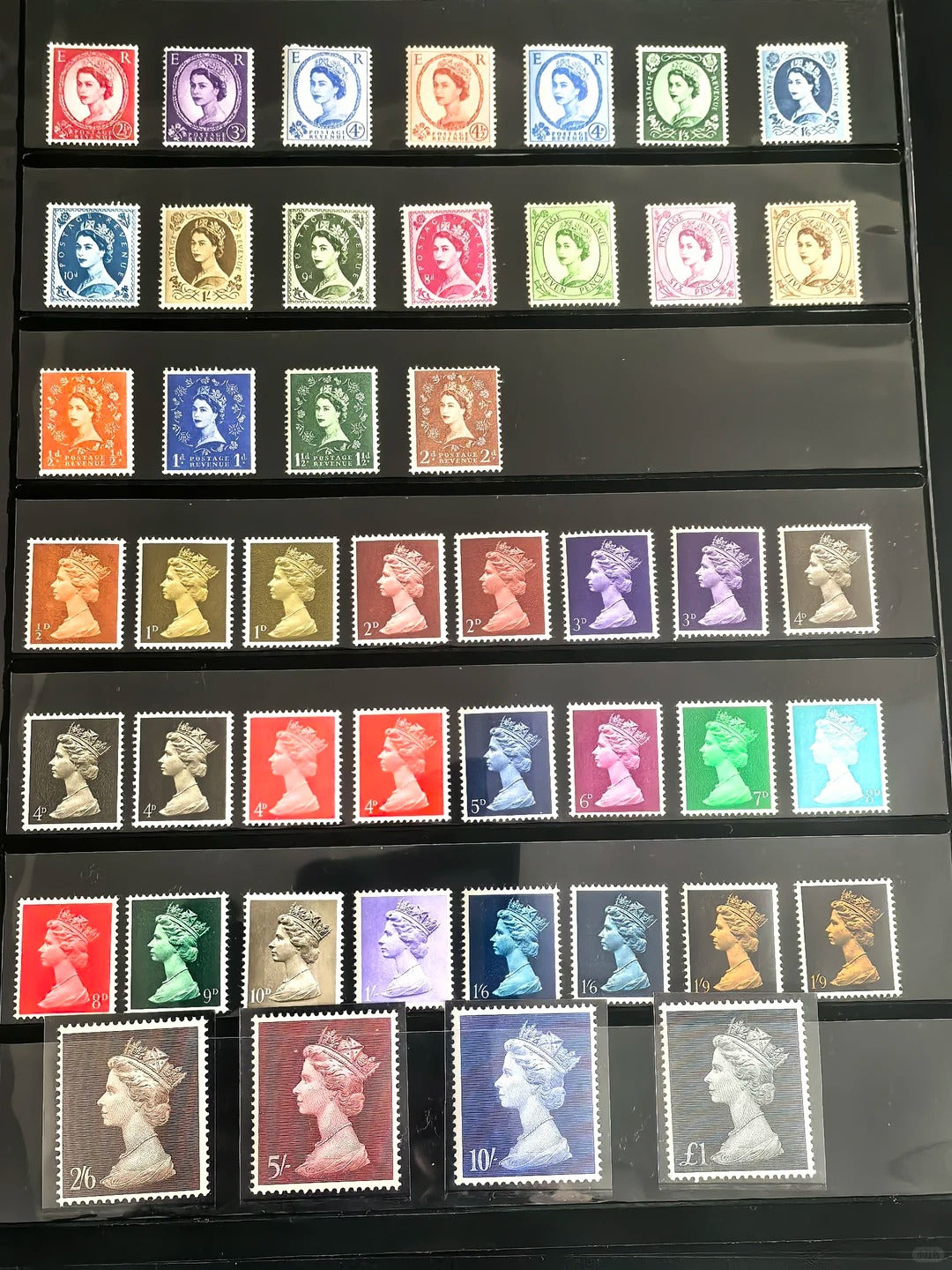
Queen Elizabeth II stamps from the colonial era are central to the history of philately in Hong Kong. From the early and middle periods through to the end of the 1990s, their designs spanned several decades.
1. Which Queen Elizabeth II Stamps Are Most Valuable?
Not every Queen Elizabeth II stamp commands a high buyback price. Growth in value depends mainly on how early the issue date is, whether the denomination is unusual and how close the condition is to perfect.
- Early issues: Queen Elizabeth II stamps from the 1950s and 1960s survive in relatively smaller numbers, particularly the high-denomination issues.
- Special varieties: These include commercially used covers with a particular post-office cancellation and error stamps with printing defects.
- Full sheets: An intact sheet that has not been separated generally carries a much larger premium in the buyback market than individual loose stamps.
2. The “King of the Market” Effect in Hong Kong Stamp Buyback
Hong Kong stamps seldom produce an extreme case like Mainland China’s large “The Whole Country Is Red,” in which a single stamp sold for more than HK$10 million. In 2018, one large “The Whole Country Is Red” changed hands for RMB 13.8 million, equivalent to approximately HK$15.18 million. Even so, rare early Hong Kong issues are also keenly sought by collectors across Asia.

2. Before and After the 1997 Handover: From Speculative Fever to More Rational Growth
A wave of stamp-collecting enthusiasm swept Hong Kong around the 1997 handover. At the time, many people queued to buy handover commemorative stamps, gold coin-and-stamp issues and similar products.
1. The Present Value of 1997 Handover Commemorative Stamps
- Mass issues: Because the quantities issued at the time were very large, ordinary 1997 handover first-day covers and loose stamps now have strong market liquidity, but their unit prices tend to be stable.
-
Higher-value types: Limited-edition 1997 handover commemorative gold-coin sets and unseparated multiple-stamp issues with special numbers can still carry significant buyback value. Gu Jin Jian Bao, for example, often receives enquiries about handover gold coins and commemorative gold medals. Their precious-metal content gives these items a stronger store-of-value characteristic during market fluctuations.

2. The Leader Among Zodiac Stamps
Hong Kong’s zodiac stamp series is another focus of the buyback market. For comparison, Mainland China’s first zodiac stamp, the 1980 Gengshen Monkey (T.46), became legendary: at its peak, a complete sheet in pristine condition set a world record of HK$1.437 million. Well-preserved first-cycle Hong Kong zodiac stamps are also items that Gu Jin Jian Bao actively seeks to buy at strong prices.

3. In-Depth Appraisal: Stamp Condition Grading Table
In the high-end buyback market, condition is everything. Even a rare stamp can lose several times, or even tens of times, its potential buyback price if it is thinned, foxed or creased.
The table below shows the professional grades and their effects on value that we refer to when carrying out a buyback appraisal:
Table 1: Stamp Condition Grades and Their Reference Effect on Buyback Value
| Condition Grade | Physical Characteristics (Technical Appraisal Indicators) | Buyback-Value Premium (Relative to a Standard Example) | Notes |
|---|---|---|---|
| Gem (97–100) | Perfect original gum; no flaw under 5× magnification; bright metallic powder; perfectly centred design. | 3.0×–5.0× or more | Commands the highest buyback price and is considered top collector grade. |
| Pristine (90–96) | Full original gum; extremely slight, even yellowing is permitted; no sign of human intervention. | 2.0×–2.5× | A mainstream high-end market grade with excellent investment potential. |
| Fine (80–89) | Even yellowing of the gum; possibly a slight soft bend or tiny paper speck; bright overall appearance. | 1.0× (market baseline) | The most common good condition and readily saleable. |
| Average (60–79) | Obvious creases, foxing, fading or a small thinned area; colours have aged. | 0.3×–0.5× | Value is substantially reduced, depending on the scarcity of the issue. |
| Poor (Below 60) | Severely missing perforations, hard folds, extensive damage or human repair such as recolouring or regumming. | 0.1× or less | Usually of historical-research interest only rather than investment grade. |
(Note: The multiples above are market-trend references. The actual offer is subject to an in-person appraisal by a Gu Jin Jian Bao specialist.)

4. A Professional Buyer’s Eye: How Are Genuine and Fake Stamps Distinguished?
As high-value stamps have risen sharply in price, counterfeiting methods have continued to evolve. A professional buyer cross-checks microscopic physical characteristics.
1. Examining the Printing Process
- Gravure: On a genuine stamp such as “The Whole Country Is Red,” the dots seen under magnification are even and rounded, with hollow centres.
- Engraving: On an issue such as the 1980 Monkey stamp, the hair lines are natural and fine, with a distinctly raised feel to the touch. Most fakes use offset lithography, leaving the lettering heavy and the edges rough.
2. Examining the Paper and Gum
- Paper: Genuine examples use specialised stamp paper that is firm and accepts ink well. Fakes often use coated paper, which reflects strong white fluorescence under ultraviolet light.
- Gum: Original gum is fine and evenly applied. Evidence that the gum has been washed away or applied again later will reduce the value substantially.
3. A Special Feature: Ink Showing on the Back
On Mainland China’s Monkey stamp, for example, genuine copies often show a natural, indistinct trace of black ink on the back. This is a distinctive remnant of the printing process used at the time, whereas the backs of fakes are often too clean. Details of this kind are among the points a professional appraiser examines closely.

5. Storage Advice: Protecting Wealth in a Tiny Frame
Hong Kong’s humid climate makes stamp storage an exercise in precise environmental management.
- The “Goldilocks” principle: Keep the temperature between 15°C and 25°C and the relative humidity steady at 45%–55%. Excess humidity can cause foxing or adhesion; too little can make the paper brittle.
- Protective tools: Never touch a stamp directly with your hands. Always use professional round-tipped stamp tongs. The oil and salt on your skin provide an ideal breeding ground for mould.
- The art of storage: A stamp album must be kept standing upright. Stacking albums flat puts pressure on the lower stamps and can cause molecular-level adhesion between the gum and the protective mount, resulting in irreversible damage.
6. Professional Buyback Service: An Easy Way to Sell Idle Old Stamps
If you are looking for a reliable channel in Hong Kong or Macau, Ho Mong Kok Shopping Centre is a traditional trading hub, but visiting one shop after another to compare prices is time-consuming and can easily lead to trouble.
Gu Jin Jian Bao provides a professional one-stop buyback service designed to help you realise the value of your assets efficiently and at a strong price:
- Free online appraisal: Send photographs through WhatsApp to receive an initial estimate without leaving home.
- Home buyback service: An expert can visit your home anywhere in Hong Kong or Macau, with safety and privacy maintained.
- Cash transaction: Once the item has been examined on site, payment can be made immediately in cash or through the Faster Payment System (FPS). The process is clear and straightforward.
Comparison of the Types We Buy
| Category | Representative Items | Main Appraisal Points |
|---|---|---|
| Zodiac stamp buyback | 1980 Monkey stamp, first-cycle Hong Kong zodiac stamps, gold coin-and-stamp issues | Pristine condition, brightness of metallic ink and state of the gum. |
| Cultural Revolution rarity buyback | “The Whole Country Is Red,” “Black Inscription,” “Complete Victory” | Completeness of the map, gravure dots and sharpness of the lettering. |
| Queen Elizabeth II stamp buyback | Queen Elizabeth II visit-to-Hong Kong commemoratives, high-denomination Queen Elizabeth II stamps | Clarity of the postmark, yellowing of the paper and evenness of the perforations. |
| Gold and silver commemorative coin buyback | 1997 handover commemorative gold coins, zodiac gold coins, Australian Kangaroo gold coins | Completeness of the certificate, precious-metal fineness and any impact marks or wear. |
Conclusion: Respecting History and Protecting Wealth
A stamp is more than paper and ink; it is a compact slice of history with an extraordinary density of information. In a collectibles market full of uncertainty, professional appraisal and a fair buyback channel are the only way to protect the legacy of wealth carried across time.
Do you have old Hong Kong banknotes, old stamps, silver coins or gold coins and wonder what they are currently worth?
Contact us now to obtain the highest offer for your collection.
🏛️ Business name: Gu Jin Jian Bao
📲 24-hour free WhatsApp enquiries: (852) 9834 2057 🏢 Service area: Free home buyback visits throughout Hong Kong and Macau 💰 Payment methods: Cash / immediate FPS payment
Gu Jin Jian Bao—the professional coin and stamp buyer by your side.
