
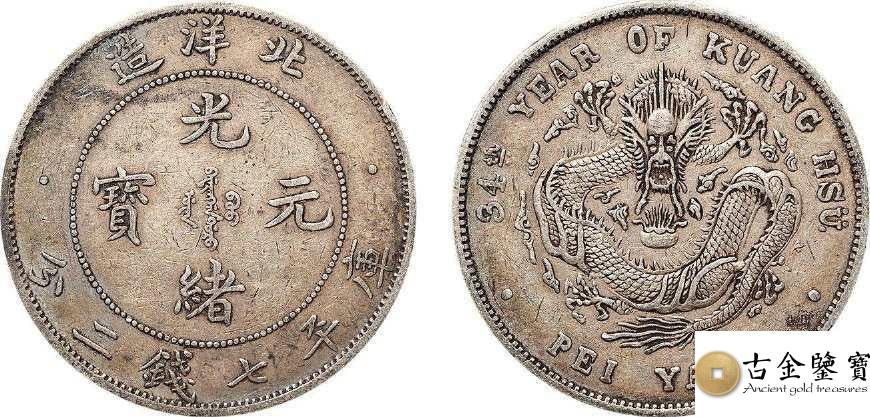
The reeding is the easiest part to overlook in silver dollar authentication, but it is actually the most difficult to counterfeit.Yuan Datousilver dollars primarily have two types of reeding:"fine reeding"and"coarse reeding."The standard reeding type varies with different years, and high-quality fakes often reveal themselves through their reeding. Learning how to use the 90-degree observation method to identify the reeding type can largely deter most inferior counterfeits.
1. What is"Reeding"?
Reeding refers to the vertical lines on the edge (rim) of a silver dollar. Its functions include:
- Anti-counterfeiting– precise reeding is difficult to imitate.
- Anti-theft– in ancient times, people would scrape the edges of silver coins to obtain silver shavings; reeding would immediately reveal this.
- Aesthetics– enhances the craftsmanship of the silver dollar.
- Identification– subtle differences in reeding exist across different years.
2. Standard Characteristics of Yuan Datou Reeding
Standard Parameters
| Item | Standard |
|---|---|
| Number of reeds | 175-180 (slightly varies by year) |
| Angle | 90° (perpendicular to the coin surface) |
| Depth | Approximately 0.5mm |
| Reed tip | Sharp |
| Reed base | Consistent depth |
| Reed shape | Vertical narrow reeding (fine reeding) |
Differences in Reed Count by Year
- Year 3 of the Republic: 178 reeds
- Year 8 of the Republic: 175 reeds
- Year 9 of the Republic: 176-178 reeds
- Year 10 of the Republic: 178-180 reeds
The differences are minor but can serve as an auxiliary identification tool.
3. Fundamental Difference Between"Fine Reeding"vs."Coarse Reeding"
Fine Reeding (Yuan Datou Standard)
"Fine reeding"refers to reeding where the individual reeds are thin, vertical, and dense. Characteristics:
- Width of each reed: approximately 0.3-0.5mm
- Spacing between reeds: approximately 0.6-0.8mm
- Higher number of reeds (175-180)
- Overall visual impression resembles"parallel threads"
Coarse Reeding (Characteristic of Some Counterfeits)
"Coarse reeding"refers to reeding where the individual reeds are thicker and sparser. Characteristics:
- Width of each reed: approximately 0.6-1.0mm
- Spacing between reeds: approximately 1.0-1.5mm
- Lower number of reeds (150-170)
- Overall visual impression resembles"comb teeth"
Note: Coarse reeding is not always indicative of a counterfeit. Some historical pattern coins or silver dollars minted in border provinces also feature coarse reeding. However, for Yuan Datou, the standard is fine reeding; coarse reeding should be viewed with caution.
4. Reeding Measurement Tutorial
Tools Required
- 10x magnifying glass (HK$50-150 online purchase)
- Precision digital scale (0.1g accuracy)
- Caliper (for measuring diameter)
- White background (for photography and observation)
Measurement Steps
Step 1: Measure Diameter
Use a caliper to measure the diameter of the silver dollar. Standard: 39mm (common standard for Yuan Datou,Sun Xiaotou,Da Qing Silver Coins, and other late Qing/early Republic silver dollars). A deviation of more than 0.3mm is a red flag.
Step 2: Count Reeds
Use a 10x magnifying glass to count the reeds one by one. Technique:
- Place the silver dollar on a white background.
- Use a pen to mark the first reed.
- Count clockwise around the coin.
- Compare to the standard: 175-180 reeds.
Step 3: Check Angle
Use a 10x magnifying glass to observe the cross-sectional angle of the reeding:
- Standard: The reed body is perpendicular to the coin surface (90°).
- Common in counterfeits: Tilted 85-88° or 92-95°.
- A deviation exceeding 2° is a red flag.
Step 4: Observe Reed Tips
Genuine reed tips:
- Sharp, neat
- Exhibit mechanical marks from cold pressing
- No burrs or dullness
Common in counterfeits:
- Dull (sand-cast counterfeits)
- Burrs (post-minting modification)
- Inconsistent angles
Step 5: Observe Reed Bases
Genuine reed bases:
- Consistent depth (approximately 0.5mm)
- No sand particles remaining
- Smooth surface
Common in counterfeits:
- Inconsistent depth
- Sand particles (sand-casting marks)
- Metal flow marks
5. Common Counterfeiting Techniques for Reeding
Technique 1: Sand-Casting and Post-Minting
Using a genuine coin to create a mold for sand-casting, then machine-pressing the reeding. Problems:
- Tilted reed angles
- Dull reed tips
- Sand particles remaining at the reed bases
Technique 2: Machine-Struck High-Quality Counterfeits
Reminted using coin minting machines of the same era. Problems:
- Reed count may vary slightly (between 170-180, but with subtle differences from the genuine standard)
- Silver content does not meet standards
- Lacks the natural hundred-year patina
Technique 3:"Re-reeding"Repair
Some counterfeits repair damaged reeding to make them appear genuine. Identification:
- The shape of the reeds at the repaired location is inconsistent with other areas.
- Modern processing marks at the repaired spot.
- Patina is damaged.
6. Practical Advice for Reeding Authentication
Advice 1: Reeding is Not the Only Evidence
Even if the reeding appears correct, it doesn't automatically mean it's genuine. Reeding is just one of 4-5 criteria for comprehensive authentication (others include patina, character strokes, sound, weight, silver content). No single criterion can 100% confirm authenticity.
Advice 2: Compare with Known Genuine Coins
For beginners in reeding authentication, it is recommended to purchase a physical copy of"PCGS Coin Facts"or browse their official website to compare high-resolution photos of reeding on known genuine coins.
Advice 3: High-Value Collectibles Must Be Graded
For Yuan Datou coins with a market value of HK$10,000+, regardless of how perfect the reeding appears, it is recommended to submit them for PCGS/NGC grading. The instruments and experience of professional organizations cannot be replicated by individuals.
7. Advanced Knowledge of Reeding Authentication
Reeding Characteristics of"Jingfa Edition"
The Year 9"Jingfa Edition"has 1-2 more reeds than the regular Year 9 edition (179-180 vs. 175-178 for the regular edition). This serves as an auxiliary method for identifying variants.
Reeding of Rare Editions
The reeding of the L. Giorgi signed edition is identical to the regular edition (same mint, same dies). Therefore, reeding cannot be used to distinguish between rare and regular editions – it can only be used to identify authenticity.
Practical Reeding Authentication for Your Home Yuan Datou
- Prepare a 10x magnifying glass + digital scale + caliper.
- Follow the 5 steps in this article to measure each item.
- Compare against standard parameters (175-180 reeds, 90° angle, 0.5mm depth).
- Take clear close-up photos of the reeding (smartphone macro mode + ring light recommended).
- WhatsApp photos to 98342057 for professional confirmation from Gu Jin Jian Bao.
Conclusion
Reeding authentication is a core skill in identifying the authenticity of silver dollars. By mastering the 5-step measurement method and distinguishing the characteristic differences between genuine and counterfeit items, you will have a foundational level of expert-grade authentication. However, remember: reeding is just one part of comprehensive authentication; ultimate confirmation of authenticity requires authoritative certification from PCGS/NGC grading. WhatsApp 98342057 to book a free reeding appraisal with Gu Jin Jian Bao.
Want to know the value of your Yuan Datou?
Gu Jin Jian Bao offers free appraisals, a valuation response within 30 minutes, same-day doorstep purchase, and instant cash payment. WhatsApp a photo to us for an immediate valuation, no need to visit our store in person.
