
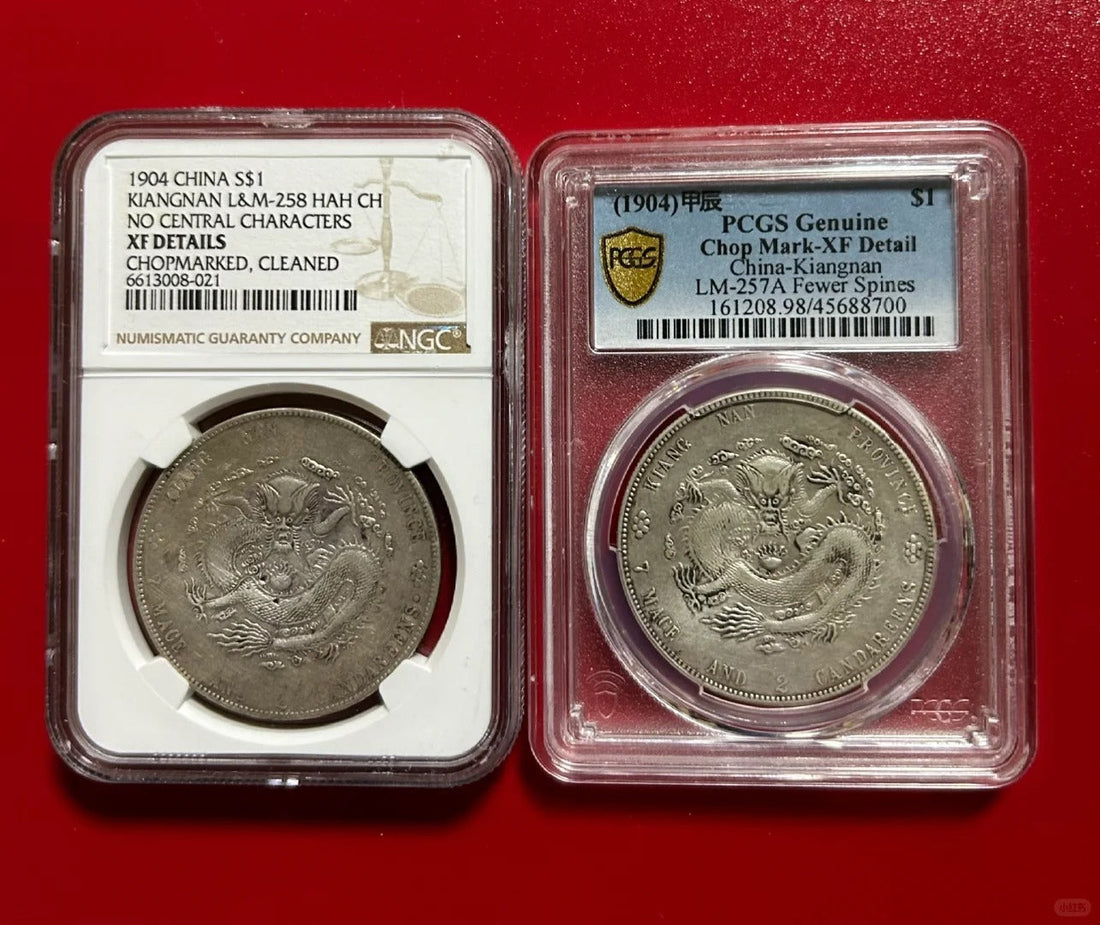
Locate the cyclical date on the Jiangnan Guangxu Yuanbao
Begin with an uncropped inscription face and identify where the Jiangnan mint wording, cyclical date and Kuping denomination appear. Do not complete a faint character from a catalogue entry.
Transcribe Mint, Date and Denomination
Photography links an inscription-side orientation image to separate date and denomination close-ups, while the dragon-side image anchors border and denticle details.
Physical evidence: retain the continuous edge, weight, diameter, tool and native unit under one coin number.
Keep the Date and Dragon Together
Glare, holder coverage and soft focus are logged against the relevant face; none of those gaps is filled from a comparison coin.
Photograph both full faces at matched scale before moving to the date characters or dragon details. The orientation image prevents a convincing close-up from drifting to another specimen.
Build a Continuous Edge Sequence
Use identical identifiers for image names, measurements, sleeve, holder and written notes. When several Jiangnan issues are present, work on one coin at a time.
The working record contains only the characters that can be transcribed and their orientation, with the unresolved stroke named before any cyclical-date label is considered.
A proposed Jiachen or other cyclical date remains tentative until the necessary characters are visible and correctly oriented. Save the partial reading when one stroke is concealed.
Keep Documentary Claims in Context
Separate the physical transcription from collector shorthand, holder wording and family accounts, each of which needs its own date.
A grading holder provides printed wording and a numerical grade. Recheck the enclosed legends, dragon, border, edge and surface wherever the plastic allows.
Cite an identifiable reference and consultation date for minting or historical claims. Family descriptions and web pictures belong with research notes, not the physical transcription.
Compare Measurements Like for Like
Retain the instrument display, original unit and contact point for every reading, including any repeat that differs from the first attempt.
Distinguish stable toning, circulation wear, weak strike, wiping hairlines and chemically changed colour. A dark field is not permission to clean around the date.
When the Cyclical Date Still Needs Direct Access
Request access only for a defined gap, such as a faint cyclical character, delicate rim work or a section concealed by a sealed holder.
Read the mint wording and cyclical date against the complete inscription face, then verify the Kuping denomination. Each uncertain character should point to a dated photograph.
Move to the dragon face and locate dragon anatomy, beaded border, denticles and English legends without confusing weak strike with wear.
Keep the ordered circumference and original measurements alongside both faces. A later examiner should be able to reconstruct the sequence and repeat the readings.
If an old sleeve claims a date that the coin does not clearly show, preserve the claim verbatim and leave the physical date unresolved.
