
 WhatsApp item photos
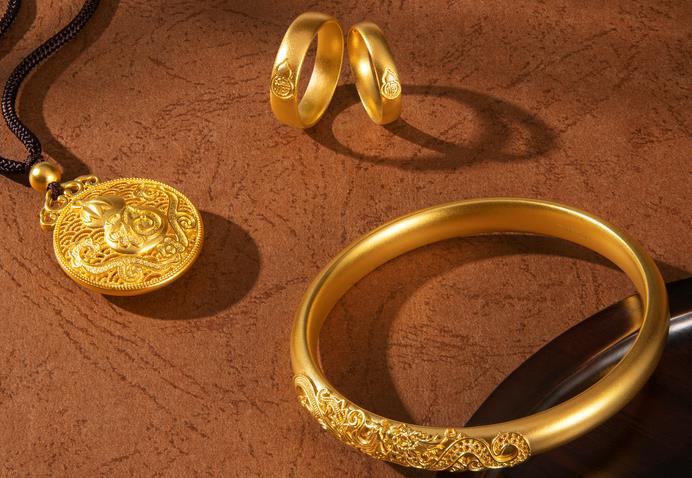
Start with individual old-gold objects
Lay out bracelets, necklaces, rings and pendants separately, assigning each one a number. Photograph the complete form, hallmark, clasp or fastening, and every visibly damaged area.
Wedding sets and matched groups
Before handling, circle any part that cannot be viewed safely and leave unsupported details blank rather than moving, opening or stressing the item.
Keep matched pieces connected in the catalogue, while recording stones, pearls, cords, springs and detachable fittings separately from the gold body.
Photograph the complete item before its damage details
Record breaks, deformation, missing gold, visible solder and repaired areas piece by piece, locating every close-up on the complete numbered object.
Transcribe marks such as 999, 916 or 750 exactly, with a location photograph. A worn punch, maker's mark or old trade mark should not be modernised into a fineness claim.
Inspect solder, later fasteners and mixed-colour sections. These may reflect manufacture or repair and should be documented before any conclusion about composition.
Record weight without hiding the unit
Photograph the empty-scale zero and each item reading with the unit and decimals visible. State whether the reading is gross object weight or a separately supported net figure.
Keep grams, local taels and troy ounces as recorded. Show any conversion method on a new line rather than replacing the original number.
For hollow jewellery, do not infer wall thickness or internal filling from appearance. State the construction clue and the limitation.
Map condition that can change the calculation
Locate breaks, dents, stretched links, missing metal, repairs and visible solder. A close-up should remain tied to a full view of the numbered object.
A broken chain or single earring still requires its own identity and scale image. Do not bury an incomplete piece inside a mixed-lot total.
Keep deductions transparent
Separate the offered rate, fineness basis, gross reading, stated net-metal basis and each deduction. The arithmetic should be reproducible without an oral explanation.
Only enter non-gold or damage adjustments after inspection and with a stated reason. Do not invent a standard percentage for stones, clasps or solder.
Preserve the handover evidence
Link boxes, receipts, tags and family notes to the correct item number, while treating them as provenance rather than proof of fineness.
Keep the first reading when a repeat differs and record the new setup. An unexplained replacement figure is not a correction.
If testing is required, define the method, position and consequence beforehand. Filing or cutting should never be a casual step in preparing a record.
Finish by reconciling count, item readings and any group total. Confirm which accessories accompany each piece and which questions remain unresolved.
Store old gold so chains do not tangle and settings are not stressed. No polishing is needed to make a hallmark, clasp or repair trace more credible.