
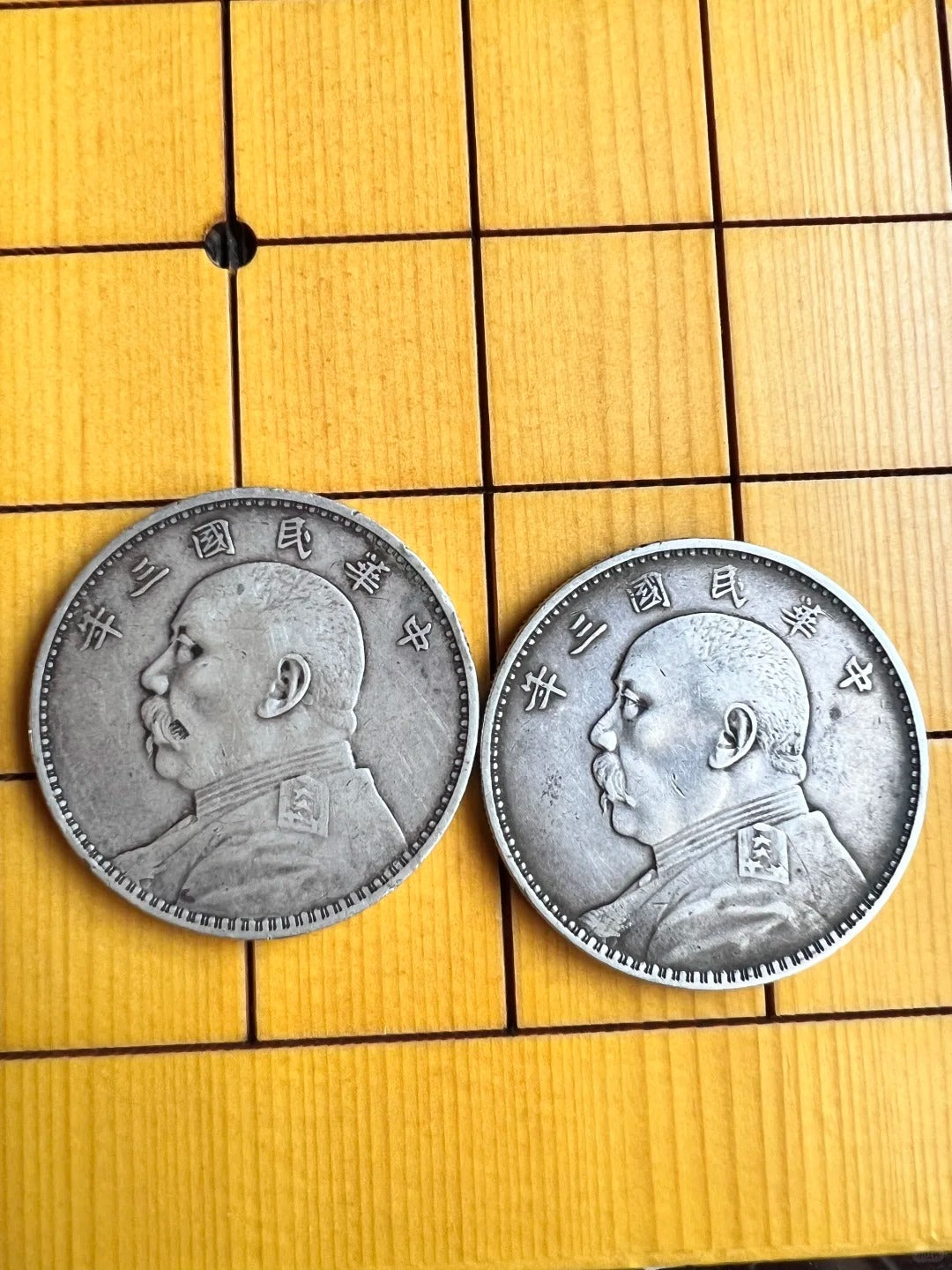
Begin with one coin and one number
Place the coin on a neutral surface and take level, uncropped views of both faces. Keep the whole rim visible so later details can be located without guessing orientation.
Assign the same number to the coin, holder, old envelope and measurement card. For a group, make individual sets before arranging pieces by a possible type.
Use a temporary description such as ‘silver-coloured coin with portrait and wreath’ when the identity is still open. A cautious name can be refined; an invented certainty is harder to remove.
Transcribe before translating or identifying
Copy visible letters, characters, numerals and punctuation in reading order. Record the date and denomination exactly as shown, and use brackets or a note for incomplete passages.
Describe the central designs on both faces and their surrounding border. A portrait, dragon, ship, standing figure, seated figure, wreath or emblem is evidence only in combination with the legends.
Do not borrow missing text from a similar online coin. Save the comparison reference and date separately, then photograph the precise position it suggests checking.
Give the circumference equal attention
Choose an edge starting point and photograph a full circuit in overlapping sections. Note reeding, lettering, a plain edge, seams, knocks, holes, solder or filing without rubbing the metal.
Add weight, diameter and thickness with the instrument and unit visible. Measurements can challenge or support a proposed family, but they cannot identify an unreadable coin on their own.
Describe condition by observable feature
Separate toning from high-point wear, weak strike, scratches, wipe lines and cleaning-related brightness. Replace broad grades with a location and a photograph another person can find.
Map a chop, perforation, rim bruise or repair on the full coin before adding a close-up. Retain neutral-light images before using raking light for texture.
If a capsule or slab blocks the edge, state the covered section. Do not open a stable enclosure merely to complete a beginner checklist.
Know what photographs can and cannot settle
Clear images usually establish readable wording, design relationships and obvious damage. Metal composition, very fine tooling or a concealed repair may require the object in hand.
Write the unresolved question narrowly: for example, ‘edge between four and six o'clock remains hidden’. A precise gap makes later inspection safer and faster.
Let the unreadable legend or missing edge frame choose the next view
Identify the unreadable legend or missing edge section first, then check that the new view, both complete faces, dimensions and holder all return to one number. Keep first measurements when a later attempt differs and explain the new setup.
Distinguish what is confirmed, what is proposed and what remains unreadable. This simple separation prevents a likely identification from becoming a false transcription.
Retain old labels and family notes as provenance, not proof of lettering or variety. Cite published historical details rather than blending them into the visual description.
Store the coin in its existing safe enclosure while advice is pending. Do not dip, polish, scrape, file or test the edge to make the surface look more decisive.
Before storage, verify that every close-up can be located on a complete face or on the ordered edge sequence.
