
 WhatsApp item photos
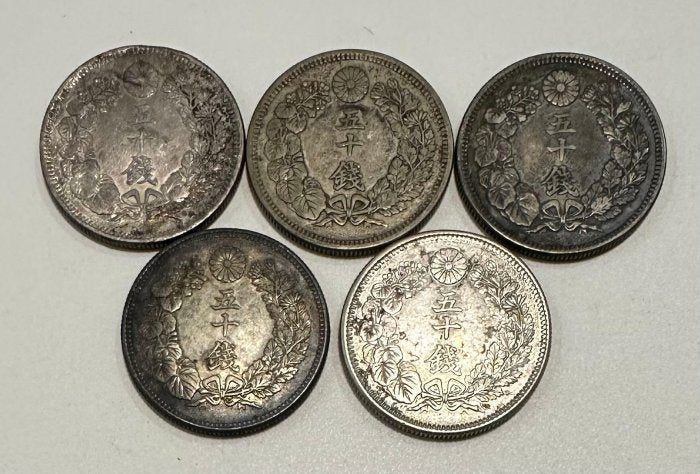
Let the Japanese inscriptions lead the identification
Photograph both faces level and uncropped, retaining the entire rim. Copy the visible date characters, denomination, surrounding words and central devices in their original order.
What can be fixed immediately
Record the complete face photographs, legible text and principal design under one item number. Keep any grading holder or old paper envelope linked but separate.
What should remain open
Leave worn characters, an obscured denomination or an unsupported variety name unresolved. Do not complete Japanese era wording from a similar coin or catalogue image.
Move from the full coin to located details
After each complete face, add close-ups of the date, denomination, crest, dragon, wreath or other device with enough surrounding detail to recover the position.
Use neutral light for colour and raking light for strike and surface. Preserve the original files before cropping, sharpening or changing exposure.
When several coins share a tray, give each one an individual set before grouping by visible year, denomination or design.
Make the edge a continuous piece of evidence
Choose a fixed landmark and photograph overlapping sections around the full circumference. Note reeding, lettering, seams, filing, holes, solder, knocks or mount traces as found.
Keep edge frames in order and state any section hidden by a holder. Rubbing or opening the enclosure to reveal brighter metal would damage both surface and context.
Check the final frame against the starting landmark, recording any gap rather than presenting an incomplete sequence as a full edge.
Record measurements after the coin type is supported
Retain a photographed scale value plus calliper readings, naming every tool, original unit and measuring position. Dimensions can test a visible attribution; they cannot create one.
If a second attempt differs, retain both readings and repeat the same setup. Do not select the value closest to a published specification.
Describe condition without altering it
Separate toning, circulation wear, strike softness, scratches, wipe lines and chemical-cleaning sheen. Map each feature to a complete face or edge frame.
Photograph chops, holes, repaired rims and other later work under neutral and raking light. Keep old sleeves and written provenance in a background section.
Reconcile the date legend with the complete edge circuit
Read the era date and denomination against the full faces, then reconcile the edge circuit, first measurements and holder with the reference number. Check that every close-up has a recoverable location.
Separate confirmed inscription, proposed coin name and unresolved detail. Cite historical and production information with its reference and consultation date.
Use direct inspection when metal, faint tooling, subtle cleaning or a concealed repair remains material to the conclusion. Define the question before moving the coin from a stable holder.
At handover, retain the patina, envelope and earliest images. No dip, polish, scrape or edge file is needed to improve an honest record.
A final image check should connect every detail to one face, the edge circuit or the measurement card without relying on filename memory.