
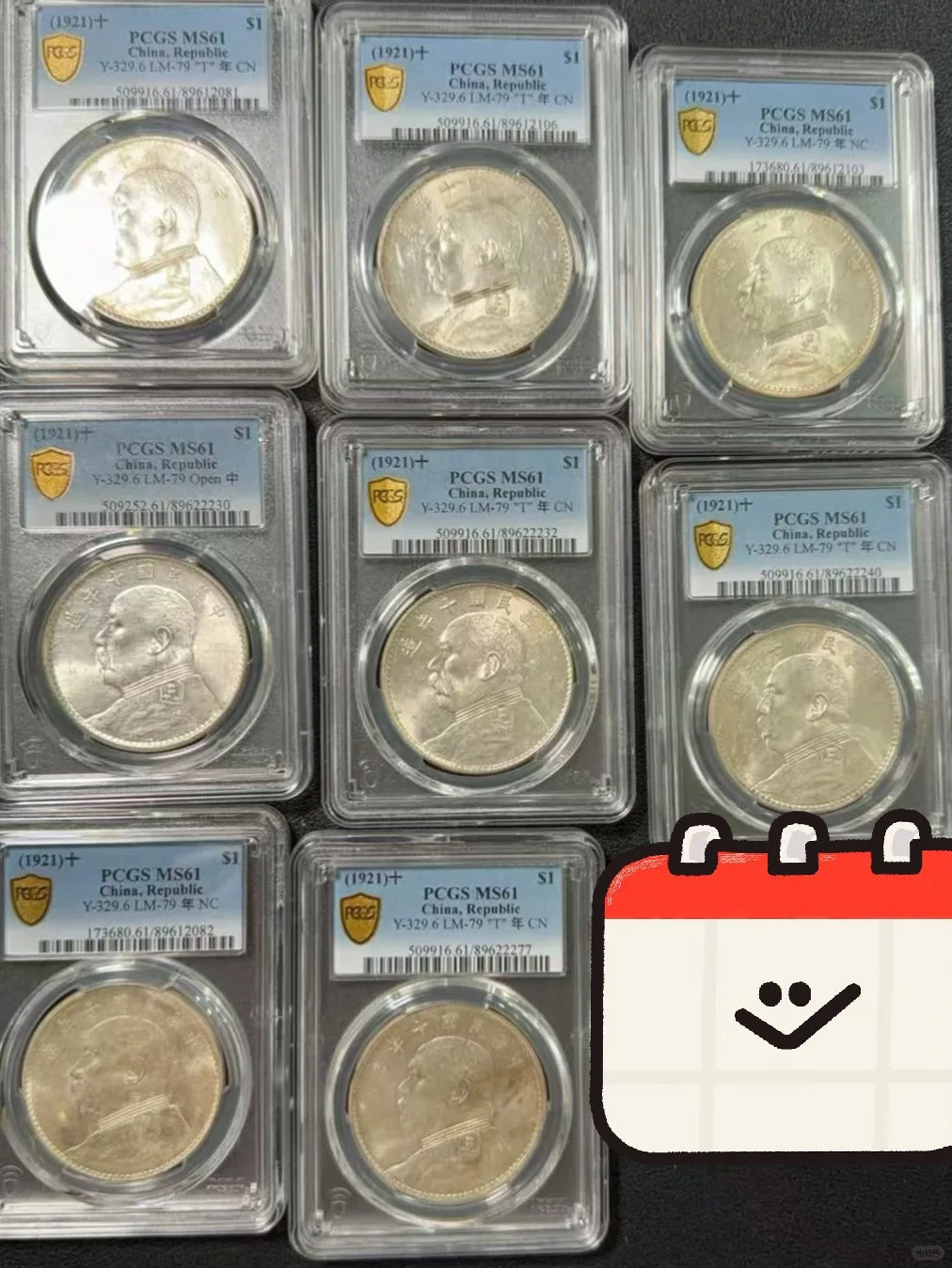
Begin with the date, portrait and grain wreath
Photograph the dated portrait side and grain-wreath reverse in the same orientation. Copy the date and denomination first; finer portrait or character differences should not be considered until those basics agree.
Use one reference number for each coin found at home, even when several pieces look alike. A full group photograph records quantity, while the individual faces and edge support attribution.
Keep a proposed O variety, triangle-circle or other market name in the comparison notes until its diagnostic positions are clear on that numbered coin.
Make the two faces easy to compare
On the portrait side, retain the complete head, epaulettes, date characters, inner border and rim. Add close-ups only after the uncropped face establishes their locations.
On the reverse, show the denomination, grain ears, leaves, ribbon and surrounding border. Describe differences precisely rather than relying on a nickname whose meaning may vary between sellers.
Carry the same number through an overlapping edge sequence, weight and diameter card. A variety claim is weak when its edge photographs belong to an unidentified coin in the same batch.
Keep surface observations out of the variety name
Stable toning, worn high points, incomplete strike, wiping lines and cleaning-related sheen affect what can be seen. Record them separately so wear is not mistaken for a different character form.
Locate chops, holes, rim knocks, solder and worked sections on the complete views. Preserve the metal as found; brightening the date or wreath destroys useful evidence.
Retain the first neutral-light surface views. If a diagnostic stroke appears only under one angle, show that angle beside the complete face and describe the lighting rather than treating it as settled.
Use old labels as clues, not conclusions
Photograph a sleeve, box or holder label beside the item number and transcribe its wording. Then test its date and variety description against the enclosed coin.
When referring to issue history or published variety diagnostics, name the reference and record when it was consulted. Keep that citation distinct from direct observations.
Compare like with like
Sort the coins by visible date before comparing portrait hair, characters, grain wreath or border. One year's diagnostic should not be transferred to a coin whose date remains unreadable.
Retain the original measurement and unit. If a second reading differs, repeat the same points and note the instrument rather than replacing the inconvenient figure.
Know which questions require the coin in hand
Photographs can establish the broad date and many design relationships. Very fine tooling, altered edges, metal and cleaning hidden by a holder may remain uncertain.
Name the obscured part and preserve the enclosure. An in-person review is most useful when it addresses a defined character, edge section or surface feature.
Reconcile the dated face, portrait, reverse wreath, denomination, complete edge and measurements under one item number. Remove any comparison image that cannot be traced to its own coin.
Check whether wear or weak strike could explain a missing stroke before calling it a variety. Record the lighting and angle used for the decisive close-up.
Preserve earlier photographs and labels when a proposed name changes. Date the revision, state the repeatable feature behind it, and pass hidden areas forward without cleaning, filing or opening a sealed holder.
