Map the proposed O and triangular-yuan features
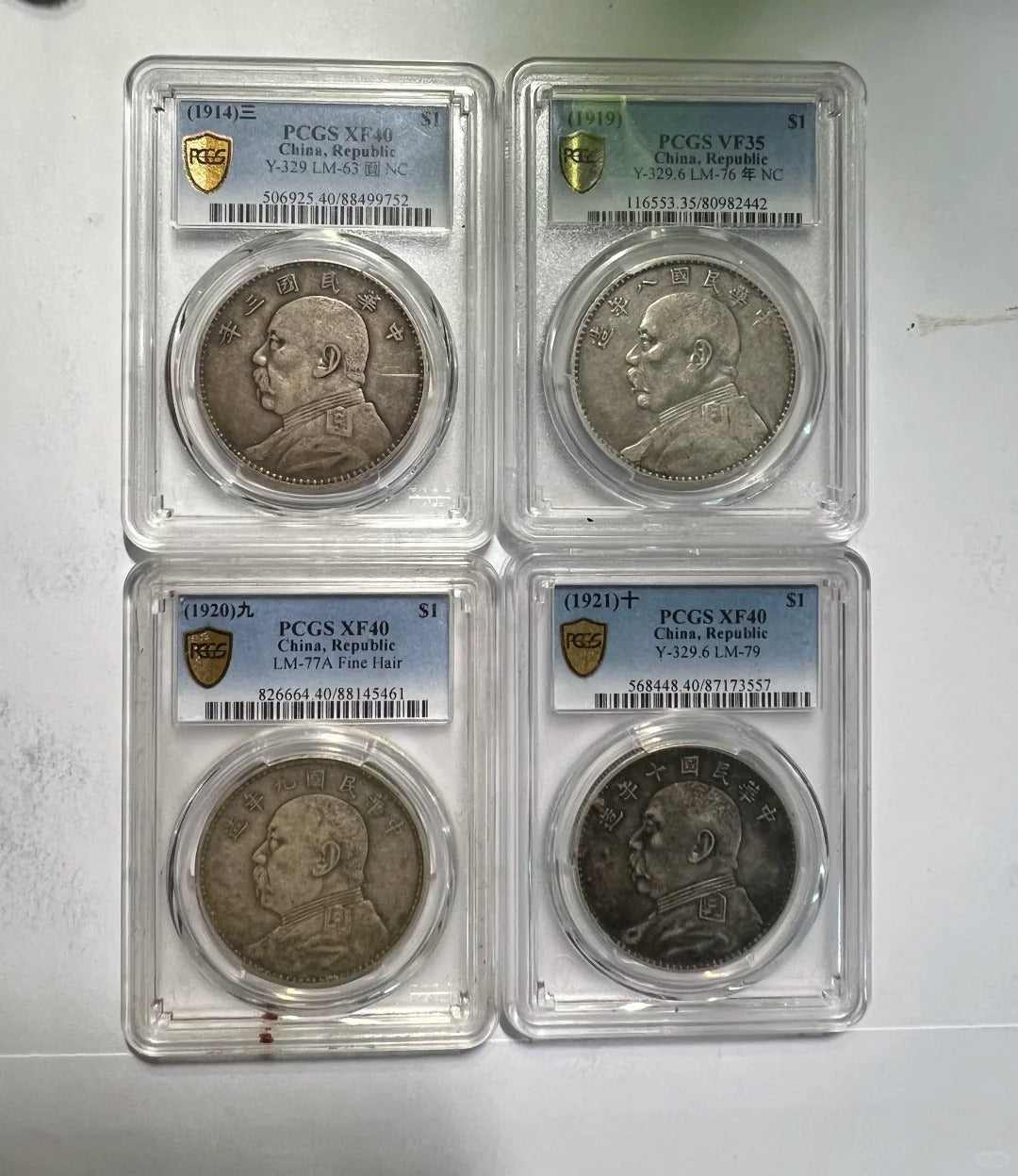
Read the date, denomination and inscriptions on both faces before using the names O variety or triangular yuan. Keep each name provisional until its stated marker is visible on this dollar.
Photograph the portrait and grain-wreath sides with the full circumference intact. Add the complete edge, weight, diameter, instrument and unit under the same identifier.
Locate chop marks, holes, filing or rim work separately from proposed variety features. An illegible or unsafe area remains pending rather than being completed from a reference image.
Use orientation before magnification
Chart patina hue, flattened relief, incomplete strike, directional hairlines and suspected chemical alteration by location. Dark metal does not justify cleaning or an attribution.
Keep old sleeves, labels and provenance accounts, but do not allow them to stand in for portrait lettering, grain details, denticles, strike or the edge.
Store each overall view, close-up, reading, package and document under one coin number. Later images are dated additions, not replacements for the first record.
Open the file before settling a name
Enter the working title, readable legends, designs, available dimensions, holder and visible condition. State exactly which letters or edge sections remain obstructed.
Transcribe the date and denomination first, then compare portrait and wreath lettering within the visible type. Weight and diameter make sense only beside that identification.
Keep every document tied to the correct coin
Take complete-face photographs before details of hair, epaulette, date characters, grain stalks, ribbon, denomination characters, denticles or the suggested O marker.
If several Yuan Shikai dollars are present, assign numbers before grouping their dates or proposed varieties. Do not exchange a clearer detail image between coins.
Attach a named source and consultation date to any production or historical statement. A market label or online comparison stays in the research notes.
Know when photographs are insufficient
Terms such as signed, O variety, triangular yuan or regional issue belong in the conclusion only when their features can be located on this object. Otherwise they remain search terms.
Images support feature location and visible condition, while metal composition, subtle repair and packaging-covered edge evidence may require examination in hand.
Resolve the O-variety and triangular-yuan markers on one coin
Anchor the proposed O and triangular-yuan details to uncropped portrait and wreath faces, naming the adjacent character, ribbon or grain element. A detached close-up cannot carry the attribution by itself.
Keep the complete circumference, weight, diameter, instrument display and original unit under that coin number. Record a changing measurement or hidden edge arc rather than selecting the tidier result.
Map filing, holes, countermarks and local wear before judging the proposed markers. Displaced or missing metal can interrupt a feature, but it cannot manufacture one.
Retain the holder's printed variety and any older label as dated source wording. If the visible portrait lettering or wreath layout disagrees, preserve both accounts without revising the first observation.
The attribution summary should cite the exact uncropped views where each O-variety or triangular-yuan marker appears. Anything that cannot be relocated remains a comparison lead.
