Collectible appraisal
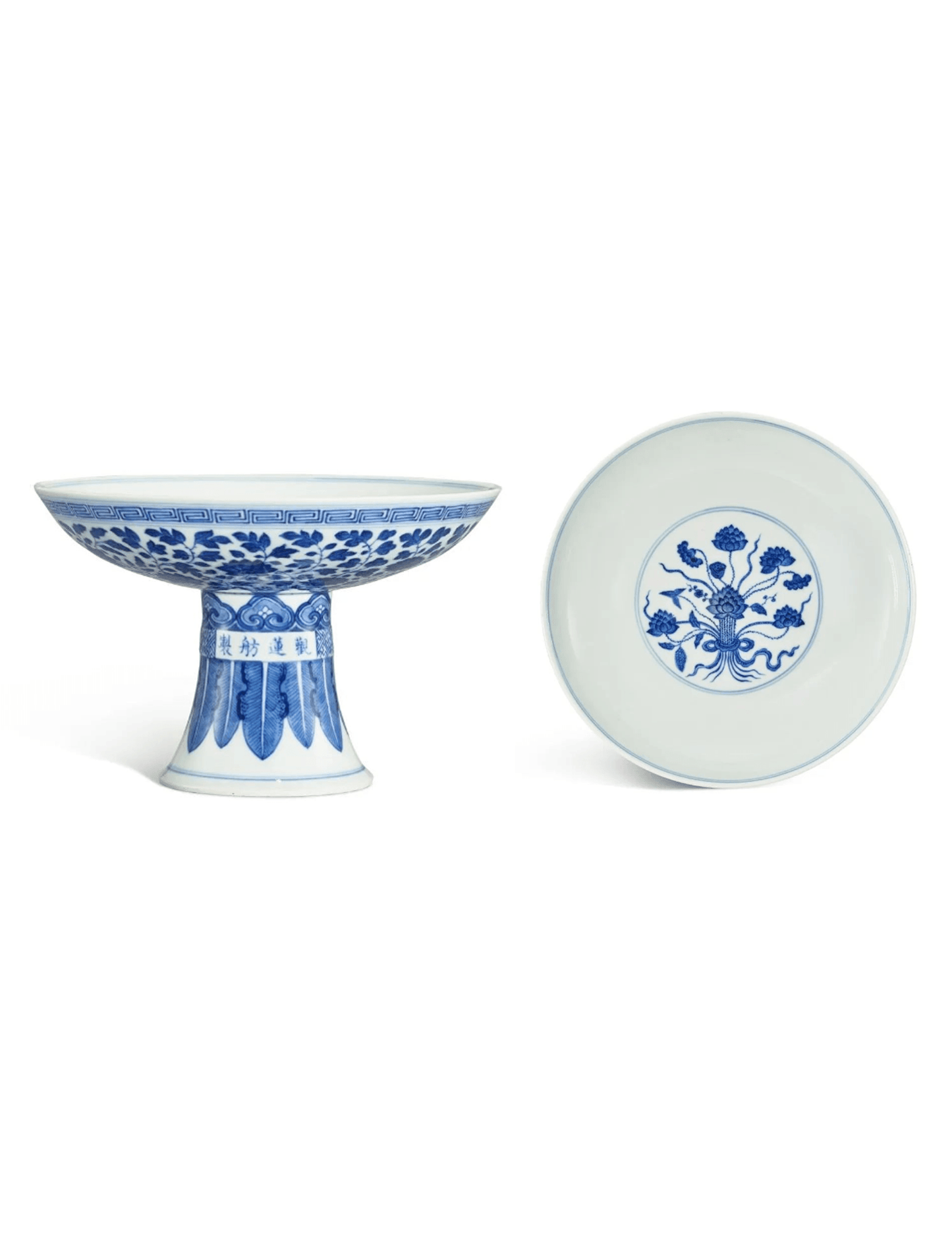
of Qing Dynasty Daoguang Period Blue and White Lotus Pattern Offering Plate | Free Valuation for Qing | Gu Jin Jian Bao
Start with photos so we can assess type, condition and market direction. Higher-value or uncertain items can then be checked in person.
WhatsApp photos for appraisal Front, back and edge photos are usually reviewed firstFree photo review Phone 852 98342057

Collectible appraisal
of Qing Dynasty Daoguang Period Blue and White Lotus Pattern Offering Plate | Free Valuation for Qing | Gu Jin Jian Bao
Start with photos so we can assess type, condition and market direction. Higher-value or uncertain items can then be checked in person.
of Qing Dynasty Daoguang Period Blue and White Lotus Pattern Offering Plate | Free Valuation for Qing | Gu Jin Jian Bao
Please include front, back, edge, weight, size, detail and certificate photos where available.
Item details and appraisal notes
The Art and Collection Value of the Daoguang Period Blue and White Porcelain Dish with Continuous Lotus Scrolls
The"Daoguang Period Blue and White Porcelain Dish with Continuous Lotus Scrolls,"as a typical representative ofporcelainfrom the mid-to-late Qing Dynasty, carries profound historical and religious cultural connotations. Although blue and white porcelain from the Daoguang period lacks the grandeur of the Kangxi, Yongzheng, and Qianlong eras, it occupies an important position in theantiquecollection market due to its unique elegance and simplicity. Such"offering dishes"were mostly used for ancestral sacrifices or temple offerings, featuring a dignified and stable form. The"continuous lotus scroll pattern,"also known as"Wan Shou Teng"(ten thousand longevity vine), symbolizes endless life, integrity, and nobility. In today'sHong Kong antique porcelain auction and buyback market, suchQing Dynasty blue and white functional and ritual wareswith distinct period characteristics are increasingly favored by collectors due to their high cultural added value.
Professional Appraisal: Core Features and Authentication Guide for Daoguang Blue and White Porcelain
For collectors interested inauthenticating Qing Dynasty blue and white porcelain, we have summarized several key identification points for Daoguang period blue and white porcelain. Mastering these features will help you more accurately assess the historical value of your collection:
| Appraisal Dimension | Authentic Daoguang Blue and White Features | Common Flaws in Later Reproductions/Fakes |
| Body and Glaze Characteristics | The body is slightly coarser than previous dynasties, and the glaze often has subtle undulations, commonly known as"wave glaze"or"buckwheat ground." | The body is too dense or incorrect in weight; the glaze is smooth as a mirror, lacking the warm feel and natural aging patina of old porcelain. |
| Blue Coloration | Mostly uses domestic cobalt material, appearing as an elegant grayish-blue, some with a floating sensation; a few finely made official wares have deeper coloration. | The color is too bright and dazzling (modern chemical materials), or deliberately smeared with dirt to mimic age, lacking the layered depth of blue and white penetrating the body. |
| Decorative Painting Style | The continuous lotus scroll lines are mostly single-line flat washes, with a delicate and soft painting style, sparse layout, and a sense of restraint and neatness characteristic of the period. | The lines are stiff and rigid, overly mimicking earlier dynasties and appearing contrived, or the brushwork is too modern, lacking the ancient charm of hand-painted artistry. |
| Foot and Mark | The foot rim is shallower, and the"loach back"characteristic is reduced. Common marks include"Da Qing Daoguang Nian Zhi"(Made in the Daoguang Reign of the Great Qing) in six or four-character seal script/regular script, with neat calligraphy. | The foot rim is roughly trimmed and rigid, and the iron-red spots are artificially created; the calligraphy of the mark is weak and lacking in strength, or it is a stiff, computer-typeset print. |
Key Factors Affecting the Valuation of"Qing Dynasty Blue and White Offering Dishes"for Buyback
When conductingon-site antique Buyback in Hong Kongandfree antique porcelain appraisals, the actual market value of a Daoguang blue and white offering dish is usually determined by the following three core conditions:
- Difference in Grade between Official and Folk Kilns: Offering dishes with standard Qing Dynasty official kiln marks, whose clay and painting are of superior quality, were exclusively used by the imperial court or large imperial temples. Their potential forhigh-price buybackis far greater than ordinary folk kiln utilitarian wares.
- Completeness of Condition (Perfect vs. Damaged): There's a common saying in the porcelain world:"A chipped porcelain is not worth half a cent."Any minor chips, knocks, or hairline cracks directly affect the finalantique porcelain buyback price.
- Provenance and Origin (Well-Documented History): If a collection has early auction house labels, records of return from overseas, or has been passed down through generations of a family, its market recognition and buyback price will significantly increase.
Common Antique Porcelain Condition and Valuation Reduction Reference
To enhance transaction transparency, for clients undergoingemigration old item clearanceorhouse moving porcelain disposal, we provide the following common condition grades and value impact references in the secondhandantiquemarket:
| Condition Grade | Detailed Description | Impact on Buyback Valuation |
| Perfect / Flawless | No chips, no cracks, no repairs, smooth glaze, excellent preservation. | Base Valuation (100% - 120%), highly scarce items have significant premiums. |
| Minor Flaw / Minor Firing Imperfection | Presence of inherent firing imperfections (e.g., glaze shrinkage spots, black specks) or extremely small"feipeng"(tiny glaze loss on the edge). | Minor impact, usually retaining80% - 90%of the base price. |
| Hairline Crack / Chip | Visible cracks (hairline cracks) on the body or noticeable chips/loss of material on the edge. | Significant value depreciation, usually30% - 50%of the perfect condition price. |
| Cut Rim / Repaired Piece | The rim of the object has been flattened, or it has been repaired with Kintsugi, riveted porcelain, or modern adhesive after breakage. | Value is greatly reduced, often Bought back as a sample fragment, approximately10% - 20%. |
Hong Kong high-price antique porcelain Buyback, appraisal and consultation:
WeChat: john19998
Buyback Yuan, Ming, Qing, Republican period porcelain, doucai, famille rose, Canton famille rose, blue and white porcelain, sacrificial blue, sang-de-boeuf (langyao red), Longquan ware, late Qing porcelain, Jingdezhen porcelain, Jingdezhen's four great painted porcelains, Republican period porcelain, antique porcelain, Ming and Qing porcelain, blue and white porcelain, Qianlong period, Yongzheng period, Five Great Kilns of the Song Dynasty, etc. Professional Buyback, professional appraisal.
On-site Buyback of old items for house moving/emigration, free appraisal, 24-hour online service, welcome to inquire.
Recommended Related Buyback Series
You may also be interested in: Popular Related Buyback Items
- High-Price Buyback of Ming Dynasty Porcelain — Da Ming Wanli Nian Zhi Wucai Xian Rui Jin Bao Tu Bowl | Wanli Blue and White Wucai — Hong Kong Professional Porcelain Buyback
- Antique Porcelain Buyback | Qing Guangxu Doucai Eight Auspicious Symbol Pattern Folded Waist Plate “Da Qing Guangxu Nian Zhi” Ming and Qing Porcelain High-Price Buyback | Professional Appraisal
- Buyback Qing Dynasty Qianlong Famille Rose Porcelain, Ming and Qing Antiques — Da Qing Qianlong Nian Zhi Famille Rose Nine Peaches Celestial Sphere Vase — High-Price Buyback of Antique Ornaments — Free Appraisal
Porcelain appraisal emphasizes details — glaze color, body quality, and base marks are all indispensable. Welcome toWhatsApp 98342057to send photos for a quote; our experts will assess each item. For more Buyback categories, seeBuyback Series.
此類藏品 FAQ
出售前先看這類藏品的關鍵問題
每個產品頁會按藏品類型顯示專屬問答。先看保存狀態、成色、證書、照片角度與交收方式,再把實物照片傳給我們初步判斷。
