
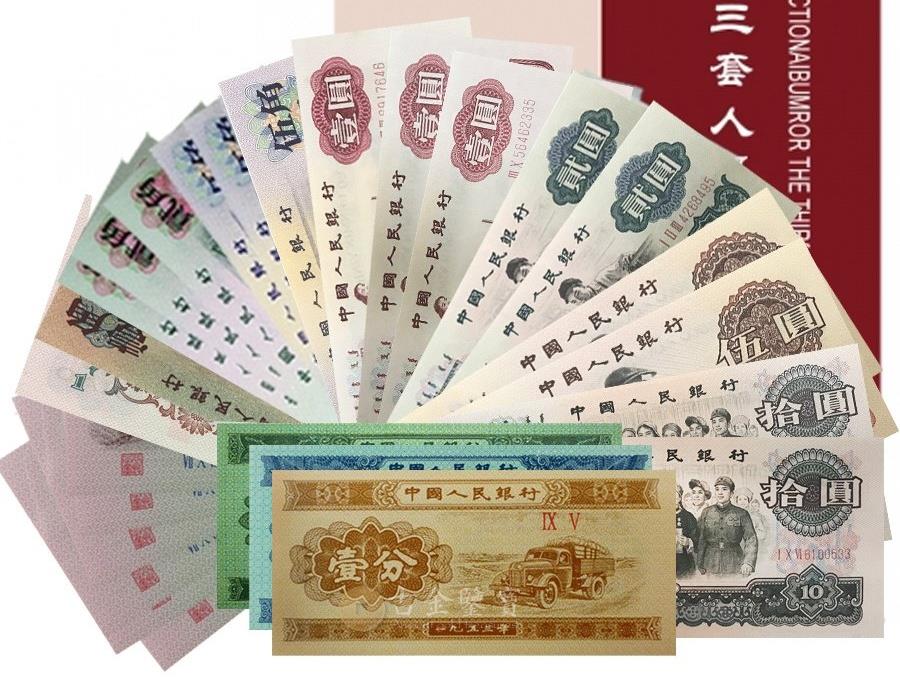
In traditional asset allocation, coin collecting is categorized as an"Alternative Asset,"alongside art, fine wine, and luxury watches. Its core appeal isn't short-term returns, but rather its long-term ability to hedge against inflation and the ease of intergenerational transfer—a"Yuan Datou"(silver dollar) stored in a safe deposit box for 50 years requires no management, no renewal fees, and won't be diluted to zero by inflation. Below, we dissect the practical logic of coin collecting from an asset allocation perspective.
Quick Conclusion:When choosing a used banknote buyback service, the most important things to verify are whether the inspection process is transparent, whether the quotation is itemized, and whether the settlement method is clear.
3 Major Advantages of Coins as Asset Allocation
Advantage 1: Inflation Hedge
The physical silver content (89-90%) of silver dollars naturally hedges against inflation. Even the collectible premium portion resists fiat currency depreciation due to continuous accumulation of scarcity.
Actual Data (2016-2026)
| Item | 10-Year Cumulative | Annualized |
|---|---|---|
| Hong Kong CPI (Inflation) | +27% | +2.4% |
| HKD Fixed Deposit | +28% | +2.5% |
| Silver Dollar (Common VF) | +50-80% | +4-6% |
| Silver Dollar (MS62 Graded) | +150-250% | +10-13% |
| Silver Dollar (Rare Variety) | +250-450% | +13-18% |
| Silver Dollar (Pattern Grade Top Tier) | +300-500% | +15-22% |
Overall trend: The appreciation rate of high-grade and rare silver dollars is 5-9 times higher than inflation.
Advantage 2: Family Wealth Succession
Silver dollars are an excellent tool for succession:
- Physical form, unaffected by bank failures or currency collapse
- No geopolitical risk (not affected by sanctions)
- No inheritance tax in Hong Kong, smooth transfer
- Possesses emotional and cultural value, enhancing family cohesion
Advantage 3: Diversify Investment Portfolio
Coins have a low correlation with traditional assets like stocks and real estate, which can diversify the overall investment portfolio risk.
3 Recommended Allocation Ratios for Asset Allocation
Conservative (5-10%)
Suitable for: Traditional investors, first-time alternative investors
- For a total asset of HK$10,000,000, allocate HK$500,000-1,000,000
- Primarily choose common items + PCGS MS62 graded items
- Hold 5-10 pieces for diversification
Balanced (10-20%)
Suitable for: Experienced alternative investors, seeking diversification
- For a total asset of HK$10,000,000, allocate HK$1,000,000-2,000,000
- Common items (30%) + MS62 graded items (40%) + rare varieties (30%)
- Hold 15-25 diverse pieces
Aggressive (20-30%)
Suitable for: Experienced collectors, seeking high returns
- For a total asset of HK$10,000,000, allocate HK$2,000,000-3,000,000
- Rare varieties (50%) + pattern grade (30%) + MS65+ graded items (20%)
- Hold 10-15 high-quality collectibles
5 Specific Allocation Strategies
Strategy 1:"Core + Satellite"Strategy
Similar to the core-satellite strategy in stock investing:
- Core (70%): PCGS MS62-64 graded items with stable appreciation (e.g.,Yuan DatouYear 3,Sun Xiaotou, etc.)
- Satellite (30%): Rare varieties with high potential (e.g., O variety, Triangle circle, Signed edition)
Strategy 2:"Cross-Dynasty Diversification"Strategy
Diversify risk across dynasties:
- Qing Dynasty Silver Dollars (40%): Various provincialGuangxu Yuanbao+Daqing Silver Coins
- Republic of China Silver Dollars (50%): Yuan Datou + Sun Xiaotou + Junk Dollars
- Republic (10%): Panda Silver Coins + Commemorative Coins
Strategy 3:"Fixed Investment Increment"Strategy
Similar to dollar-cost averaging in stocks:
- Purchase HK$100,000-500,000 worth of silver dollars annually
- Continue for 10+ years
- Diversify timing risk
- Average cost + accumulate scarcity
Strategy 4:"Cross-Category Diversification"Strategy
In addition to silver dollars, include other categories:
- Silver Dollars (50%)
- Banknotes (20%, e.g., the four kings of the first series of Renminbi)
- Stamps (15%, e.g., 1980 Gengshen Monkey)
- Porcelain (15%, e.g., Qing Dynasty imperial kilns)
Strategy 5:"Top Single Item"Strategy
Suitable for collectors with extremely high budgets (HK$5,000,000+):
- Seek single top-tier collectibles (e.g., L. Giorgi signed edition, Xuantong Reverse Dragon)
- 2-3 pieces can form a complete allocation
- Acquire through auction houses
- Hold long-term for 10+ years
5 Risk Management Strategies for Allocation
Risk Management 1: Diversify Holdings
Do not concentrate your entire budget on 1-2 collectibles. It is recommended to have at least 5-10 pieces to diversify risk.
Risk Management 2: Recognize Grading
All investment-grade purchases should be PCGS / NGC graded slabs. Avoid high-value transactions without grading.
Risk Management 3: Traceable Provenance
Choose collectibles with clear provenance records (auction house transaction records, proof from well-known former collectors). Avoid private transactions.
Risk Management 4: Long-Term Holding
Silver dollars are long-term investment tools. A minimum of 5 years is recommended, ideally 10+ years. Short-term trading will erode most returns due to commissions.
Risk Management 5: Regular Valuation
Consult for professional valuations annually (Gujin Jiabao provides free annual valuation updates) to understand market changes.
Succession Planning
Step 1: Establish Complete Records
- PCGS / NGC grading report for each collectible
- Purchase receipts
- Family succession stories (oral history)
- Market value estimate (regularly updated)
Step 2: Legal Arrangements
- Clearly define distribution in a will (drafted by a lawyer, HK$5,000-15,000)
- Consult on inheritance legal issues
- For large sums (HK$500,000+), trust arrangements are recommended
Step 3: Educate the Next Generation
- Share the historical and cultural value of the collectibles
- Cultivate children's interest in collecting
- Annual family collectible review
Gujin Jiabao's Asset Allocation Consulting Service
We provide high-net-worth clients with:
- Free asset allocation consulting (strategy tailored to budget and goals)
- Free annual valuation updates
- PCGS / NGC grading submission service
- Auction house liaison service
- Succession planning support
Asset Allocation Review of Your Home Silver Dollars
- Inventory existing collectibles (category, condition, valuation)
- Calculate the proportion of total assets
- Compare with the recommended ratios in this article (5-30%)
- If not meeting the target ratio, formulate an buyback plan
- If exceeded, consider optimizing the structure (sell low-appreciation, buy high-appreciation)
- WhatsApp 98342057 to book our free asset allocation consultation
Information to Verify Before Choosing a Service
- Detection Methods:Confirm that the other party will explain the detection tools, judgment criteria, and that estimation based solely on verbal appraisal is not acceptable.
- Quotation:Request an itemized list including type, condition, weight or variety, deduction items, and final net amount.
- Settlement Security:Before trading in person or at the store, confirm payment method, identity verification, receipt, and confidentiality arrangements.
The value of service-oriented articles lies in helping you check if the process is transparent; before formal transactions, you should ask the other party to itemize detection methods, quotation basis, and payment methods.
Service Quotation Boundary (2026-06-03)
The commitment to service procedures does not mean that every collectible has a fixed purchase price. Before formal transactions, calculations should still be made item by item based on the authenticity, condition, purity, weight, variety, grading results, and the prevailing market price on the day of the transaction.
Frequently Asked Questions
How to determine if a buyback service is transparent?
See if the other party is willing to explain each detection method, quotation composition, deduction items, and payment method, rather than just giving a lump sum price.
What should I prepare before an in-person transaction?
First, take clear photos of the collectibles, organize the quantity and provenance information, and confirm the transaction location, payment method, receipt, and privacy arrangements.
