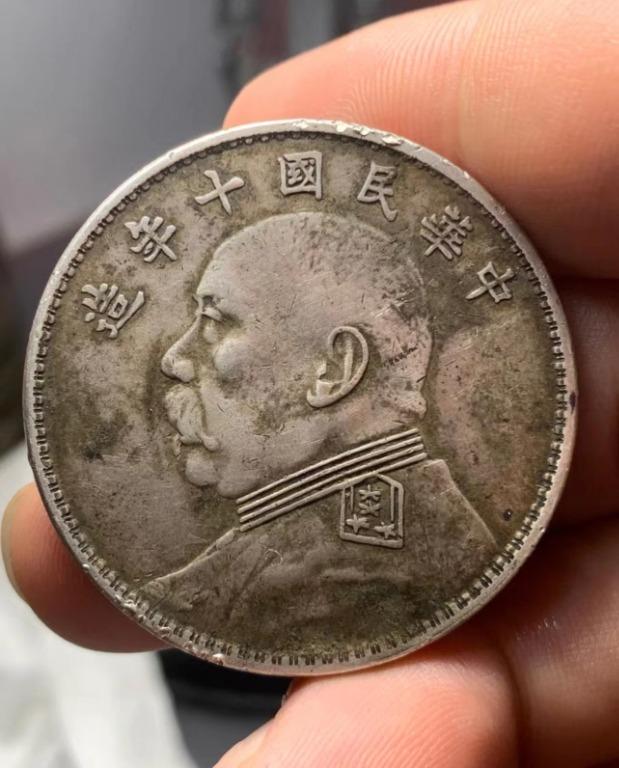
The technology for counterfeiting silver dollars has advanced by at least three generations in the past decade—from early sand casting to modern electroforming, die casting. The precision of high-quality counterfeits can now deceive many experienced collectors. The following 11 tips are practical experiences from the Buyback industry, progressing step by step from visual inspection, tactile feel, sound, to tool testing.
11 Quick Tips for Counterfeit Detection
| Method | Difficulty | Accuracy | Tools Needed |
|---|---|---|---|
| 1. Sound Test | Low | 70% | Wooden table |
| 2. Weight Test | Low | 80% | 0.1g precision electronic scale |
| 3. Reeded Edge Inspection | Medium | 85% | 10x magnifying glass |
| 4. Character Structure | Medium | 85% | 10x magnifying glass |
| 5. Dragon Pattern Details | Medium | 90% | 10x magnifying glass |
| 6. Magnetic Test | Low | 60% | Strong magnet |
| 7. Acid Test | Medium | 75% | Touchstone + nitric acid |
| 8. Density Test | Medium | 85% | Electronic scale + measuring cup |
| 9. X-ray Fluorescence (XRF) | High | 99% | XRF instrument |
| 10. PCGS / NGC Grading | Professional | 99.9% | Submission for grading |
| 11. Provenance | Low | Auxiliary | Document tracing |
Tip 1: Sound Test
Principle
Genuine silver dollars (89-90% silver content) have a unique metallic resonance frequency. When tapped, they produce a long ringing sound; counterfeit coins (made of cupronickel, alloys) have different resonance frequencies and produce a short, harsh sound.
Practice
- Use a wooden table (avoid metal tables that reflect sound)
- Tap lightly with another silver dollar or a wooden object
- Genuine: Clear, prolonged ringing sound (approx. 1-2 seconds)
- Counterfeit: Short and harsh (cupronickel) or dull (lead core)
Limitations
The sound test is subjective and requires comparison with known genuine coins. For beginners, the accuracy of this method alone is about 70%.
Tip 2: Weight Test
Principle
Silver dollars have international standards for their weight, silver content, and diameter. Deviation from these standards is a warning sign.
Standard Parameters
| Type | Weight | Silver Content | Diameter |
|---|---|---|---|
| Yuan Shikai Dollar | 26.6-26.8g | 89% | 39mm |
| Sun Yat-sen Dollar | 26.4-26.8g | 89% | 39mm |
| Da Qing Silver Coin | 26.7g | 90% | 39mm |
| Guangxu Yuanbao(7 Mace and 2 Candareens) | 26.7-26.9g | 89-90% | 39mm |
Practice
- Weigh using a 0.1g precision electronic scale
- Deviation of 0.5g+ from standard is a warning sign
- Measure diameter with calipers; deviation of 0.3mm+ is a warning sign
Tip 3: Reeded Edge Inspection
Principle
The reeded edge of a silver dollar is precisely minted, with international standards for the number of reeds, angle, and depth. Counterfeits are difficult to reproduce perfectly.
Practice
- Examine the reeded edge with a 10x magnifying glass
- Count the reeds (Yuan Shikai Dollars have 175-180)
- Check the angle of the reeds (should be perpendicular 90°)
- Observe the sharpness of the reed tips (genuine are sharp, counterfeits are rounded)
- Check the depth of the reed bases (should be consistent)
Tip 4: Character Structure
Principle
The characters on genuine coins are formed by hand-carved dies, resulting in unique depth, lines, and tool marks. Counterfeits are often made with flat printing or machine-cast high imitations, lacking the three-dimensional quality of the characters.
Practice
- Examine the text with a 10x magnifying glass
- Genuine characters: Deep lines, natural tool marks, sharp edges
- Counterfeit characters: Shallow lines, lack of tool marks, blurry edges
- Lightly touch the surface of the characters with a fingernail; genuine coins have a slight tactile Ao Tu (raised/recessed) feel.
Tip 5: Dragon Pattern Details
Principle
The dragon patterns on Qing Dynasty silver dollars were hand-carved, with extremely intricate details. Counterfeits struggle to reproduce the layering of the dragon scales, the density of the dragon whiskers, and the strength of the dragon claws.
Practice
- Examine the dragon pattern with a 10x magnifying glass
- Genuine: Clear layering of dragon scales (each with an independent outline), dense and fine dragon whiskers, powerful-looking dragon claws
- Counterfeit: Fused dragon scales, sparse dragon whiskers, flat dragon claws
- Compare with images of known genuine coins (PCGS Coin Facts)
Tip 6: Magnetic Test
Principle
Pure silver is non-magnetic. If a magnet attracts the coin, it must contain an iron core (a typical characteristic of counterfeits). However, note that this only identifies counterfeits with iron cores and cannot identify cupronickel or lead-core counterfeits.
Practice
- Use a strong magnet (neodymium magnet)
- Place the silver dollar on a flat surface and bring the magnet close
- Attraction = counterfeit (contains iron core)
- No attraction = genuine / cupronickel counterfeit / lead-core counterfeit
Limitations
The magnetic test can only identify 20-30% of counterfeits (those with iron cores); it is ineffective for other types.
Tip 7: Acid Test
Principle
Silver reacts with concentrated nitric acid to turn red (silver nitrate solution). Counterfeit coins (cupronickel, zinc, nickel alloys) will react differently.
Practice
- Use a touchstone (small ceramic plate) + concentrated nitric acid test solution
- Rub the silver dollar on the touchstone to leave a pale yellow metallic streak
- Drip one drop of nitric acid onto the streak
- Genuine: Streak turns red (silver nitrate)
- Counterfeit: Streak turns green (copper), blue (nickel), or colorless (zinc)
Limitations
This method will slightly damage the surface of the silver dollar (at the point of friction). It is not recommended for collectible coins.
Tip 8: Density Test
Principle
The density of silver is 10.49 g/cm³. The metal density of counterfeits varies (cupronickel 8.5, zinc 7.1, lead 11.34) and can be measured using the displacement method.
Practice
- Weigh the silver dollar using a 0.1g precision electronic scale (W)
- Fill a measuring cup with water and record the initial water level
- Submerge the silver dollar in the water and record the new water level
- Calculate the displaced volume (V) = new water level - initial water level
- Calculate the density (D) = W / V
- The density of a genuine coin should be in the range of 10.4-10.5 g/cm³
Tip 9: X-ray Fluorescence (XRF) Test
Principle
An XRF instrument uses X-rays to excite a sample and analyzes the wavelengths of the returned fluorescence, allowing for precise determination of metal composition (accurate to 0.1%).
Practice
- Get tested at a professional Buyback dealer (e.g., Gujin Jianbao)
- Metal composition (proportions of silver, copper, zinc, etc.) displayed within 30 seconds
- Genuine coins should show 89-90% silver, 9-10% copper, and other trace elements
- Counterfeits will show different proportions (e.g., 70% silver, 25% copper, 5% other)
Tip 10: PCGS / NGC Grading
Principle
Internationally recognized grading agencies use XRF + high-resolution microscopes + database comparison + expert numismatist experience to achieve an identification accuracy of 99.9%+.
Practice
- Submit for grading through Gujin Jianbao as an agent
- Receive grading results after 4-8 weeks
- Genuine: Encapsulated in a plastic holder with a grading score and certification number
- Counterfeit: Returned with documentation explaining why it was not graded
Tip 11: Provenance
Principle
Silver dollars with clear provenance (records of ownership history) have a significantly lower chance of being counterfeit.
Types of Provenance
- Auction house sales records (strongest)
- Professional dealer invoices
- Family heirloom documentation
- Historical photos or documents
- PCGS / NGC certification numbers
Recommended Combined Application of the 11 Tips
Initial Home Inspection (5 minutes)
- Sound Test
- Weight Test
- Reeded Edge Inspection (using a 10x magnifying glass)
- Magnetic Test
If all 4 tests pass → High probability of being genuine; proceed to the next step.
Advanced Home Inspection (30 minutes)
- Character Structure
- Dragon Pattern Details
- Density Test
If all 3 tests pass → Over 90% probability of being genuine.
Professional Inspection (Submit to Gujin Jianbao)
- XRF Test (30 seconds)
- Professional visual authentication
If passed → Over 99% probability of being genuine.
Ultimate Confirmation (Submit to PCGS / NGC)
- International grading
- Receive grading results in 4-8 weeks
If passed → 99.9%+ probability of being genuine.
Authentication Process for Suspected Silver Dollars at Home
- Use the 4 initial home inspection tips in this article (5 minutes)
- If all pass, proceed to the advanced inspection (30 minutes)
- WhatsApp 98342057 to schedule a free on-site XRF inspection with Gujin Jianbao
- For collectibles worth HK$5,000+, it is recommended to submit for PCGS / NGC grading
Conclusion
The 11 anti-counterfeiting methods for antique silver dollars cover the full spectrum from home use to professional analysis. Beginners can start with simple methods like sound, weight, and reeded edge, then gradually delve deeper. But remember: every single method has limitations, and ultimate authenticity confirmation requires the authoritative certification of PCGS / NGC. WhatsApp 98342057 to schedule a professional inspection service.
Gujin Jianbao - Professional Silver Dollar Buyback
Free appraisal ‧ Transparent quotation ‧ Instant cash ‧ On-site purchase across Hong Kong, Kowloon, and the New Territories. If you have similar old items, don't rush to sell them cheaply. You can first WhatsApp us for an appraisal to understand the true market value.
