The"Codes"on Dragon Silver Coins: Unlocking the Authenticity ofXuantong Yuanbaoand Determining the Value of Your Family Heirloom in One Go
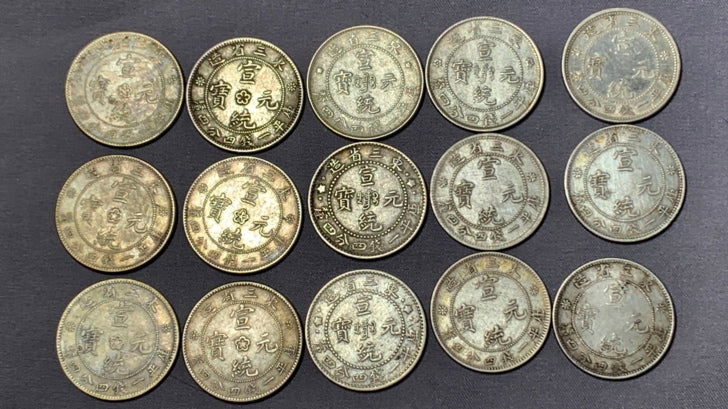
Is that long-forgottenXuantong Yuanbaoin your home a priceless family heirloom or a meticulously crafted replica? In the world of ancient coins, the difference between genuine and fake can mean a vast disparity in value.
Many people believe that authenticating dragon silver coins is a profound and mysterious skill, but that's not true. Every genuinesilver coincontains"anti-counterfeit codes"from its era. Today, experts fromGu Jin Jian Baowill simplify this process, guiding you step-by-step to decipher these codes, allowing you to personally uncover the true identity of the Xuantong Yuanbao in your hands.

Preparation Before Authentication: Discarding Misconceptions
Before we begin, please forget unscientific and damaging methods like"biting with teeth"or"burning with fire."Modern counterfeiting techniques are highly sophisticated, so we need more scientific and meticulous observation methods. Get your dragon silver coin ready, and let's start an interesting detective game!
The First Set of Codes: Listening to the"Heartbeat"of the Silver Coin — The Sound Test Method
This is the most direct and historically oldest authentication method. A genuine old silver coin, cast from high-purity silver, produces a clear, long, and resonant sound, which insiders call the"door-opening sound."
Genuine Sound:Hold the silver coin by its center with your fingers, and gently tap its edge with another silver coin or a metal rod. You will hear a"hum..."sound, clear and pleasant, with a lingering echo.
Counterfeit Sound:
Lead-tin alloy counterfeits:The sound is dull and short, like tapping a lead block, producing a"thud, thud"sound.
Modern high-quality replicas (silver-plated):The sound is sharp and harsh, lacking a lingering resonance.
(Suggestion: Embed a short video or audio here comparing the sounds of genuine and fake silver coins)
The Second Set of Codes: The"Fingerprints"Left by Time — Observing the Patina
"Patina"is a natural protective oxidation layer that forms on the surface of silver coins over decades or even centuries of circulation, through contact with air, moisture, and human hands. It is the most honest witness of time.
Genuine Patina:
Layered:Patina forms from the inside out, with rich colors (light grey, dark grey, yellowish-brown, iridescent), natural distribution, and firm adherence to the coin's surface, making it difficult to wipe off.
Clear pressure points:On raised areas like dragon scales and inscriptions, due to long-term wear, the patina will be thinner, revealing the silver's original luster, while in recessed areas, the patina will be thick and deep, creating a striking contrast.
Artificial Toning:
Monochromatic:Usually applied using chemicals (such as sulfur), the color appears dark and lifeless, lacking layers.
Surface-level:Fake patina appears like a layer of"paint."If rubbed vigorously with a finger or cloth, it may flake off or fade.

The Third Set of Codes: The Machine's"Weight"— The Weight Test Method
During the late Qing Dynasty, coin minting had strict standards. A standard"Ku Ping Qi Qian Er Fen"Xuantong Yuanbao officially weighed approximately26.8 grams.
Genuine Weight:After a hundred years of circulation, there might be slight wear, but the weight usually falls between26.5 grams and 27 grams. Weights below 26 grams or above 27 grams should be viewed with suspicion.
Counterfeit Weight:Due to different densities, the weight of counterfeits often has a significant discrepancy from genuine coins.
Lead, tin counterfeits:Will be much lighter than genuine coins.
Modern alloy counterfeits:May be intentionally weighted, but it is difficult to precisely match the standard weight.
Recommended tool:A digital scale accurate to 0.01 grams.
The Fourth Set of Codes: The Machine's"Tooth Marks"— Examining the Edge Reeding
Edge reeding is an important anti-counterfeiting feature of machine-struck coins, formed by a single high-pressure strike from a machine. It is extremely difficult for small modern workshops to replicate this craftsmanship.
Genuine Edge Reeding:
Deep and powerful:Each reeding mark is very clear, regular, and uniform in size.
Regular right angles:The grooves between the reeds are regular right angles or rounded angles, with natural transitions.
No burrs:After a hundred years of circulation, the edge reeding feels smooth and rounded to the touch.
Counterfeit Edge Reeding:
Blurry and unclear:The reeding marks vary in depth and are unevenly arranged.
Irregular shape:May be trapezoidal or triangular, with rough grooves.
Strong burrs:Feels rough or uneven to the touch.
The Fifth Set of Codes: The Artisan's"Brushwork"— Microscopic Details
This is the highest level of authentication and the most reliable method. Genuine dragon silver coins were struck under high pressure from official steel dies, resulting in unparalleled detail.
Dragon Scales and Body:The dragon scales on genuine coins are three-dimensional and distinctly separated, and the dragon's body is full of power. Counterfeit dragon scales are often blurry and muddled together, and the dragon's body appears weak and lifeless.
Stroke of Inscriptions:Look closely at characters like"Xuan,""Tong,"and"Bao."The strokes on genuine coins rise and fall with grace, full of calligraphic strength. Counterfeit inscriptions often appear stiff and rigid, lacking spirit.
English and Manchu Script:The English letters on genuine coins have smooth lines, and the Manchu script details are clear. Counterfeits often reveal their flaws in these subtle areas.

Still Unsure? Let Us Help!
After completing the above five steps, we believe you have a preliminary judgment on theXuantong Yuanbaoin your hands.
However, we understand that when dealing with a coin that may carry generations of memories, any judgment requires utmost rigor and professionalism. If you still have doubts about the authentication result, or wish to know its exact value in the current market,Gu Jin Jian Baois always at your service.
Our team of experts has years of practical experience and is equipped with professional instruments to provide you with a100% freeprofessional authentication service. We do not charge any authentication fees; we simply want to help you understand the truth and discover the true value of your family heirloom.
Want to know how much your silver coin is worth?
Welcome to get an accurate quotation service through theXuantong Yuanbao Buyback Series.
Act now, don't let wealth slip away!
📞WhatsApp Quick Quote/Appointment for Authentication:98342057(Click the number to start a conversation immediately)
☎️Phone Consultation Hotline:852-98342057
Gu Jin Jian Bao, your most trusted ancient coin expert.
Want to know how much your Xuantong Yuanbao is worth?
Gu Jin Jian Bao offers free appraisal, estimated value within 30 minutes, same-day doorstep collection, and instant cash payment. WhatsApp us a picture to get an immediate estimate, no need to visit our store in person.
