
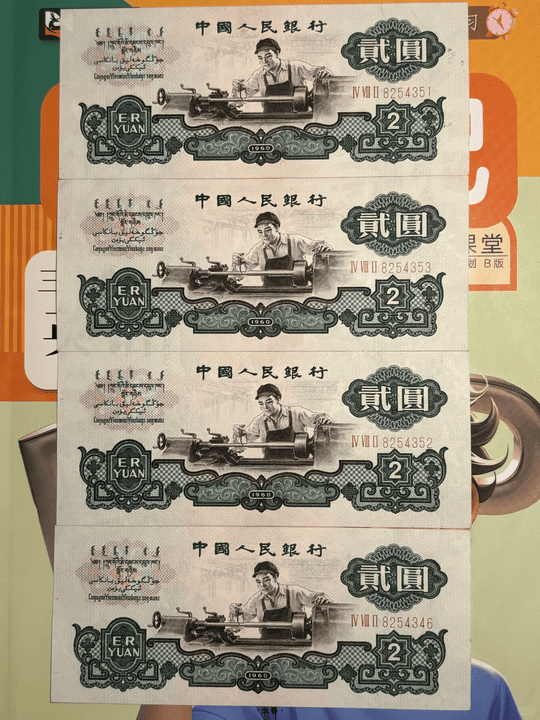
Open a dedicated Lathe Worker 2-yuan record
For the 1960 Third Series RMB Lathe Worker 2-yuan note, transcribe date and face-value wording, both principal designs, prefix and complete serial before measuring the paper. Treat Lathe Worker as the recognised English term, not a substitute for visible evidence.
Keep complete front and back, four corners, every edge, serial and transmitted-light view under one note number. Record only structures actually visible under transmitted light.
Map folds, tears, stains, mould, adhesive, infill, recolouring and pressing separately. Do not wash, iron or force a note from an album to make the file look complete.
Transcribe the whole note before variant comparison
Record Third Series, denomination, visible date wording, both designs and full serial. An unconfirmed layout remains open instead of being supplied by a market nickname.
Use a unique identifier for the two faces, corners, edges, dimensions and sleeve. A detached serial or damage close-up stays outside the summary.
Preserve complete faces, edges and transmitted light
Keep the camera parallel to the paper and retain all four corners in each complete view. Add located details of wording, serial, design junctions and damage.
Use broad, even transmitted light without filters and record location and direction. Do not presume a watermark, thread or optical device that the note does not show.
Protect album order and paper stability
Photograph a bundle, serial run, album page or adhered note in its existing sequence before any decision to open or separate it. Do not heat, peel or press the paper.
Images support layout and obvious damage review, while paper feel, minute repair and printing layers may still require examination of the physical note.
Describe the paper condition by position
Mark hard and soft folds, tears, corner loss, stains, mould, adhesive, infill, recolouring and flattening on the corresponding complete face.
Preserve the unfiltered colour file because lamp spectrum, white balance and an old sleeve alter appearance. Add raking-light photographs without replacing it.
Cross-check the Lathe Worker serial, paper and transmitted-light views
Place the 1960 Lathe Worker 2-yuan prefix and serial at their printed positions on complete front and back images. A detached number close-up cannot identify the note's layout.
Use transmitted light to map any proposed watermark, thinning or paper repair, then record infill, recolouring, pressing and replaced-corner clues in separate fields. Each detail returns to the same note number.
Measure length and width with the tool and unit shown, and distinguish folds, tears, stains and mould from printing features. A group view records quantity only.
Name the exact corner, margin or paper area before considering opening or testing. Keep the present sleeve and Lathe Worker note unchanged until the likely effect is understood.
Where an old album or sealed package blocks the paper, photograph the visible corners and obstruction. The unread area stays pending rather than being inferred from another 2-yuan note.
