
 WhatsApp item photos
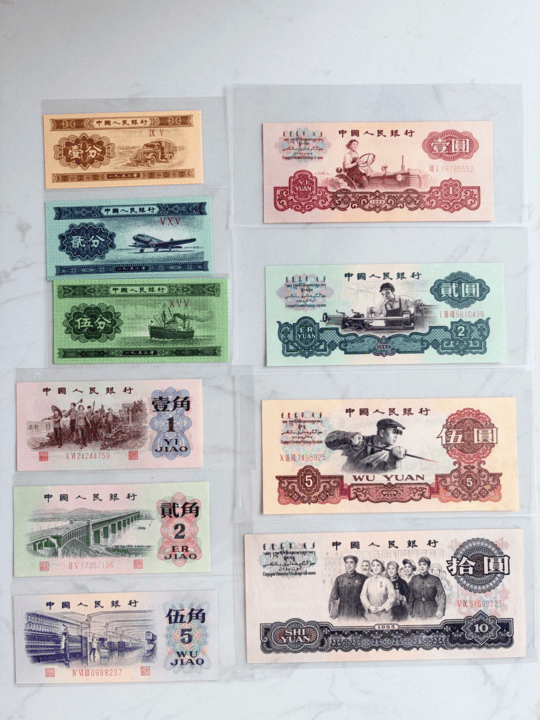
Give Each Third Series RMB Note Its Own Record
Begin with the visible series, denomination, printed year, principal designs, prefix and serial number, copied from that note rather than a neighbouring example.
Photograph complete front and back faces parallel to the paper, leaving all four corners and the entire perimeter inside the frame.
Attach details of the serial, inscriptions and damage only when their positions can be found again on an uncropped face.
Keep albums, wrappers and inherited descriptions in contextual fields, separate from the printed and physical evidence on the note.
Use Light to Answer a Defined Question
Make an evenly lit colour record first, then use gentle raking light for paper relief, folds and suspected repair without pressing the sheet flat.
A transmitted-light image records only structures actually visible; it does not assume that every version carries a watermark or security feature.
Describe Paper Condition by Location
Separate folds, tears, edge splits, corner loss, stains, mould spots, adhesive residue, filled holes, retouching and replaced corners.
Preserve the original colour files because a sleeve, white balance or uneven illumination can change the apparent paper and ink tones.
Protect Runs and Album Order
Photograph the existing sequence of consecutive notes, bundles or album leaves before any movement, including seals, first and last numbers and visible count.
Stop if notes are adhered, damp or brittle, and do not wash, iron, laminate or force a page apart for a clearer image.
Know What Photographs Cannot Settle
Images can document printed details and evident damage, while paper feel, fine repair and areas behind mounts may still require direct examination.
State the exact reason for access before touching a loose note or changing a wrapper, and retain the former arrangement if movement is permitted.
A Serial-Number Record That Survives Album Reordering
The note number appears in filenames for both faces, four corners, perimeter, serial detail and transmitted-light view, so an album move does not break the evidence chain.
Consecutive serials are recorded as an observed run with first and last numbers; a missing or unreadable note is not silently supplied from the sequence.
Folds, tears, stains, mould and repairs retain locations independent of the attractive serial pattern or the album caption.
Published series information carries its source and access date, while the printed year and prefix remain transcriptions from the physical note.
After reordering, the count, new album position and unchanged individual identifiers provide the audit trail without flattening or relabelling the paper.