
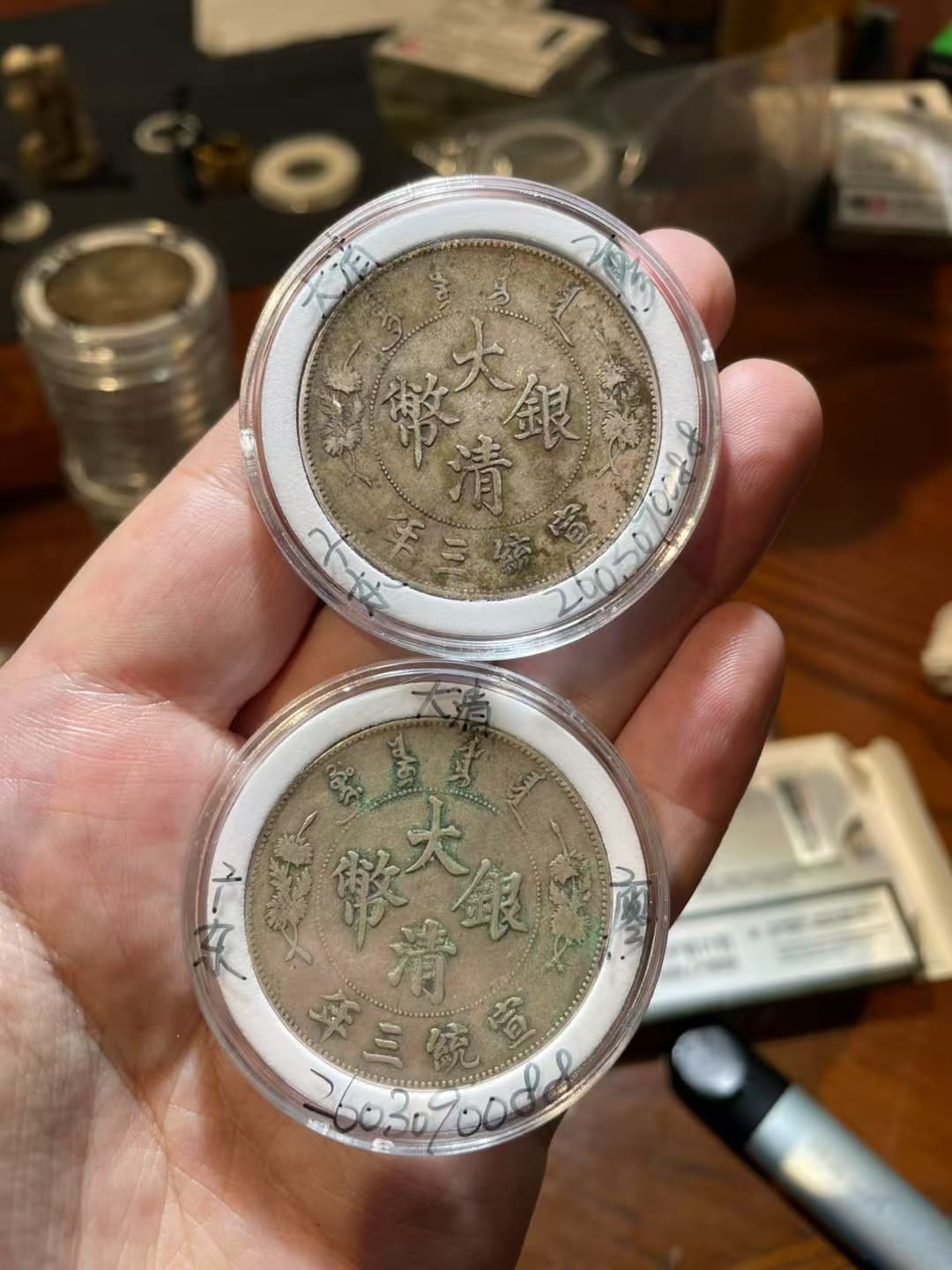
One number per Great Qing silver coin; never mix the photographs
Before cataloguing, describe the possible effect of any contact examination. Every overall view, detail, measurement and attachment taken afterwards must follow the coin's item number.
- Classification / identification: dragon design, beaded border, denticles and English inscriptions
- Condition: patina, wear, knocks and traces of cleaning
- Photographs: full-coin views, raking-light views and located damage close-ups
Give the packaging its own reference and match it to the coin rather than treating both as one object. Check that collector nicknames have not supplied missing wording. Leave unsupported points open and note anything the packaging prevents you from seeing.
The focus is the Great Qing silver coin itself: inscriptions, designs, edge and surfaces that another person can verify.
Join the edge views into a complete circuit
Photograph the reeded edge in overlapping sections around the full circumference. Leave seams, altered edges, holes, solder and evidence of removed jewellery fittings untouched; keep every image under the coin's number.
Distinguish stable toning from circulation wear, a weak strike, hairlines left by wiping and colour that could reflect chemical treatment. Dark metal should not be cleaned simply to make it easier to photograph. List obscured areas for review.
Give every coin an independent number
Transcribe the province or mint, date inscription, Kuping denomination and inscriptions on both faces. Compare weight and diameter only within the correct variety family, keeping the photographs tied to that coin.
First retain uncropped views of both faces and their complete circumference. Then add located details of the dragon, beaded border, denticles, English inscriptions and denomination. Leave anything illegible pending.
Describe patina and wear exactly as found
Group dragon dollars by province or mint, date and Kuping denomination. Number each coin so the Chinese-inscription side, dragon side, edge reeding, weight and diameter cannot be detached from one another.
A grading holder supplies a label and grade, not a substitute for the coin. Compare the enclosed mint, date, denomination, dragon design and surface condition, and leave hidden areas unresolved.
When direct examination is necessary
Store chop-mark notes, old sleeves and provenance accounts separately from observation. They do not replace examination of the inscriptions, dragon, beaded border, metal surface or edge; keep the supporting photographs under the coin's number.
Coins sold under the same market name may come from different mints, dates, denominations or dragon varieties. Group them by the inscriptions actually visible, then examine the finer design details.
Photographs, measurements and limits for a Great Qing silver coin
For the Great Qing coin, begin with the dragon, inscriptions and beaded border. Retain uncropped obverse and reverse views with located dragon details, then describe patina, wear, knocks and cleaning traces separately. Neither group may be used to invent what the other lacks.
Separate paper sleeves, grading holders and old labels from the dragon, beaded border, denticles and English inscriptions. The former provide background; the latter are observations from the coin. Neither a label nor a category proves attribution, so check every point against the object.
Describe condition by location: a particular point on the face, a section of the edge or a seam. 'Good condition' and 'signs of age' are too vague to reproduce. If a design or inscription is doubtful, return to the full views and its located close-up.
Count each coin by number at handover, and cross-link its original packaging and documents. Treat spoken history as background rather than a visible feature. Finish by checking the dragon, beaded border, denticles and English inscriptions and noting every unresolved point.
Before sending an enquiry, make sure the Great Qing silver coin's number links to its photographs, weight, diameter and edge-reeding record. Anything that still cannot be confirmed waits for direct examination.
