
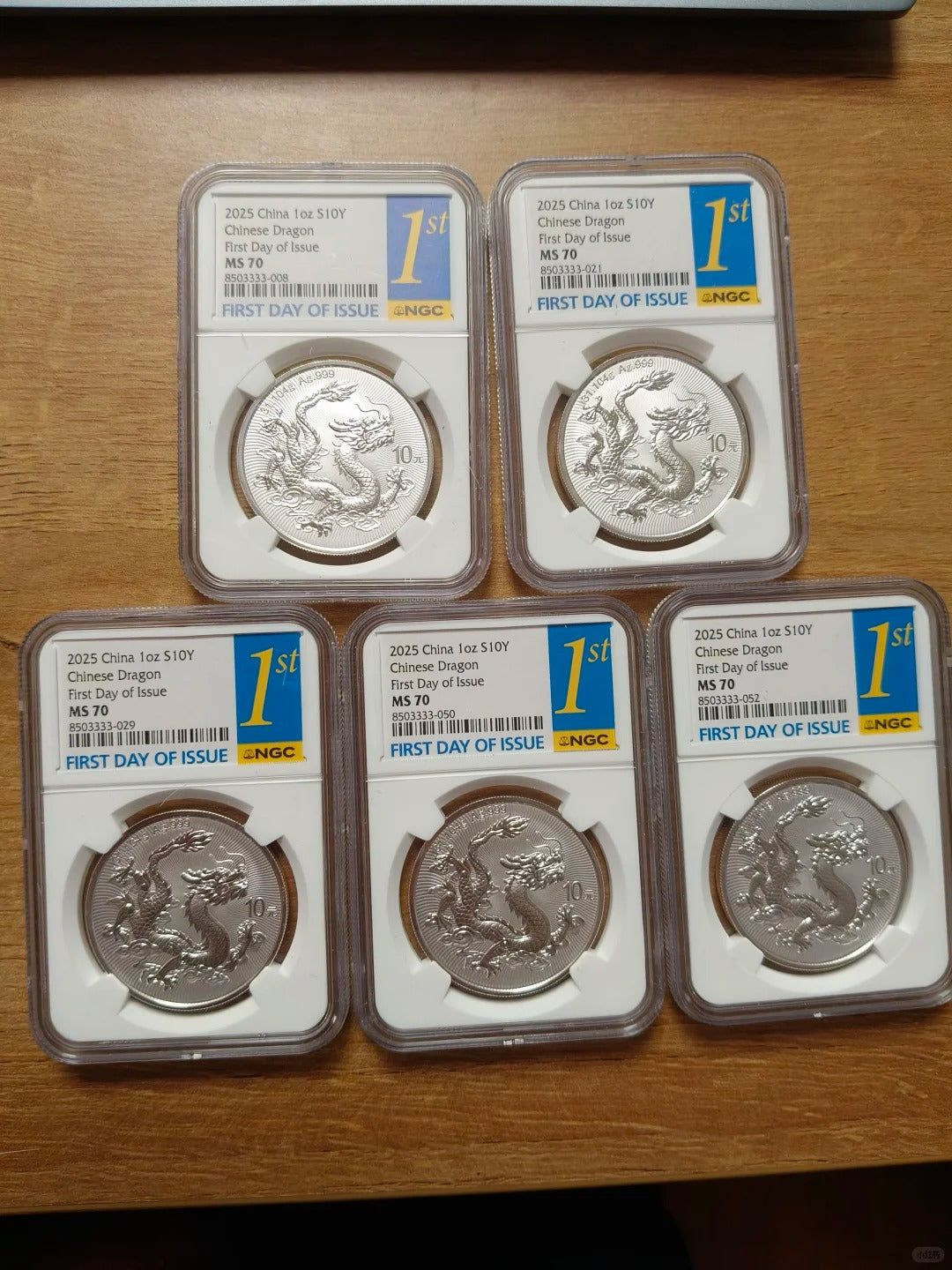
Number each Curved-Whisker Dragon coin before comparing it
A group photograph can show the set, but every Xuantong Year 3 Great Qing Curved-Whisker Dragon coin needs its own identifier. Keep inherited date claims as background and describe only visible evidence first.
- Measurements: complete edge, weight, diameter, instrument and original unit
- Images: full faces, raking-light views and located damage details
- Identification: provincial mint or mint name, date, Kuping denomination and visible legends
Finish by matching packaging to the coin number. A detail unsupported by the photographs remains open, and any restriction on opening or direct contact should be stated.
Reference every issue or variety statement
A grading holder contributes its label and grade, but the visible mint, date, denomination, dragon and surface still need comparison with the enclosed coin. Describe the view blocked by packaging.
Transcribe the provincial mint or mint name, date, Kuping wording and legends on both faces before comparing weight and diameter within the same proposed variety.
For an issue, production or historical claim, identify the reference and the date on which it was examined. Treat earlier labels, recollections and web pictures as leads tied to the correct coin.
Establish the visible type before arranging details
Note the working name, legible text, dragon design, dimensions or weight, present enclosure and condition. Anything obscured must remain unresolved rather than copied from a similar coin.
For several dragon dollars, sort by visible mint, date and Kuping denomination, then number each piece. Keep its legends and dragon views with the matching rim sequence and measurements.
Do not overwrite original readings
Coins with the same market name may differ by mint, date, denomination or dragon design. Group them from visible legends before considering finer design distinctions, and state any packaging limit.
Capture the edge in overlapping sections. A seam, reworked rim, hole, solder point or former jewellery fitting must remain untouched; a neighbouring coin cannot supply a missing section.
Keep complete views, dragon close-ups, measurements, packaging and documents under one identifier. Explain where contact is proposed and what it could change.
Make a later comparison reproducible
Separate surface tone from use-related wear, incomplete striking, wiping marks and colour that could reflect chemical treatment. A dark surface does not call for cleaning, and the holder restriction stays with the condition note.
Images can establish broad grouping and locate conspicuous damage. Composition, fine repairs and portions hidden by an enclosure may still need direct examination.
A working sequence for the Curved-Whisker Dragon coin
Begin with complete edge views, original weight, diameter, instrument and unit. Then map mint letters, applied chops, perforations or changed rim sections; do not promote a name unsupported by the images into a conclusion.
Next transcribe the provincial mint or mint name, date, Kuping denomination and legends, followed by full-circumference views and dragon details. State an obstruction plainly instead of moving the coin merely to fill a blank.
Keep visible observations separate from labels, certificates and recollections. If the two accounts disagree, date and preserve both, then return to the edge, weight and surface images.
Before handover, confirm the number of coins, attachments, packaging and unresolved points. Inspection terms should be stated only after the actual coin can be seen.
For an enquiry, check complete and detail views, measurements and packaging once more. Add photographs where the mint, date or Kuping wording is incomplete without altering the surface.
