
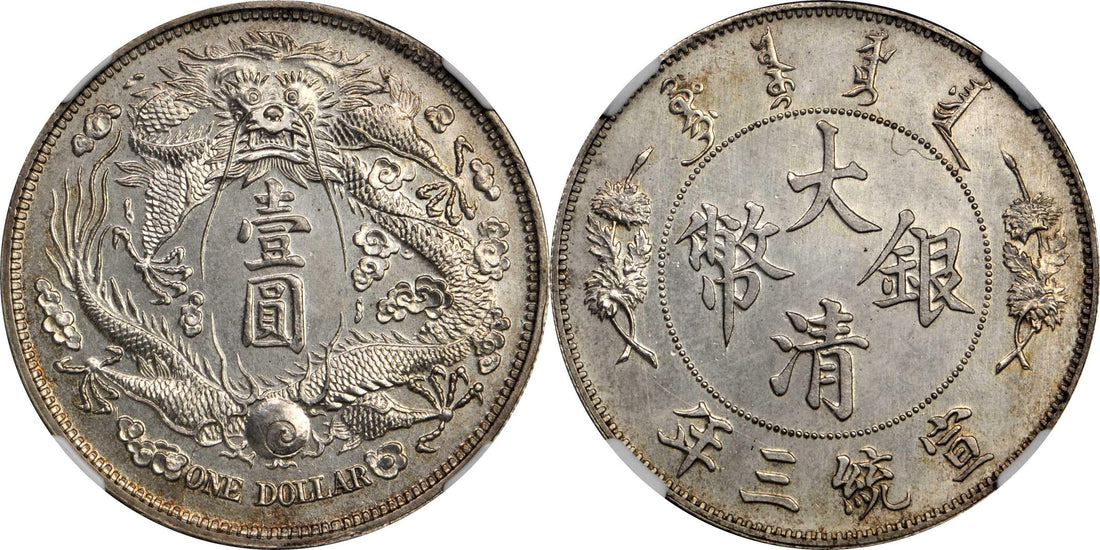
Fix the Year 3 coin identity before discussing a finer variety
Begin with complete, level photographs of the inscription side and dragon side. The Xuantong Year 3 wording, denomination, English legends and principal devices should be readable in relation to the whole coin.
Assign one number to the silver coin and carry it through the holder, edge sequence, weight and diameter card. A batch image may show quantity, but it cannot stand in for the individual record.
Copy an old label or grading attribution exactly and keep it as supporting context. Confirm the enclosed legends, dragon and visible condition independently before adopting its variety name.
Read the dragon from centre to rim
Photograph the dragon head, whiskers, horns, claws, scales and tail with enough surrounding detail to show their positions. Include the beaded border, denticles and adjacent wording rather than presenting isolated macro images.
Make a continuous edge survey with overlapping frames. Preserve any seam, repair, knock, filing, perforation, solder or mounting trace; none should be cleaned away for a sharper photograph.
Keep the original weight, diameter, tool and unit on the first measurement card. If a later reading differs, repeat the same setup and retain both results until the cause is understood.
Do not mix issue research with observations from the metal
A production or historical statement needs an identified reference and consultation date. Old sleeves, oral accounts and internet photographs can point to research, but cannot complete a missing character.
When the current enclosure blocks the mint lettering, dragon or rim, name that restriction. Do not describe a hidden feature as confirmed merely because the holder label lists it.
Group similar Great Qing coins by visible evidence
Coins sharing a broad Xuantong Year 3 name may still differ in lettering, dragon treatment, border or edge. Sort them first by features that can be photographed on each piece.
Keep one coin's dimensions and surface notes out of another's file. A useful comparison identifies the diagnostic position while leaving the conclusion open until the subject coin shows it.
Preserve the order in which the evidence was collected. Dated additions should sit beside the first images and readings, not silently replace them.
Use condition language that another person can repeat
Describe toning shade, high-point loss, strike weakness, wipe marks, scratches and cleaning-related sheen separately. Uneven colour alone does not justify washing or polishing the silver.
Locate damage on a full view and then show it under raking light. This keeps a rim knock, field mark or repaired area tied to the correct side and orientation.
Reconcile the coin, holder and documents before handover
Check that both complete faces, the full edge and every measurement return to one item number. Match holder numbers and old envelopes without treating their wording as physical proof.
Read the Xuantong characters, denomination, English legends and dragon once more against the photographs. Mark any covered or indistinct passage for direct inspection.
If photographs settle the design but not the metal or subtle repair, state that limit plainly. Specialist inspection should focus on the unresolved area while the existing patina and packaging remain untouched.
Retain inconsistent readings rather than choosing the more convenient figure. A repeat made with the same instrument and contact points is more useful than an unexplained correction.
Finish with a short list of confirmed, proposed and unresolved points. That distinction allows the next reviewer to test the attribution without recreating the entire file.
