
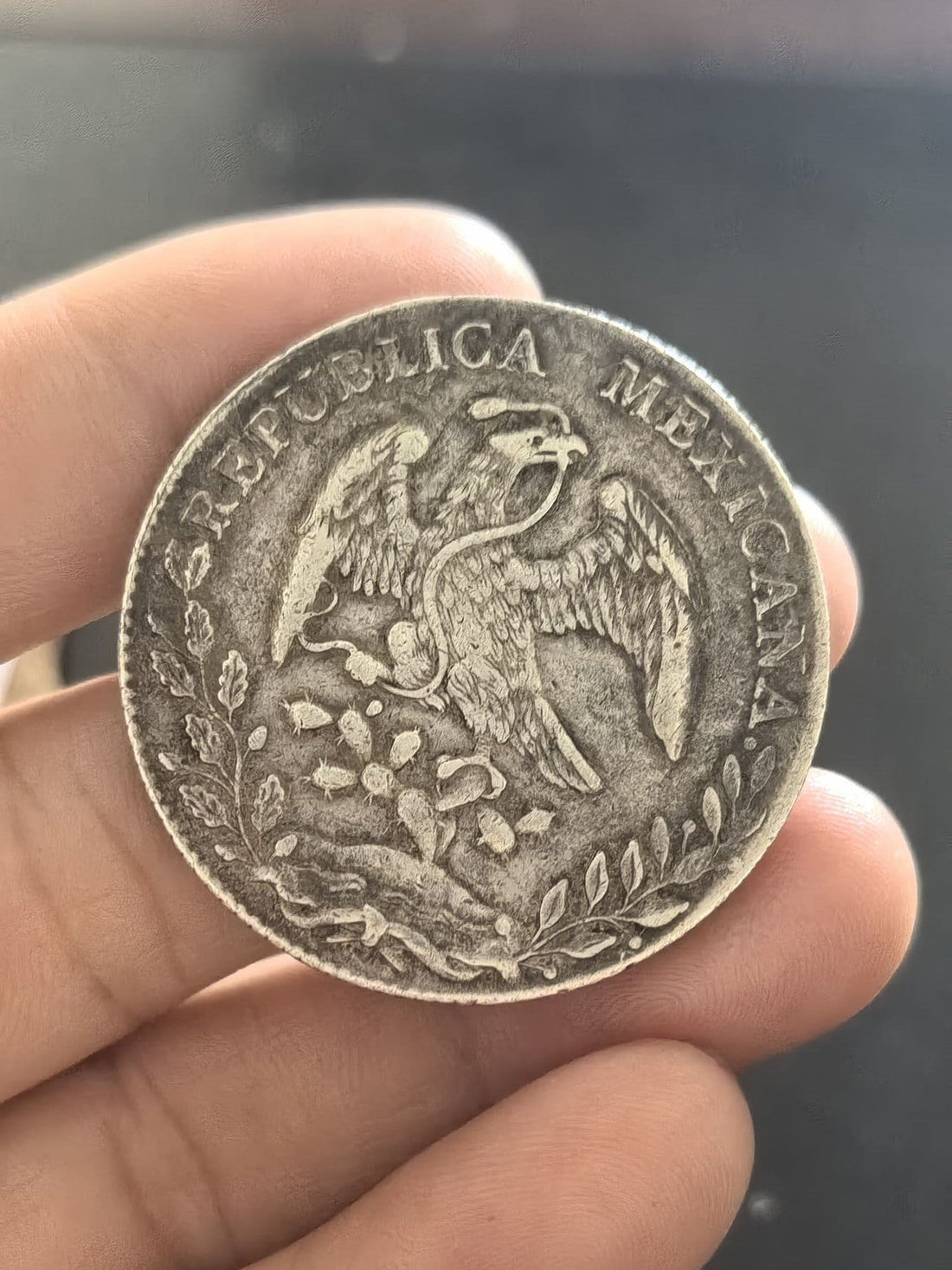
Assemble the complete photographs before describing a Mexican Eagle Dollar
The Chinese nickname is a search aid, not evidence. Assign the coin a number, then gather full-face, raking-light and damage photographs before assessing its dimensions or surface.
Use a deliberate order of examination
Write down weight, diameter, measuring tool and original unit as one group. Treat the date, denomination, central devices and border wording as another, so an uncertain identification does not contaminate a physical reading.
Use a complete view to locate every close-up and leave a missing point unfilled. If the album or holder cannot be opened safely, describe what it conceals.
Personal names, places and transaction details may explain provenance, but they do not identify the Mexican silver coin. Base the description on the object and its traceable images.
Create a physical description of the coin
Transcribe the date, denomination, country or territory wording and the main device on each face. Only then compare weight and diameter with a specification for the same type, while keeping all photographs under the coin number.
Capture both faces and the circumference before adding details of the main devices, border inscriptions, mintmark, denticles and edge. Put an unclear position on a direct-review list.
Photograph faces and edge as separate but connected sequences
Where reeding, lettering or another design is present, photograph the edge in overlapping sections. Preserve seams, altered areas, holes and solder as found.
Describe old surface colour, worn relief, uneven strike, fine wipe marks and hues consistent with chemical exposure as separate observations. Do not assume that a dark coin requires cleaning.
State the limits of the enclosure
Retain chop marks, a paper sleeve and provenance notes as supporting material. They cannot substitute for inscriptions, designs, metal surface or edge evidence on the coin itself.
Use the market nickname only to find references. The formal identification should follow the visible date, denomination, country wording, mintmark and principal designs, without importing features from a different foreign coin.
Keep measurements and surface observations together
Separate Mexican Eagle Dollars from junk dollars, piastres, British Trade Dollars, Morgan dollars and other foreign issues. Attach both faces, the edge sequence, weight and diameter to the number of the individual coin.
Read a grading label, then compare it with the enclosed type, date, mintmark, principal designs and visible surfaces. List anything the plastic prevents you from checking.
Reconcile the dated design with the circumference record
Start by matching physical measurements to the dated design, then map each chop mark, hole, solder point or suspected edge alteration. Keep each observation with its method and location, and name the gap when a feature cannot be seen.
Next, transcribe the date, denomination, main devices and border wording, then examine the circumference and its lettering or reeding. This sequence protects the coin from unnecessary handling merely to fill an empty line.
An old box or accessory can add provenance, but it does not speak for the silver coin. Keep enclosure numbers, seals and visibility limits distinct from observations of the object.
Retain original image files without filters or artificial sharpening. Make a new located photograph when more clarity is needed, while preserving the earlier view for comparison.
If the Mexican Eagle Dollar remains in an album, old box or sealed holder, note the limitation before an enquiry. Photograph what can be seen and do not force the enclosure open for a weight or surface check.
