
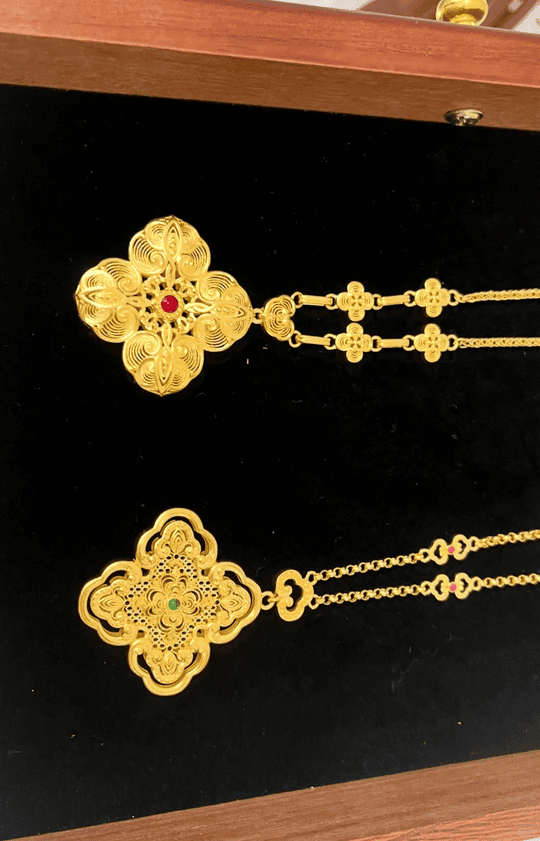
Inventory every piece in a pure-gold floral set
List the set by its actual contents—bracelets, necklaces, earrings, pendants and any other pieces—and give each one its own number. A group photograph shows how the set belongs together, but it cannot replace item-level images of hallmarks, weight, clasps and damage.
Petals, leaves, connecting rings and moving clasps carry stress in different ways. Mark hollow sections, old solder joints, breaks and later-added components individually; do not cut, fire-test or polish anything first.
Keep the set's total weight, each piece's weight and its non-gold components on separate lines. Stones, cords and tags are not part of the net gold weight. A hallmark is one clue, not a conclusion, so the agreed contact limits of any fineness check must also be stated.
A set still needs item-by-item documentation
Number bracelets, necklaces, rings, pendants and matching accessories separately. Note the quantity, style, hallmark position and visible damage for each piece, retaining the original reading and unit.
Compare the available photographs with a complete view of every piece, then add the clasp, seams, solder joints and moving parts. Do not rely on a single group image; if packaging hides an area, state the limitation.
List non-gold components separately
Distinguish gross weight from the basis used for net weight. Identify stones, pearls, cords, spring clasps, watch movements and any other non-gold parts one by one, while preserving the original readings and units.
A scale photograph should show both the unit and decimal places. Do not mix grams, taels and troy ounces, or substitute the set's combined weight for individual figures. Note any view still blocked by the original packaging.
Construction and repairs
Marks such as 999, 916 and 750 are evidence to be considered. Repair solder, later-added fasteners, hollow supports and mixed materials require their own observations.
Locate breaks, distortion, missing parts and repairs accurately. Leave the surface untouched—no polishing, cutting or fire testing—and note any area that remains hidden by packaging.
Define inspection and deductions before handover
Match receipts, tags and packaging to the numbered pieces. Components that cannot be separated safely remain unresolved; do not assign a fixed deduction before they have been examined.
Count every piece against the checklist before handover. The scope of any inspection, disassembly or deduction should be written down in advance, with packaging restrictions made explicit.
Inspect the floral set from clasps to components
Begin with clasps, solder joints and construction. Keep individual weights, combined weight and scale unit together, while separately noting hollow construction, later-added fasteners and repair locations. Link both sets of observations to the right item without treating either as proof of fineness. An incomplete measurement cannot support the next conclusion.
After the first pass, check that inseparable components, pending net weight, clasps, seams, solder joints and moving parts all trace back to the correct piece. Date conversions, oral information and later additions separately. The original individual weights, total weight and scale unit remain the starting point for comparison.
Photographs can support visible wording, decoration, proportions and obvious damage, but may not establish material, hidden fractures or subtle later treatment. Keep those limits with the relevant item number, including when reviewing clasps, seams, solder joints and moving parts.
Do not polish, scratch-test, cut or fire-test gold before inspection. Keep sealed, set and structurally fragile areas as found. Note these limits under the correct item number, then confirm against the condition list that no information has crossed between pieces.
Before submitting an enquiry, review the number assigned to every component in the floral set. Include only what the photographs and notes support, and leave inferences out of the conclusion.
