
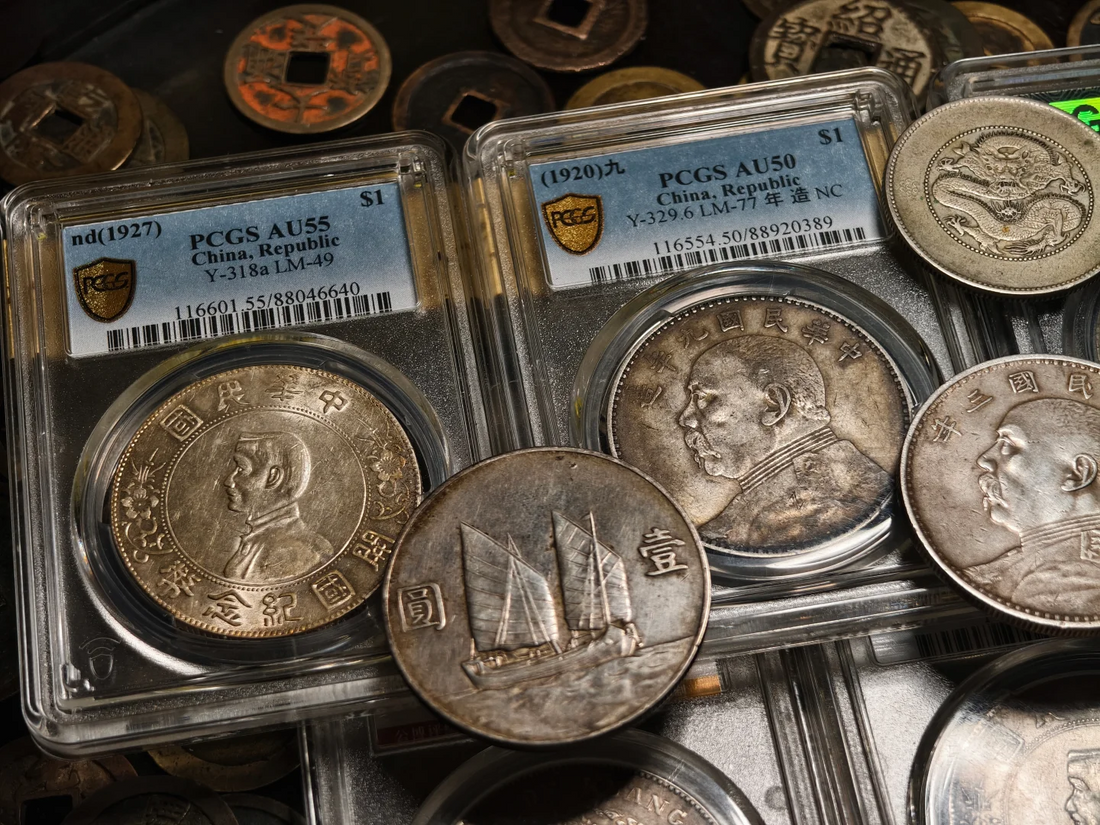
Write only what the silver dollar shows
Do not name the coin from an old label or similar online image. Begin with mint letters, applied chops, pierced points and rim alterations, keeping every view in the same direction under one item number.
Leave an unconfirmed coin type or variety open, and connect all supporting photographs, measurements and attachments to the same identifier.
Details that still need review
If the full circumference, denticles or edge are incomplete, first make sure the date side, principal design and edge share one number. Separate illegible wording, unsupported statements and areas that cannot be opened.
Background stories should not decide the result; describe only the condition visible on the silver dollar.
Build the comparison from complete faces
Transcribe the visible date, denomination, legends and principal designs. Compare weight and diameter only after the coin type has been established, leaving indistinct areas unresolved.
Preserve uncropped photographs of both faces and the full circumference. Add located details of legends, the main motif, denticles, mintmarks and edge, with the original readings and units.
Photograph faces and edge as separate sequences
Capture the edge in overlapping sections around the full circumference. Keep joins, reworked rim sections, perforations, solder spots and former-mount evidence exactly as found.
Set out surface colour, ordinary wear, softly formed details, wiping hairlines and chemically altered hues as distinct observations. Do not clean the coin, and retain every first measurement and unit.
Keep preservation limits visible
A chop mark, old paper sleeve or provenance account may be retained as context. None replaces examination of the inscriptions, design, metal surface and edge; list every hidden position.
Coins sharing a name may carry different dates, denominations or mintmarks. Group them by what can be transcribed before comparing condition or later information.
Match measurements to the surface photographs
For several coins, sort by visible date, denomination and main design, then number each piece. Its two faces, edge, weight and diameter must remain together.
A grading holder supplies its label and score, but the enclosed coin type, date, proposed variety and surface still require checking against the actual coin.
How Chops and Altered Rims Stay Locatable
Keep mint letters, counterstamps, pierced points and rim changes together with the paper sleeve, holder and old label under one identifier. Variety and condition comparisons come only after those links are secure.
Use three passes: confirm the coin number, complete the circumference and denticles, then assess patina, wear, knocks and cleaning traces. Preserve the date and first images throughout.
Separate direct observation from later interpretation. Photographs, dimensions and weight show what was seen; market names, provenance accounts and unresolved points remain supporting context.
If an image and measurement conflict, repeat the same reading under the same conditions. Preserve both results and seek direct inspection if the difference remains unexplained.
For an enquiry, retain complete and close views together with a plain statement of what is hidden, sealed or unsupported.
