
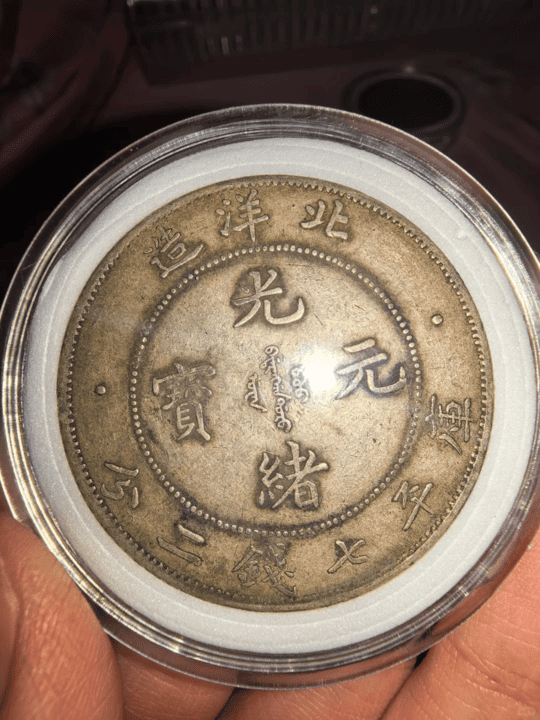
A review sequence for a standing-figure trade dollar
Secure complete faces, raking-light views and located damage photographs first. Then identify the main designs, denticles and mintmark positions, keeping both groups under one coin number.
Add weight, diameter, measuring instrument and original unit. The notes should allow another person to repeat the comparison without promoting an unconfirmed detail into a date or variety.
Check that no overall photograph has cropped the circumference and add the examination date. A blank can carry a reason; it should never be completed by guesswork.
Leave names, uses and prices from earlier stories aside; concentrate on evidence presently visible on the trade dollar.
Read the inscriptions and designs before measuring
Transcribe the visible year, denomination, country or regional wording and principal designs on both faces. Compare weight and diameter only within the established coin type.
Preserve uncropped front and back views, then add positioned details of the main motifs, border legends, mintmark, denticles and edge. Explain the likely effect before direct handling.
Specifications do not decide the attribution
Separate ship dollars, seated-figure coins, standing-figure trade dollars, Morgan dollars and other foreign silver coins. Number every piece so its two faces, edge, weight and diameter remain together.
A grading holder supplies label and grade information, but the enclosed type, year, mintmark, two principal designs and surface still need visible confirmation.
Take whole-coin views before enlarging a detail
Where the edge carries reeding, wording or a design, photograph overlapping sections around the full circumference. Preserve seams, altered areas, holes and solder as found.
Observe the coin's tone first, then distinguish wear, weakly struck detail, fine wiping marks and possible chemically changed colour. Darkness alone is not an instruction to clean it.
Keep holders and provenance apart from physical evidence
Chop marks, an old sleeve or a provenance account may remain with the supporting material. None replaces examination of inscriptions, principal designs, metal surface and edge.
Use the Chinese collector name only as an index. Base the description on this coin's visible year, denomination, country wording, mintmark and designs rather than borrowing another silver coin's attributes.
Trace one standing-figure coin from whole view to edge
Begin with the visible year, denomination and designs. Match complete, raking-light and damage images to one identifier, then locate mintmarks, holes, solder or altered-edge positions under that same number.
For several examples, assign identifiers before weighing. Keep every tool, original unit, edge observation and surface detail with the individual coin; a group image establishes quantity only.
Make each reading traceable to the instrument and each close-up locatable on a complete view. If either link is missing, leave the corresponding conclusion open.
If opening, handling or testing is proposed, explain the location and possible effect. Until consent is given, retain the holder and surface exactly as found.
Before submitting an enquiry, include only details supported by the images and first readings. Do not turn an inference into the stated attribution.
