
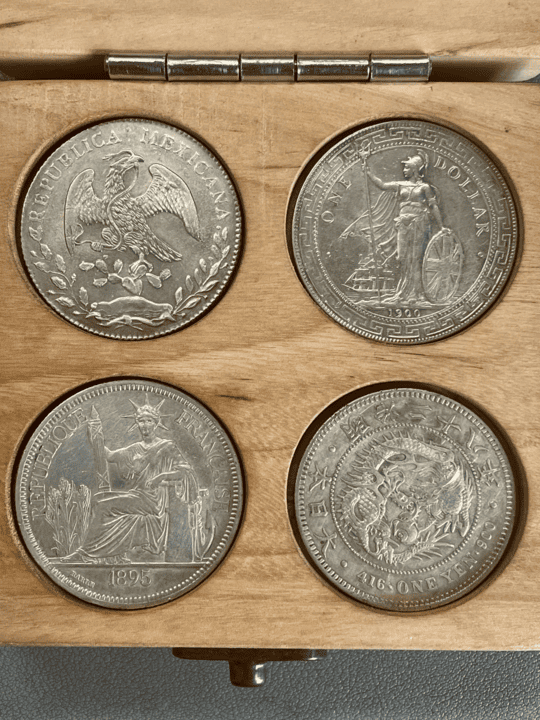
Return from documents to the trade-silver coin
Transcribe the date, denomination, principal designs and surrounding legends under identification. Keep visible coin evidence, packaging and oral or written accounts separate, preserving discrepancies rather than filling one from the other.
Next, match weight, diameter, measuring instrument and original unit to the coin number. Include the tool in the image so the reading can be repeated in the same direction.
Map visible chop marks, holes, solder or rim alteration under condition. Date any storage change and stop a measurement or handling step that cannot be reproduced safely.
The guidance applies to each coin individually, without assuming a particular owner or transaction date.
Specifications are comparison tools, not conclusions
Separate junk dollars, seated-figure and standing-figure trade coins, Morgan dollars and other foreign silver before measuring. Each piece keeps its own faces, edge, weight and diameter.
A grading holder contributes a label and numerical grade, but the enclosed coin type, date, mintmark, designs and surface still need checking wherever visible.
Read the inscriptions and designs before the scale
Copy the date, denomination, country or regional wording and main motif from both faces. Compare weight and diameter only within a sufficiently established coin type.
Secure uncropped face photographs first, then locate the designs, border legends, mintmark, denticles and edge under the same item number.
Photograph the complete circumference after the whole coin
Where edge lettering, reeding or another pattern is present, capture it in overlapping sections. Preserve seams, rim work, piercings and solder without intervention.
Describe patina, circulation wear, weak strike, wiping lines and chemical-cleaning colour independently. Dark toning alone is no reason to brighten the coin.
Retain sleeves and provenance in their own section
Applied chops, old paper sleeves and background accounts may be preserved, but none replaces examination of the actual inscriptions, motifs, metal surface and edge.
Use Chinese collector names only as an index. Formal identification returns to the date, denomination, country wording, mintmark and designs visible on that particular coin.
Why Each Trade-Silver Type Needs Its Own Legend Set
Begin with date, denomination, principal designs and surrounding legends, followed by the full circumference and its lettering or reeding. Both evidence sets stay under one identifier; paper sleeves and holder labels follow separately.
After the first pass, reconnect chop marks, holes, solder and rim work to the same piece. Retain dates for conversions, recollections and later additions instead of overwriting the initial observations.
Photographs can support wording, design, proportions and prominent damage, but may not settle composition, concealed cracks or slight later treatment. Keep these limits beside the coin number.
Leave the silver unwashed, unpolished, unscraped and unfiled. Do not open an original holder until its connection and the effect of opening are understood.
Before sending an enquiry, align the date, unit and image direction and retain both versions of any conflicting information.
